Reflections on Drama, Drama Worlds and the Land of Misfit Kids

“All the world’s a stage, and all the men and women merely players.  They have their exits and their entrances; And one man in him time plays many parts.”  William Shakespeare, As You Like It.

 I have always been a great fan of using drama and movement in the classroom.  Here I look at the dramas that unfold regardless of what we do or don’t do.

As I enter the room I look around.  Who is here?  Who is not here?  Who is talking to whom and who is not talking to anyone?  What is the “pulse” of the group today?  Is the energy high?  Low?  Medium?  Do I read stress, playfulness, and exhaustion?  What does this group hold today?  What dramas are unfolding before my eyes?  What will happen in this class today? 

Image

Photo Credit: hobbinol.wordpress.com

 By observing drama worlds within our classrooms we then invite our students to “read” the drama actions going on in their worlds with a heightened sense of awareness, reflection and learning.  Each classroom is unique just as each individual within each classroom is unique.  Understanding one’s self, the group and being able to “see” from someone else’s point of view allows us to teach empathy and real life skills that will be forever invaluable for our students.  We can call this “dramatic consciousness” where we ask of our students and ourselves to be aware of what is happening in and around us, within the books we read, the characters we create and the meaning that we ultimately make for ourselves.

 “Dramatic consciousness means bring aware that there is dramatic action taking place in one’s life, in one’s work, in the lives of the people who make up the school community.  It implies being present to that drama, engaged in its passions, struggles and adventures, rather than being psychologically distant, removed from the action.”

                                             Robert J. Starratt, The Drama of Schooling: The Schooling of Drama

One year, my first year at a new school I had the privilege of getting a class of “misfits”.  I say this with love for each of these children, but the truth of the matter was that I had gotten all of the students whose parents had not made requests for other teachers.  I was new, the unknown and the keeper of all of the students whose parents did not know to make requests or were just not interested in doing so.  This group of kids was one of the most challenging and consequently rewarding groups I have ever worked with.  We spent much of the year working on group dynamics and accepting people for who they were.  When I say misfits I am talking about all of those kids who had something incredibly special about them that had yet to be nurtured.  They were a group for whom school was not a comfortable stage.  They were a group, who by the end of the year became the tightest knit group of students I have ever had.

 “And so faith is closing your eyes and following the breath of your own soul down to the bottom of life, where existence and non-existence have merged into relevance.  All that matters is the little part you play in the vast drama.”             

                                  -Anonymous

 As individuals they were as different as they were talented.  The everyday work of school, sitting at one’s desk and performing a series of tasks was not going to work for not just a couple of them, but literally for none of them.  If they were not coded then they were labeled with some kind of something that supposedly hindered their ability to learn.  They were also the group that took to drama more than any other.  It was a way for them to be and to show their learning through movement.  It was what eventually made this group do things that were beyond comprehension.  Every day was filled with dramatic activities and chances for kids to “become” someone other than themselves.  Puppetry, theater, role-playing, Picture Book Dramas, Joke – Telling, Songs, Poet’s Theater were parts of every day often inspired by the students themselves.

 One beautiful spring day I was called to the principal’s office to discuss an upcoming “fight” that was to take place the very next day.  The rumor was that many of the kids in my class were involved.  Involved?  That was putting it mildly.  They had all gotten together as a class for each recess for weeks and worked on the planning and execution of this upcoming “event”.  It was to be a showdown between two boys in our class who had agreed to “fight”.  There was a marketing committee who went around at each recess talking up the upcoming event.  There was a sales committee that created and sold tickets to the event.  There were judges, participants and even prizes to be donated by various other students in the class.  There were flyers made, and all of the the other third grade classes were buying the tickets and oh yes, did I mention, they were also placing bets on who would be the winner?  In their own time they had created an entire drama world where each of them were the stars.  The organization, thoughtfulness and planning that went into this event was amazing.  But, we were at school and what were we going to do about this?  The fight was cancelled, much to the relief of the contenders and monies were returned to the rightful owners.  Letters of apology were written and yet, through it all there was a part of me that was actually proud of these kids and what they had almost pulled off.

“I love acting.  It is so much more real than life.” 

                                  -Oscar Wilde

Image

Photo Credit: http://www.tumblr.com

So, I took the pulse of the group and ran with it.  We broke down the drama of the event they had planned, unpacked it and gathered on the carpet and discussed all of the skills they used to plan and eventually execute such an event.  After mapping them out I proposed that we use all of these skills in order to plan an event that might actually help someone or a cause.  The thinking began and the ideas started to flow.  What would we do?  At the time we were studying the rainforest and after careful consideration it was decided that we, as a class, would buy a portion of a rainforest.  The efforts to raise money began as the kids headed up different committees and the money was eventually earned and we purchased an acre of a rainforest that would never be destroyed.  We received a picture and a document stating it had been saved and the best part was that out of this planning and execution nobody got hurt and even better part of the world was saved.

“Life is like an overlong drama through which we sit being nagged by the vague memories of having read the reviews.”

                              John Updike

 It seems to me that too often in our school worlds we see things in black and white.  Sure, what they planned was inappropriate for school, but as a group it was an amazing feat.  Here was a group of kids who lingered on the outskirts of the popular kids, who became, as a group, the focus of the third grade recess.  They had planned an event that every other third grader wanted to be a part of.  As a group these students created and made a drama world where they were center stage and not behind the scenes where most of them had been most of their school careers.  And even as I write this I realize that this is not completely true because many of those kids were front and center, but not in a place that was helping them.  Many were in trouble with the “law” for numerous accounts and even in this we need to ask, what is the drama action that is happening and what need is it fulfilling?  Attention.  Working together they were able to get this attention in a positive way.

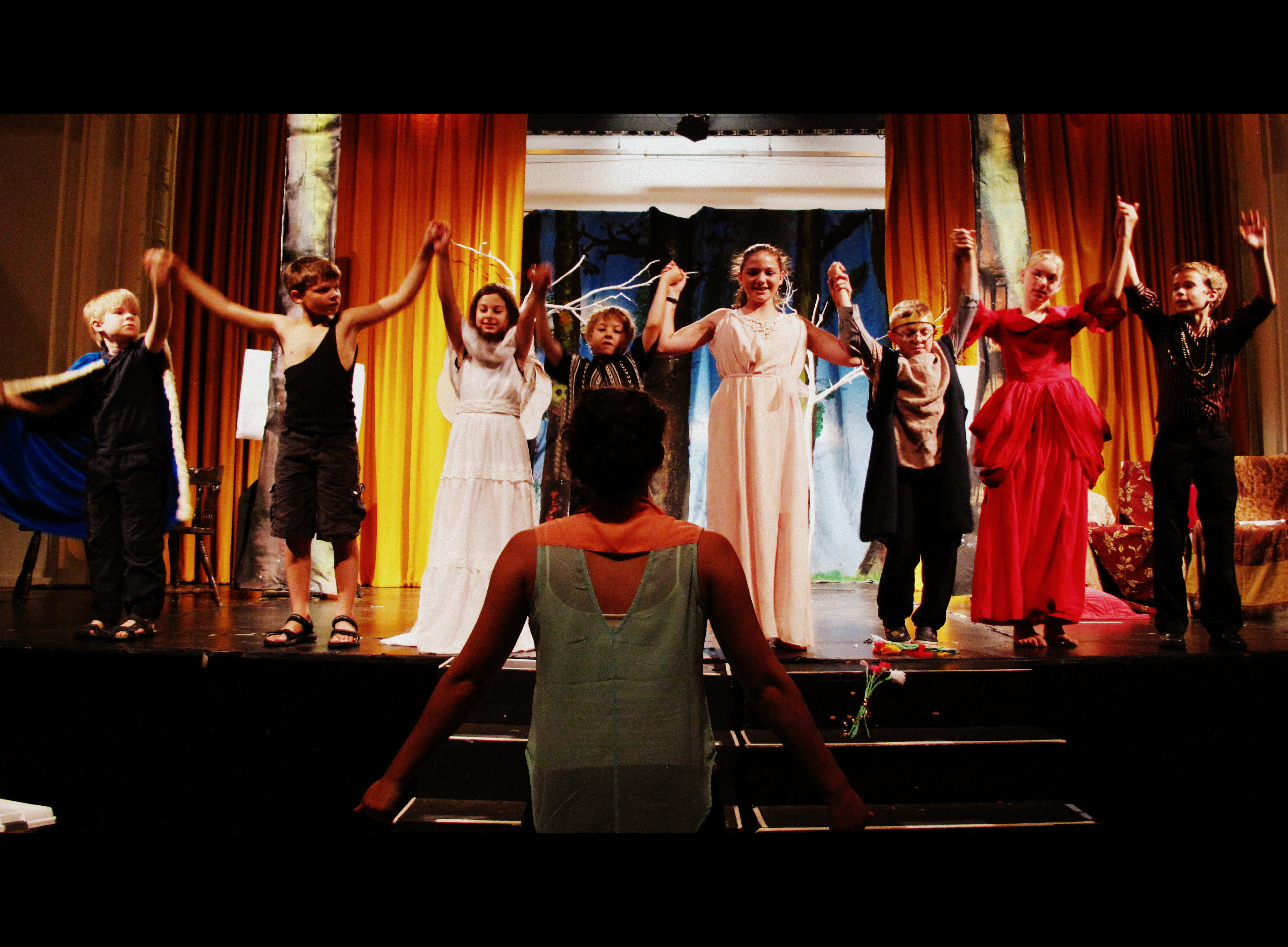
 We spend a great deal of time focusing on everything that is wrong.  What is right?    These kids were brilliant….but school was never a place where their genius was discovered.  I just think we can do better.  And part of better is helping kids to see their roles in life, in school and as individuals.  Lights, Camera…ACTION!
Image

Photo Credit: shakespeareinaction.wordpress.com

“All the world’s a stage, and all the men and women merely players.  They have their exits and their entrances; And one man in him time plays many parts.”  William Shakespeare, As You Like It.



The Joke is on You

“Humor, like hope, permits one to focus upon and to bear what is too terrible to bear,” Harvard psychiatrist George Vaillant, writes in “The Wisdom of the Ego.”

“Why did the cookie go to the doctor’s office?”

“Because she was feeling crummy!”

“Do you get it?”

My 4 year old daughter, Emma loved to tell this joke when she found herself in new strange hospital situations.  Humor is one of those incredible gifts that we all have for making human connections.  This was her way of taking some kind of control over her illness and she loved to tell this joke over and over.  The delight in her eyes in seeing who “got it” was sheer heaven, thinking she was so clever and loving the joke over and over herself.  There was something in this joke  she could see that made her enjoy it every time she told it.  She “got” it and was always sure to ask, “Do you get it?”

The getting it is like the ultimate secret that she is privy to; the delight is making sure that everyone is able to enjoy the magic of the punch line in the same way as the teller.  And there is an art to telling a good joke and the feedback is instant…did you get a laugh or not?  You can always tell those who get it as an expression of knowing crosses their faces, and then there are those that laugh to be polite and those who are laughing as they are still trying to figure it out.  We have all been there, at one end or the other and of course the worst place to be is to be the jokester that gets no laughs at all.  It is a tough lesson, but one that you can do something about right away.

In the classroom one part of our morning meeting was joke telling. There were some rules surrounding the telling.  First the joke had to be appropriate for school.  Yes, of course there were those who pushed the limit, but for the most part kids were able to discriminate between those that would be acceptable and those that would not.  Just trusting them allowed them the freedom and the responsibility to make good choices. 

The second rule was that you had to practice the joke at least three times and that you had to get a laugh at least one or two of those times before volunteering for morning meeting.  This was for two reasons; one was to work on the delivery and to work on making it funny.  We would talk about what made a good joke and what didn’t.  We talked about the emphasis being on the punch line and how to deliver an effective punch line.  These could be classified in our  under reading with expression, the importance of audience and comprehension studies.  (How is that for meeting standards?)  It was a clear test of whether the child understood the joke or not based on the reaction of the audience.  If it was not funny we worked together as a group to think about what could be done with the joke to make it funnier.  This is revision in real life.  Then the child would take his or her newly revised joke out into the world and wait until it was funny enough to bring it back to the class. 

Everyone had ownership of the joke by then and often there would be many versions of the same joke told over and over again.  This gave us time to talk about the fact that authors do this all the time.  Once someone has a great idea then other authors try to take the basic idea and make it their own.  We talked about how this often happened with jokes and that jokes changed regularly in their details because joke-telling is typically an oral form of literacy that is passed on from person to person.  The game of telephone is a great way to show how things change based on the oral telling and that people all hear things differently.  

I would always begin the year telling a joke to model how to tell a joke.  I would overemphasize the telling in order to be able to point out to the class just what it was I was doing and that there are things that you can do to tell a good joke.  The joke I told was about a chicken that goes into the library to get a book.  He goes up to the librarian and says, “Book, book book”.  This is said like a chicken saying bok, bok, bok with a high voice.  (This is hard to put into writing!)  The chicken takes the book and returns within 10 minutes shouting the same thing to the librarian, “Book, book, book”.  The librarian thinks this is strange but gives the chicken another book.  Sure enough if you have heard enough jokes you know that this chicken is going to be back in no time.  This structure allows us to look at it closely and see there is predictability in jokes and that if you wanted to make up your own joke then like fairy tales, the magic number of 3 often appears.  Well, the chicken magically does show up again but this time the librarian wants to know what is going on, knowing the chicken could not have read either of those books so quickly.   She gets on her coat and decides, after giving the chicken yet another book, to find out what is going on by following the chicken.  The chicken leaves the library, heads up a big hill, out into a field and through the forest to a clearing.  (Again here is a way a leading the audience into what we know is going to be the punch line.  I talk about slowing down here and that when I do the audience almost leans in waiting, waiting, waiting and thinking get to the punch line already!)  At the edge of the clearing is a pond.  The chicken walks over to the edge of the pond where a frog is sitting.  The chicken pulls out the book and shows it to the frog.  The frog looks at it and promptly replies, “READ IT. READ IT”.  Of course this is said like a frog instead of ribbit it is read it.  These slight changes in voice are very important because without them the joke is just not funny!  So, okay you are thinking this is a dumb joke, and it is.  It is also, however an excellent model for kids because it is clean and it contains so many elements of a good joke.  This gets kids thinking about their own jokes and jokes they have heard in the past.  Often one of the hardest things to do is to just remember the joke.  I tell the kids that having one or two good jokes in your pocket is a great way to be in a new crowd.  Everyone loves a good joke.  But is has to be a GOOD joke.  A bad joke won’t get you very far.  This also encourages kids to think about themselves in social settings and to think about when it is appropriate to tell a joke and when it is not.

“Jokes compact the elements of storytelling into bite-sized mini-narratives. They are not just funny. For writers and editors, they are models that can help teach storytelling” Chip Scanlon, the Poynter Institute.

 Joke telling is a form of storytelling; something that we can use to help our young  readers and writer’s to see the elements of a story in a very compact version.  To tell a good joke the teller must prepare the reader by setting the stage introducing main characters and setting, the chicken, the librarian and the library.

Next is to provide some kind of background for the reader, in knowing the structure of many jokes, one is sure that the chicken will be coming back at least a couple more times.  Also using the voices allows for the characters to know more about them.  She is a female chicken with a high voice; the librarian is suspicious about a reading chicken from the beginning.

The joke relies heavily on creating scenes that the reader can follow.  The chicken comes and goes, comes and goes and does these actions very quickly, leading the librarian to become even more suspicious.

A good joke creates suspense, engaging the reader as they sit and listen, leaning in to find out what in the world is going to happen next and often this is done through conflict.  The conflict here is for the librarian who is miffed that this chicken keeps on coming back without having read a book!

Next it builds to a climax and a clear resolution.  We know that when the chicken leaves and the librarian follows that we are going with her and that we will find out instantly just what the chicken is up to.

Finally, is that wonderful element of surprise, the “aha” moment where we wonder how we didn’t get it all along.  It is funny that the chicken is trying to get the frog a new book and so we laugh with this quick resolution and twist that we can visualize as being very funny.

Derek was a small fourth grader who had a hard time fitting in.  Not only was he smaller than all of his classmates, but also he was somewhat goofy looking and gangly.  He had a hard time finding his place in the world and was often seen getting into it with kids.  If there was trouble, then Derek was in the middle of it.   In the classroom he struggled.  As a reader he struggled the most.  For Derek, this opportunity to tell jokes, this place where being the class clown was encouraged was his place to shine.  By the end of the year he had found every joke book in his local area.  I will never forget the day he showed up with a book the size of Webster’s heaved up under his arm.  It was titles “A Million and One Jokes.”  Derek would sit for hours pouring over this book in search of the perfect joke.   It was a ridiculous book for him as it was laden with jokes that were so out there that I didn’t get a lot of them.  Many of them politically motivated from cultures all over the world.  The schema one would have to have for many of these jokes would put Google to shame!  The print was as small as anyone could imagine, but he continued to read over it, searching for that one joke that he did get!  And he would know when he would get it.  You want to talk about serious close reading.  He was getting to know himself as a reader through this insurmountable task he had set for himself.  He would carry that book everywhere…and did I mention it must have weighed 25 pounds??

Image

Photo Credit: blogs.women24.com

 At first he would tell jokes that none of us got.  Eventually, though he was able to work on finding a good one, practice it and in no time Derek became one of the classes favorite joke tellers.  This was his forte’.  This was his place to find comfort and acceptance for who he was.  This also gave him a very real reason to read and to read for meaning and with purpose.  It also gave him a real reason to write as he then went on to write his own jokes.  At morning meeting it would be Derek that everyone wanted to tell a joke.  Each day we had time for three jokes.  On days when nobody else would volunteer, they would all chant Derek’s name and he would get up and do his own version of a Leno monologue telling joke after joke.  He was good.  I don’t know where Derek is today, but I have a hunch that someday I may see him on stage at the Laugh Factory!

 We need to value children, for who they are, not who we want them to be.  We need to look at each child and find the strength inside of him.  Derek could also easily have dropped out of school.  It was not a place that he “typically” succeeded and joke telling allowed him to have a place in our classroom community for who he was.   Don’t get me wrong.  This was not that all magical cure and Derek continued to struggle each and every day in the classroom and on the playground, but offering this as an option allowed for Derek and other kids to use their humor in an effective and constructive way.  It also allowed Derek to take some of the painful anger in his life and poke fun at that as well.  Doris Kearns Goodwin writes in Team of Rivals, a study of Abraham Lincoln where she focused on “the vital role humor and storytelling played in Lincoln’s melancholy personality.”  , “He laughed, so he did not weep.  He saw laughter as the ‘joyous, universal evergreen of life.’  His stories were intended ‘to whistle off sadness.’” 

 We should each laugh as many times in the day as we can.  I remember reading somewhere that we use so many more facial muscles to frown than to laugh…therefore frowning causes more lines in the wrinkles of life.  So heck, let’s laugh or in the end…the joke is on you!!


The Power of Modeling, Connection, Trust and Play

When my daughter Emma was three, she was playing happily in her corner of the kitchen where I had created her own little “house” complete with a wooden hutch, oven, highchair and cradle for her own dolls.  She spent hours creating her own reality of being a Mom.  One day I was about to wander in when I stopped and peered around the corner (yes mothers do spy!) and as I watched her rock her baby and look into her eyes adoringly, one of those warm washes of love and perfection poured over me.  It was a moment that I wanted to sink into and enjoy.

Emma took her baby, placed her into the high chair and began feeding her and gently said,   “Eat, dammit.  Eat your food, dammit.”

IMG_0012

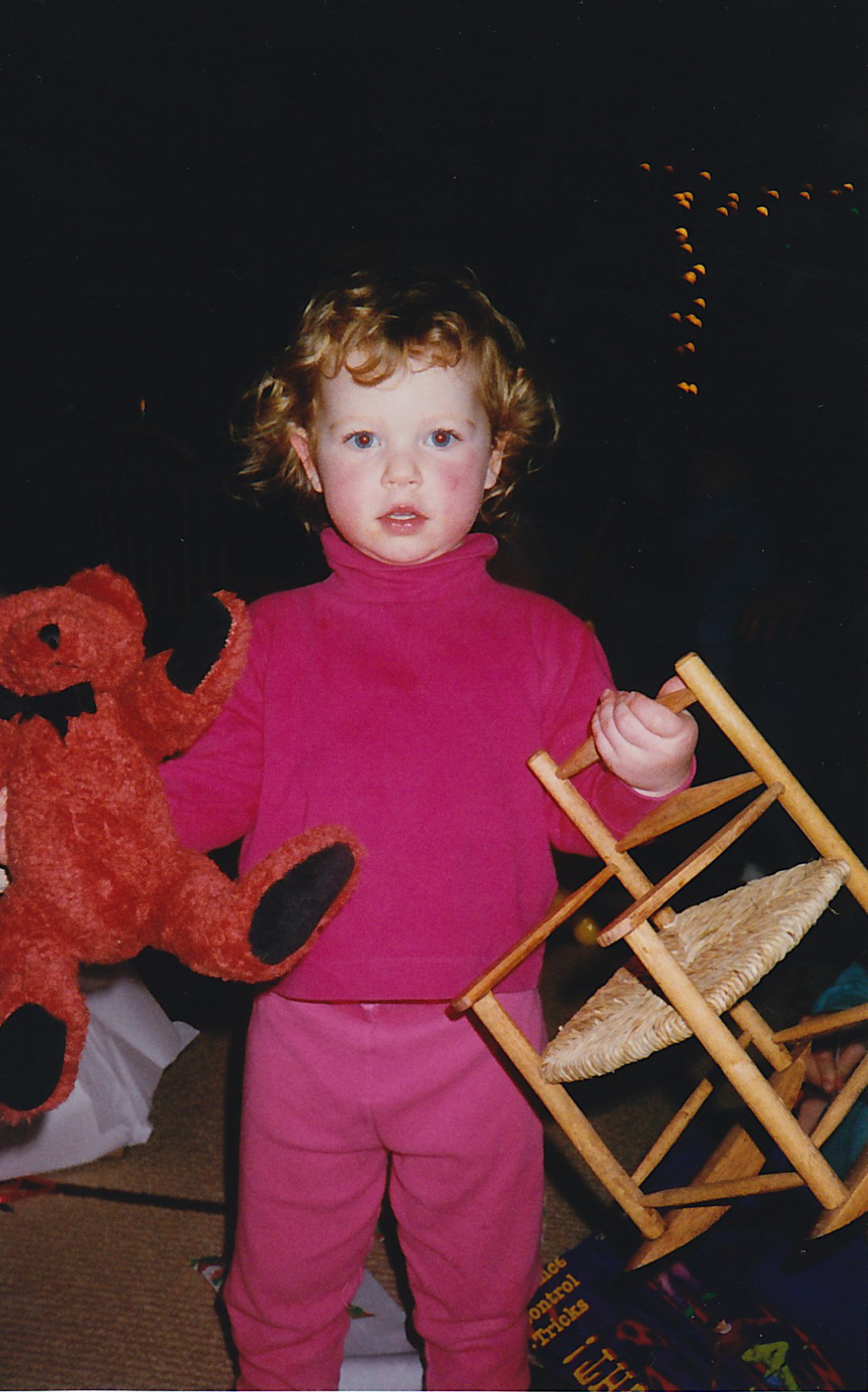
Emma

I stood there in horror, unable to move and continued to watch.  After the lovely meal, Emma placed her baby into the cradle and in a very nurturing way, covered her up with the blanket and said, “Now time to go to sleep, dammit.”

Again, that word hit me, smacked me right across the face and left a sting.  What had happened to my perfect mother moment?

“Emma”, I asked, “What are you doing?”

“Putting my baby to bed.  She is tired.”

“I see that.  I heard you use a “D” word that I was wondering about.”

“A D word?” she contemplated.  “Oh, Dammit?”

“Yes that is the one.”

“Oh, that is my baby’s name Momma.”

Silenced again.

The power of modeling…

I have been known to tell this story when working with teachers to show how modeling is one of the most powerful tools we have and that we can use it to show our literate lives for our students every day.  It is what we do, not just what we say.  We need to talk about what we read, write and wonder; to show them first hand that literacy is not about school, it is about life and how we choose to live  this life.  When students see that we are interested in writing, reading books, articles, blogs, on-line periodicals, newspapers etc., they can “see” how we live each literate day.  When we talk about a great book we found at a used bookstore or bring in our favorite children’s book, they can catch a glimpse of our lives beyond the four walls of school.  And they begin to consider theirs as well.

Bridging the gap between “school” reading and “life” reading is critical.  As an instructor in the English Department at the University of New Hampshire’s Learning Through Teaching professional development program, I have the privilege of going into classrooms and supporting teachers in their coursework.  Every time I enter a classroom I have my Writer’s Notebook and other sundry of books with me.  It could be a couple of children’s picture books, the current novel I am reading, or more recently my Ipad.   Kids ask me about the ever-present essentials (appendages?) that I carry with me.  They are curious and I can open them up and share small pieces of myself with them.  It is an entry point for conversations about reading and writing.

When I am modeling a lesson for a teacher or group of teachers, I start by talking to the class about my passion for reading and writing; my excitement over a new author I have found, what I am working on myself in writing or how a word looks or sounds.   And it is authentic.  I love words.  I love to read and write and when kids feel that from me, they too want to be a part of that energy.  It is infectious and it is not hard to get them to buy in as I ask them to repeat a word with me, a nice long juicy word like onomatopoeia, that they can take home with them and share with their families. “There is a world in a word,” Lev Vygotsky wrote and it’s up to us to open up those worlds.

My-Mama-Had-a-Dancing-Heart-9780531071427

Toting Libba Moore Grey’s, My Momma Had a Dancin’ Heart under my arm, I entered Emily Spear’s wonderful and familiar first grade classroom where I was greeted with hugs and an offer for one of those famous birthday cupcake that are handed to you with great love and grey grubby hands.  I received the confection’s love, knowing it would never get eaten and smiling at the gesture.

I settled into the comfy rocker and had a brief time to reconnect as they told me about their latest ventures in writing. Voices rang all around me as they shared their latest “sound” words.   Three little girls got closer and asked about the pink necklace I was wearing twirling it in their hands and marveling when I told them it was a crystal.  “ooooh…you must be rich!”.  I explained it was a gift from my sister and that SHE was the rich one because she had ME for a sister.  They giggled.

Taking this time to connect with these kids is a critical part of the modeling process.  It only took a few minutes, but in that time my words and actions showed them I was interested in THEM.  This gives me an advantage because I have re-established our working relationship and can then move into our writing time together.  I am reconnecting and we are exchanging trust in these small moments.

I read aloud, knowing that I wanted to model Moore’s use of playfully hyphenated words as a craft the kids could name and experiment with.  I stopped and wrote some examples on the white board:

tip-tapping

song-singing

finger-snapping

We talked about these words and wondered why the author would use the hyphen.  They quickly identified that it made it into one word, made the reader say the word more quickly and created rhythm.  For each dance in the book I asked for a volunteer to get up and “perform” each season’s ballet.  They were eager to move and the movement brought this story to life for all.

We then brainstormed a name for these words and the list consisted of

1.describing words

2. two words in one

3. DASH-ing words.

It was democratically decided that DASH-ing words described them most accurately because of the dash (hyphen) and use of the suffix ”ing” on the end of each word.  And while some may be thinking this is not correct it is playful and something the kids will remember.  Let’s just call it poetic license!  Next, I asked them to go and try out some of the DASH-ing words in their own writing.

And the play began.  Some kids came up with what we called Double DASH-ing words such as tweet-tweet-tweeting. Morgan, who I thought was struggling was left to her own thinking for some time and arrived at my side with this incredible poem:

Swish-swash

Slush-sliding

Icicles-banging

Against the long

White world

But the world

Is not always white

Wow!  I just love the image of the long white world…

We all came back to the carpet, shared our DASH-ing words and created a chart with all of the examples the kids had come up with, creating a classroom “model” that they could refer back to and add to.

I left the room, again humbled at the brilliance of these kids and just what they can do if given the time, space, place and a  model of what is possible.   Trusting our students.  What a concept and something we can all do, Dammit!!

Ramblings on Lobsters, Testing, Brownstones and Poetry over the John

One sticky New Hampshire July summer evening while hosting the annual lobster and clamfest for our UNH Summer Literacy Institute, Donald Murray was in the house.  Now you must know that to have Don in my house was an honor.  He was a man I had admired since I was an undergraduate and then here he was all hot and buttered fingers and faces on the back deck with the rest of us.

Image

Donald Murray

And then it happened.  He walked right up to me and asked, “Who wrote the poem, ‘Over the John’?”  I froze.  What?  The ultimate test had come my way and as my face heated up and I began to sweat, I flipped through the suddenly empty files in my brain, wracking it for any poet I could think of.  The words, who wrote Over the John? Over the John?, Over the John?, reverberated in my head.  As I agonized I realized he was staring at me…waiting for an answer and so finally, in the ultimate defeat I simply admitted, “I don’t think I know that poem.”  At which point Donald Murray let out a larger than life guffaw of a laugh and re-stated, “No, the poem over the john in the bathroom, who wrote that?”

And in my state of stunned stupidity it still took me a moment to actually realize that he was not testing me at all but simply asking me a question to which I knew the answer.  “Oh!  My daughter wrote that in 3rd grade.”  To which he responded that she was quite a little writer.  And then he left me there in all of my shame to melt in my sense of stupidity.  I hate tests.  I have always hated tests and this was a self-imposed one.  The pressure makes me stupid.

Image

The “actual” poem over the john!

So what if we are all made stupider by tests?  And if that is not the case then what about the some of us that are?  I will admit it; I am one of the worlds worst test takers.  When I see a question and then the 4 possible answers I try to think about the “right” one and while one might seem “more” or “less” right, I get stuck on imagining the possibilities of what “could” or “could not” be right.  I see grey in a world of black and white.  I stammer in the ideas that the test is probably trying to trick me and so I get obsessed with thinking about outwitting, outplaying, and outlasting the test.  Yes, I want to be the sole Survivor, but I get too caught up in the game and then I simply freeze and ultimately I am blindsided and voted off the island.  I lose.

This past weekend in NYC at Barnard (see previous post as well as here:  Totalwebcasting.com/live/columbiatc/20130504/ for live on streaming) was eye opening on so many levels.  It made me wonder about so many things…many of which have to do with testing and beyond.  I heard stories, saw grown men weep, and felt passion so great it was palpable.  I met people that I have only “known” on-line for the first time in person.

I was welcomed into Renee Dinnerstein’s (See her blog here:  http://investigatingchoicetime.com/)   home in Brooklyn…our first face to face meeting ever and she hosted me for 2 nights.   We talked for all the time I was there.  She introduced me to her husband, Simon and his incredible works of art that line their Brooklyn Brownstone and beyond.   She took me to the public schools of NYC, gave me history of the area, of her life, the schools, the system.  We visited an exhibit at the Brooklyn art museum by Anatsui, amazing!!  Thank you Renee for your kind hospitality and for bringing together great minds for brunch where I also met Vicki Vinton, (See Vicki’s blog here: http://tomakeaprairie.wordpress.com/)  on-line colleague, for the first time.   But most of all I learned that I am not alone in this endeavor.  There are so many of us out there who are so discouraged, outraged and ready to take action.

Image

Tomasen and Renee at Anatsui exhibit

And while I was hoping to have a great post synthesizing the weekend, I realize I still have a great deal of processing to do.

And so as my 16-year-old Zachary heads out the door for his annual NECAP testing this morning he seems to be fine with it.  Both of my kids are better test takers than I am.   In fact, he enjoys the testing perks…early senior privileges and the fact that teachers are not allowed to give homework during testing because they want students performance to be stellar.  (Is it just me or can you see how ironic this is?)  Our schools are ready and willing to help students get more sleep FOR the tests, but not for everyday schooling.  Sometimes I think I am crazy, or just looking for answers in my brain that are just not there.  Am I asking the right questions?  That is the real question, or am I just searching for something over the john?

You tell me.

sols_6 (2)

Alternatives and Activism: Reclaiming the Conversation on Education

This weekend I will join educational colleagues, professionals, parents, students and friends at Barnard College in New York City to “take back” the Conversation on Education.  Does it strike me that this is close to the name of my blog?  Why yes, and while it initially inspired me to make this trip, it was more about the idea that “we” can actually DO something about what is happening in the corporate takeover of our public school systems.  This is the blurb that made me sign-up.

“If you want to move beyond the focus on test scores, performance outcomes, standardization, and data aggregation, if you are tired of seeing your students deprived of real educational opportunities, if you worry teaching is being reduced to test prep and educators are losing their autonomy and academic freedom, and if you believe all our children should have access to a curriculum and extra-curriculum that are far more engaging that stripped down cram courses or subsistence level job training, then this is the conference for you.”

Image

And if that didn’t convince me then this panel of experts certainly did!!

“Hear speakers such as Susan Ohanian, Barbara Bowen, Carol Burris, Zakiyah Ansari, Juan Gonzalez, Barbara Madeloni, Ceresta Smith, Brian Jones, Nikhil Goyal, Ann Cook, and Shino Tanikawa and join with your colleagues to mobilize resistance.”

But of course the real kicker is that last line, “join with your colleagues to mobilize resistance.”  What a great line!  At first I recall being in college and while taking one of my initial  courses in education we were assigned the task of doing something we had never done before.  The goal was to get out of our comfort zones and to reflect on that experience.  I chose to go to a local anti-nuclear demonstration.   I did not have to do much to dress the part as anyone who knew me in High School or college knows that I came by the “crunchy” quite naturally.  What I remember the most about this rally was the collective energy and power that I felt there.  It was exhilarating, amazing and empowering.  It was a place where I began to develop and strengthen my voice.

Flash forward, too many years to count, and I find myself at dinner in Ohio with my daughter and 6 of her college friends at a round table where the discussion centered on the increase in tuition for students going abroad, a policy that was delivered to students at an informational meeting.  They were outraged at the way it was handled and so I asked them, “What can you do about this?”   Their collective reply was “nothing”.

They felt they did not have a voice in the policy at Kenyon College even though they entered 2 years prior with a very real sense of what the cost would be for the 4 years.  I talked to them about a Grandfather Clause and what they might be able to do.  This tuition increase was a major hit to most of these kids and yet the overwhelming consensus what that they did not feel empowered, they did not believe they had any voice; they did not believe that anything they might do would matter.

And so, in my not so subtle manner I started asking questions and suggesting ways to let their voices be heard.  By the end of the meal they were fired up and had grand plans to set up a table during parents weekend to bring attention to this issue, as parents were never formally informed and would not even know until the tuition bill arrived in the mail.  And while they had visions of posters and signs and standing up for their rights…none of this actually ever happened.  Why?  Because ultimately they did not believe it would matter.

Isn’t college the perfect place to get  involved in make change?  Have we lost this generation to the cow towing and conformity that they have had a steady diet of?   Or have they just not yet discovered the power of their voices?  Or, are they right?

Looking again at that last line…I get a different feel.  We will gather to “mobilize resistance” and it hits me, these are wartime words.  These are the words of troops and lieutenants.  And I wonder…have we really come that far?  Is this an all out war?

I don’t know the answer to these questions.  I do know that I have such passionate discourse about what is happening and that while blogging about it has helped me to research further and write down my thoughts I realize it is not enough.

I want to join the collective voice of others at the rally.  I want to begin the process of change with like-minded people who are not going to just sit at the table and watch this happen.  I want to join with the forces that believe we CAN and WILL do something.   I want to show this younger generation that there is power in numbers and activism and alternatives to just accepting whatever comes down the proverbial pipeline.  I want to model that they too can have their voices be heard.

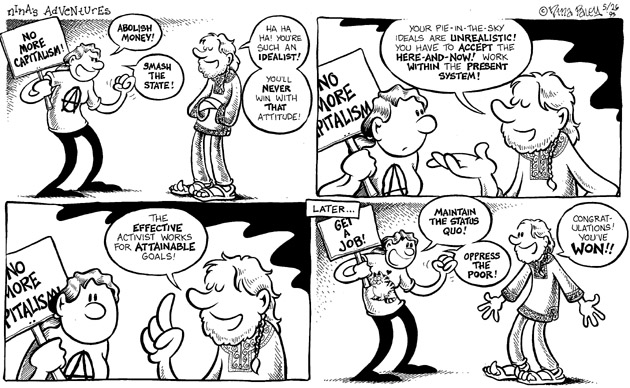
cartoon6399 (1)

Photo Credit: teacherscount.wordpress.com

So…here I go…off to the Big Apple.  Perhaps I will dig out one of my old Indian skirts, find a complimentary embroidered shirt and sandals for the occasion….and had I thought of it earlier I could have even gotten a perm, “Wonder Tomasen…activate!”

For more information on this conference check out the blog http://reclaimingconversation.blogspot.com  It will also be live streamed.

The HOPE Line is Open and Ready for Business, Honoring One Person’s Experience at a Time

I always tell people I have the best job in the world.   I have autonomy.  I am respected to make sound decisions based on the needs of my students.  I have choice and a voice that I am encouraged to use.   I have time to create lessons, facilitate discussions, envision graduate courses and then execute them with amazing professionals.  I am trusted.  This gives me hope.

Image

I wish every teaching professional could say the same thing.  My work is centered in the idea that we learn by doing and so whatever I am teaching or doing I engage in myself first be that a reading assignment, a writing assignment or something that I will be teaching to students.

Ultimately it all comes down to purpose: the why and the how of the whole thing.  And yet I find myself fighting for sites in which to work.  Moving upstream against a current that has such great momentum that is would seem there is no hope.  Imagine that not many years ago our Learning Through Teaching graduate level course were in over 30 schools in the area from New Hampshire, Massachusetts  and up into Maine.  We had a great many talented  consultants and our outreach was far and wide.

Our model was “in vogue” as it empowered teachers and brought them together within their own schools for professional reading, writing and dialogue.  Slowly over the years, the demand has not lessened but the funding has dried up.  The professional development of our teachers is one of the last things on a long list of budget demands.

Image

But there is always hope.  In fact I saw it in my class just last week.  This group is a unique group of educators who meet monthly to discuss a common professional reading in my home.  They receive graduate credit for their work, but more than that they receive support in a way that they cannot find elsewhere.

One teacher actually commented that she found herself wanting to be careful in talking with other teachers at her school about our course because they did not have the same network of support.  So on the one hand she wants to rave about what is a critical part of her ongoing professional development, but on the other hand she feels she cannot.

Another teacher was literally brought to tears as she expressed how lonely and isolated she was feeling in her own classroom and frustrated with the lack of thinking and keeping students in mind.

Image

A MUST read for all.

But, these teachers, after reading Readicide by Kelly Gallagher, immediately shifted their focus on reading to include the love of reading and celebrating that with students.   And you might think, really?  Isn’t that just a given?  And the answer is not anymore!!  This shift brought them back to themselves and who they know they are as educators.  And their students responded in kind coming into school proclaiming,

“I finished my book last night and it was amazing!!  What should I read next?”  And we, together as a group, celebrated these moments.

And in that one line there is hope!  Can you see it?  Just a glimmer?  Honoring One Person’s Experience. Let’s follow that light.  We are strong.  We know what is best for our students and if we can ignite a sense of readership, writership and thinkership among them then we are slowly creating a new genre of students in the name of those who care, those who want to think, those who want to read, those who want to write and will…

Image

And just like those Bostonians who ran towards the disaster and renewed our faith in human kind, let’s do the same for education kind.  So in this spirit please share your “one liners” of HOPE from your students, administrators, parents whatever.  What is being said to keep the hope alive?   The HOPE Line is open and ready for business, Honoring One Person’s Experience at a time.  What is yours?

Photo Credits: www.hopeinspiredministries.org,mylifelonglearningcorner.blogspot.com,info.live58.org –

All in Favor of Free Range Children, Say Bok!

Our prime purpose in this life is to help others. And if you can’t help them, at least don’t hurt them. ~ Dalai Lama

Last year my sister ordered 16 baby chicks in the mail so that she could have her own eggs and know exactly where they came from.  Her goal: to raise happy, healthy free range chickens fed the top of the line organic food.  No antibiotics or cheap genetically modified corn products for these chickens au natural!

She loves her chickens.  When they first graduated from the warmly lit crate in the house to the coop she would go daily for “play time”, sit with them and hold them and even talk to them.  Her thinking… happy, loved chickens will eventually produce happy healthy eggs.  Can you say “crazy chicken lady?”  But truly what she was doing really made so much sense!!  Crazy or not!

Image

Sister Lisa with one of her “Goldies”!

There are more and more people ordering baby chicks to free range them.  There are many movements to eat locally and small farms seem to be sprouting up everywhere you look.  We are urged to get back to our roots and consider where our food comes from.  We know that GMO’s (Genetically Modified Organisms) are taking over all of our food sources.  These modifications involve the mutation, insertion or deletion of genes to produce something more quickly, more efficiently and to be adverse to pests or to improve the shelf life of a particular food.  What is happening is we are creating foods that our bodies do not recognize and that we cannot process.  The results are out there.  Just look around and see more obesity than ever in history.  We are farming with our heads and forgetting our hearts and we are hurting our food sources and ultimately ourselves.  So the movement is to move closer to home, closer to the heart.

Free ranging is defined where animals are ”permitted to graze or forage rather than being confined to a feedlot.”  And if you have not seen those feedlots then it is well worth your while to check them out.  There are various documentaries that show how these poor chickens are raised to mass-produce and it is completely inhumane.  (See King Corn, Farmageddon or Food Fight)

Image

And I would argue here that what we are doing to our kids in schools is equally inhumane.  The idea of kids mass-producing great numbers on sterile tests is so far away from why we are here on this earth and what really matters.  It is education without heart.  It is education without soul.  It is education without wonder, curiosity and surprise.  It is all about the brain.  We are intellectualizing ourselves right out of ourselves. We need heart AND mind!!

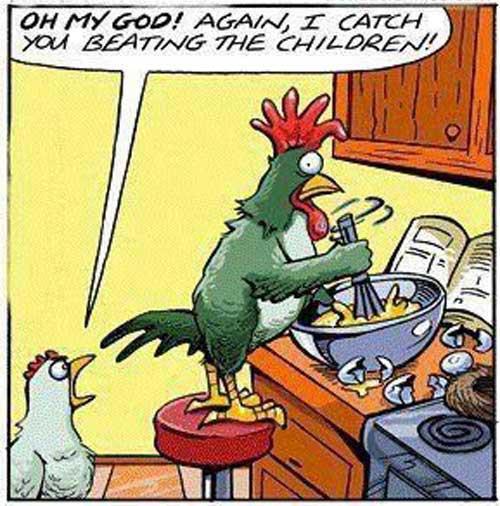
While I am a proponent of competition in some areas of life, this notion of competing has become the GMO’s of education. Performance is all that is looked at and yet what do we need for our kids to perform?  They need just what the chickens do!  They need opportunities to be free and think and make decisions and to fail and ultimately they need their own version of “the crazy chicken lady”.  Someone who is so dedicated to their needs and the raise them as well-rounded and happy chickens!!  There are so many crazy chicken ladies (and men) out there dying to do their jobs but are less and less able to do so.  We are hurting our kids and our teachers and everyone else involved with the sole purpose of production.  It is a business model that is being taken to the extreme.

Image

If all we ask of our students is to perform then we are going to crack and break them one precious egg at a time.  And dare I even say, what happens when they don’t perform?  Will we then consider genetically modifying them to fit in?  Call me crazy, but I think this has already begun with the increase of kids who are medicated in our schools for ADD and the likes.  Why?  So that they will conform to the feedlot of corporate education.

Image

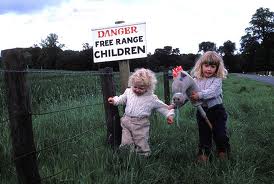
Hmmmm…and so I imagine a world of free -range children…where schools are a place where hearts and minds  are permitted to graze and explore instead of being confined to the feedlot of corporate America.  What a beautiful fantasy this is.  Can you even imagine?

It makes me think of my dear friend and colleague, Louise, who tells a great story about teaching preschool in the 70’s in northern New Hampshire.  On any given day she and her co- teachers might decide it was a nice day for a field trip.  So they would load up all the kids in the VW bus, leave a note on the door for parents as to their whereabouts and head off to the local mountain or lakeside or whatever their fancy.  For me this is the epitome of free range education and something that would never happen today.

The corporate takeover in education is daunting.  The more people and parents and friends and anyone  I talk to outside of education don’t even know what is going on.  Even those of us in education are often left helpless with the enormity of the situation and just how enmeshed it all is. I just want to say BOK in favor of free range children and baulk at these takeovers and say enough is enough.   Will you Bok with me?  Just say Bok!!

I love eating the eggs from my sister’s chickens.  There is something so perfect about it…I mean even my son when he had his first taste of these eggs exclaimed, “these are the best eggs in the world!!”  And they are.  They are not like supermarket eggs.  They are all different shapes and sizes and the color of them is glorious.  A deep orange that screams with great energy, love and hope!

I know, I know…all that in just one egg!  But you know…it is all in that one egg.  The love, nurturing, heart, soul and respect for the production of that egg that goes on to nurture those who eat it and so on.  The same can be said of taking care of and nurturing our kids in schools…one egg at a time. Bok Bok!!

“Our prime purpose in this life is to help others. And if you can’t help them, at least don’t hurt  “~ Dalai Lama

Photo Credits: www.slow-life.co.uk , www.mamamia.com.austrategicoutcomesgroup.com

The Face and Faces of Education: Surviving and Changing the Current Climate

I have the best job in the world.  But I fear it is a dying field.  I work in professional development as a field coordinator for Learning Through Teaching.  Learning Through Teaching is just that.  It is embedded professional development where we, the consultants from the University of New Hampshire English Department, go out into the schools and hold graduate course on site for teachers in literacy K-12.   What makes this model unique is that time is also spent in classrooms with teachers practicing the theory we are reading and learning about in class.  I model lessons, mentor, facilitate, coach, guide, consult with and observe teachers.  It is connected.  It makes sense.  I first learned about LTT as a student where I was enamored by the professional discussions and the Socratic method of discourse that allows teachers a safe place to talk about their practice in terms of what works, what doesn’t and what else might be considered.  The basic premise is that we are always learning and as professionals we are learning “through” our teaching, reflection, collaboration and revising that thinking as we go.  See here for more information on LTT:  (http://www.learn.unh.edu/pcw/Custom/LLT.php.html).

Image

Talented Teachers attending UNH Summer Literacy Institues, many of whom have also participated in Learning Through Teaching.

The teachers who sign up for my graduate courses are the teachers you want teaching your kids.  They are the teachers I want teaching my kids.  They are committed.  They sign up for a course after school because they want more.  They are thoughtful, inquisitive, life-long learners interested in creating that same love of learning in their students.  They are always reflecting on their practices and going to bed at night thinking about this one student who they just can’t seem to reach.  They wake up and shower thinking about what their day will be and who they might connect with that day.  They drive to work with lesson plans dancing in their heads and excitement about how it may or may not go.  They honor the passion, beauty and joy of their students and are always curious to see what they can try next.  Today, they are also often the most beaten down in our profession.

Image

Teacher professionals gather at my home for the latest model of LTT where teachers read a professional book a month and meet to discuss the book, do some writing and sharing of thoughts ideas and writing. Here teachers participate in a writing exercise on character through dramatic props.

These same teachers leave my classes discouraged because they have become powerless over how to teach.  We read these incredible books and while they are excited about the reading and the pedagogy many are not allowed to practice such good teaching in their schools.  Why?

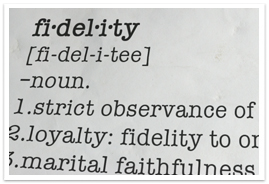
Schools are investing their money in large scripted programs instead of professional development.  Programs that require teachers to not only cover a certain amount of pages in their handbook on a given day via a new invention called a pacing guide, but also to read directly from the scripts that are provided to them.   Essentially teachers are “trained” in these programs and often the goal is to maintain “fidelity” to these programs.  Think of the implications of the words fidelity and training.   To “not” follow these programs means you are a cheating, disloyal teacher who has not followed your precise training.  Training is for dogs and fidelity is for marriage.  When in the world did the idea of marrying a program become a good one?

Image

And as a former member of our local cooperative school board I am amazed that we do not “think” about where all of our tax dollars are going.  The number one item on any local budget is that of salaries and yet at the same time we take away the authority of the teachers  to use what they know and replace it with programs that anyone off the street could administer.  On the one hand we trust our teachers to pay them salaries (yes, also another issue I will not get into here in terms of fair and equal pay) while on the other hand we tell them they are not worthy of decision-making, furthering their professional development and empowering and trusting them to do what is right for their students.   Research tells us again and again that the most powerful indicator of student success is the teacher.  Take away the “teacher” in the person in front of the room and all you have is a loyal robot spitting out information.  If this is the wave of the future then why even have teachers?  Why?  Because good teachers change lives.  Robots and scripts never will.

Image

And now if you can’t even read a script..here is a book to tell you how to do that!! What messages are there here?

“I can’t do this anymore” shouts long time friend and colleague Laura. Laura and I team-taught in a time when teachers were valued as professionals, respected and encouraged to do what was best for students.  Laura is one of the most gifted teachers I know.  She has her Masters in Reading as well as her CAGS (Certificate of Graduate Studies) in literacy.  She has been in education for 24 years.  And yet even in her own district she is not being consulted on what it is that might be best for students in the teaching of literacy.  Instead, those who are not even in classrooms, have never taught and whose only degrees are in administration are making decisions about instruction and are easily wooed by the various and sundry of publishing companies that are selling their wares door to door claiming to be the “magic bullet” sure to create students with higher test scores.  So many decisions are being made hastily out of fear instead of thinking about what is sound instruction.

And Laura is not alone.  I even find myself contemplating another professional life as I see my work and the purpose of my work becoming less and less applicable.  What good is nurturing thoughtful, reflective practitioners if there is no place for them to practice?  The frustration of so many is palpable and I can guarantee you that our kids are also feeling that frustration.

The lateral moves across districts and the adoption of mass programs puts teachers in a position where they must comply or beware.  This in turn trickles down to the students where all we are asking of them is compliance. What is missing in this top down mandated situation is thinking.

John Dewey wrote, ““Anyone who has begun to think, places some part of the world in jeopardy.”

There is a population of reformers out there who know this! Thinking requires questioning, reflection, and perhaps even going against “the man”.  But who is “the man” out there trying to keep us all from thinking and what is the end game?  The more I read the more I believe it is the privatization of education for profit.  A recent article in Salon reads,  “Getting Rich off Schoolchildren, Stop pretending wealthy CEO’s pushing for charter schools are altruistic “reformers”, they are taking in billions.”  See this article for more in depth conversation about what this might mean. http://www.salon.com/2013/03/11/getting_rich_off_of_schoolchildren/

And in turn, the de-professionalization of teachers and lack of funds for their development only creates stressed out, weary, disconnected souls wandering the halls rapidly trying to do everything that is expected of them.  By nature I really believe that a majority of those who go into teaching are rule followers.  They want to do the best job they can.  But with so many changes happening daily they are getting worn down to the point where they are saying, “Just tell me what to do, how to do it, and I will get it done.”

Image

Vicki Vinton

But how long can one survive knowing there are other ways? And what will happen when the history of good teaching disappears with those who have lived through it and all we have left are teachers “trained” in programs?   When will we pay attention to those we have hired and care for them in a way that will allow them to care for our kids in the classroom?  (For examples of the “kind” of teaching I am referring to see Vicki Vinton’s blog, To Make a Prairie to see how rich teaching can be at http://tomakeaprairie.wordpress.com/

Vinton beautifully demonstrates over and over again how to teach within the CCSS in a holistic, non-scripted, responsive workshop setting that fosters great thinking communities.

There is a storm a brewin’ folks, and with so much to keep up on in our world, I worry that education has yet to see it darkest days…

Our conversations need to be about instruction, curriculum, students, and community and away from this obsession with assessment, data and evaluation as it is making cheaters and liars of us all! We need to allow our teachers to teach, make decisions and allow them to do what we hired them to do…TEACH our children!!

Image

The Sounds of Silence and Beyond

“Sound can act like a psycho-active substance, altering and enhancing consciousness.” ~ Jonathan Goldman, Tantra of Sound.

I was in my yoga class the other morning it came to my attention, after we all chanted the sound Hammmmm that this sound alone can actually calm one down as the vibrations move through our bodies.  Being the ever -present skeptic I decided to put this into practice.  So each time I started to feel a bit stressed or frustrated I simply hummed to myself and the results were kind of freaky.  I did instantly feel calmer as the vibrations moved through my bodies, like a tuning fork settling me in a most calming bath of sound.  I liked it. I looked weird, I realize.  But I liked it.

Babies do this automatically as they coo and hum to themselves in the cribs.  Those moments I would steal outside the nursery just listening to my baby’s sooth themselves.  I miss that.

Image

That night I went, reluctantly to my singing group.  I sing with a group of 200 women and we meet weekly on Mondays.  This was the beginning of a new session and it was a rainy, cold night and the couch looked so much more appealing than actually stepping out into that crud.  But I went.  And of course, as is always the case, I left that rehearsal in great spirits.  The “sound” of the collective voices will never cease to amaze me! We knock the walls off of that church.  The sound is amazing!!  I either get the chills or I well up at least once at every single rehearsal.  The sound moves me.

So the question then becomes, what does sound have to do with learning?  I am wondering about the silence of learning and how many of our kids are struggling within the cells of silence.  My 19-year-old daughter, Emma, has always loved to read out loud.  From the time she could hold a book in her hand she would line up her stuffed animals and dolls creating her own audience and “read” to them, holding the book up so that they could all see the pictures.  Her stories went on and on, the book often even upside down.  Her delight in herself and in her creation of sounds was always mesmerizing.  Her stamina always outlasted mine as I sat off to the side listening or hopefully videotaping these acts of sheer pleasure.  Nonsense words she would trill over her tongue over and over and over until the next string of words and phrases would come along.  The stories sometimes made sense, as she recalled information from our readings together, but more often she would go off into a world of her own just bathing in the sound of her own voice.

Emma still reads out loud to herself.  It is one of the things I miss with her being off at college. Thank goodness Zachary’s music fills in for her words bouncing off the walls.  When I ask her about this she tells me that she understands it so much more when she reads it out loud.  She loves to hear as well as see what she is reading.  She knows it only slows her down, but the pure enjoyment she gets out of this process is one that she is not willing to give up.

So my question then becomes, why are so many classrooms going silent?  Why have we created a self -imposed sound barrier of sorts?  How many of our students need to “hear” themselves and others to make sense?  How many opportunities are our students given to include the idea of sound, or as Newkirk refers to in his book The Art of Slow Reading, “auditorazation” when they are learning?

Image

This generation is the “sound” generation.  Never before has sound been more accessible and available to everyone.  These kids are plugged in or jamming out to music wherever they go.  As the “elder” generation we are supposed to see this as bad, and yet I can conjure up the days when I spent my entire summer’s earnings and bought myself my first stereo complete with turntable, receiver and kick ass huge advent speakers.  I drove all the way to Manchester for a tent sale to get that sound and the first time I blasted Journey was sheer ecstasy.  Kids don’t have to drive to get the sounds they love.  They don’t have to wait to get the vinyl.  They are surrounded by the sounds they love all day every day.  They use this sound to connect with each other and the world.

Image

And yet, in sharp contrast the classroom still remains mostly silent, less the sound of the teacher’s voice.  How can we expect our students to listen to one voice for hours at a time when their minds are consciously aware at how one -dimensional it is?  (The Charlie Brown teacher, wah wah wah rings in my head as I write this)  When is the last time you saw a classroom bursting with sound?  We don’t even want our kids talking in the halls.

Image

I think back to the  “Noisy Reading Around the Classroom” where my students would take rulers and pointers and anything else they could find and go around the room reading everything on the walls.  The walls were plastered with poetry, lyrics, and phrases and such.  The directions would only be that each child read noisily alongside each other and read with great passion and expression.  It was sheer chaos and while I realize not for all students, it allowed others the chance to move and express loudly.   How often are students asked to express themselves?  Not nearly as often as they are asked to be quiet and sit down, or to walk quietly in the hallway in a straight line.

And as a disclaimer, please realize that I know there are many classrooms out there where it is not silent all of the time…. at the same time I would argue that more and more and younger and younger I see students in their seats and being asked to work quietly.  And also know that I am not against silence either.  My point here is that while we need silent time for quiet work we also need a balance of sound in our schools where kids are collaborating, talking, expressing themselves out loud, and connecting with each other, as well as having quiet work times and yes, maybe even perhaps humming to themselves along the way.

Ta la la

Lost in the Woods

In the classic tale of Hansel and Gretel the two children are left in the forest, and when adventuring deeper into the woods, they leave a trail of breadcrumbs behind to find their way back.  Of course, what they don’t realize is that the birds will come and eat the breadcrumbs and their fate with the wicked witch is secured.  When they come upon the beautiful cottage of cake and confectionary, they are drawn in…unaware of the child-eating witch inside…

Image


I was talking with a first grade teacher in our weekly consult the other day and I started our conversation asking her how things were going.  She paused, looked at me with great intensity and replied, “I know what I am doing when I am not using a program.” 

I was stunned and awed by the beauty and sadness of her confession.  I asked her if I could write it down.  Tears came to her eyes as she went on to say that after teaching for more than 30 years she felt as though she was losing her heart.  She even admitted it would be so much easier to just turn the page and do the next required lesson, but she was trying to do both.  Suddenly an image of a tightrope walker flashed in my head.  She was teetering on the edge, stepping lightly to try to find balance on a very thin rope where there is little balance to be found.  How does one teach from a program while trying to maintain what they know is good teaching? How does one teach when they know what is good for their students and maintain the rigorous lesson plans that must be checked off day after day?  How does one survive when they know, dare I say, too much? 

Our conversation went further as we reminisced in the “good ole days” of teaching when you were allowed to “think” as a professional, access and embrace one’s own creativity and ideas to problem solve to best meet the INDIVIDUAL needs of each and every student.  She lamented and her eyes turned downward as she talked about how she had not done one creative thing with her first graders all year and here we were half way through October.  She said she was trying to be a team player and do what was expected of her and even said that she had learned from investigating the many new programs, but still there was a great sadness there, an utter lack of joy. 

Her soulfulness is threatened as she runs through her day checking things off her list to be done.  She is lost in a sea of busyness and she knows she is drowning but she is still not sure what to do.  She does not want to be like some of the other teachers in her school who simply refuse to consider new ideas or programs.  She wants to be supportive on her new principal and his efforts to improve test scores.  In short, she wants to do it all…but I question…is this even possible?

In the past 5 years there has been a major shift in my conversations with teachers.  When I sat down recently with a wonderfully talented kindergarten teacher and asked her how she was and what she was thinking, she simply started listing off her list of what she was “doing”.  She was “doing” CAFÉ.  She was “DOING” Math Escapades, she was “doing”, “doing”, and “doing” and all with the very best intentions. 

This teacher is smart.  I was instantly drawn to her energy and her sense of herself as an educator, but it was this conversation about “doing” that made me realize that this is how most of my conversations today with teachers begin.  5 years ago, all of my conversations with teachers started differently and I never knew where we might go.  No longer do I hear about the struggling writer, or a great reader who doesn’t engage in challenging material.  Very rarely do the words, thinking, learning, teaching, or children enter into our conversations. 

We talk acronyms such as RTI and Leveled readers, and Dibles, but nobody is talking about the children, kids, teenagers, and adolescents, people.   It hit me then.  In our effort to “Leave no child behind” we have left them all behind.  We no longer keep every child in mind, as we are all preoccupied with what we have to do next, and what we are DOING to get everything done on the list.  The list that will ensure that our little robot children will perform, as we need them to on the test.  We have replaced our thinking about children with thinking about programs.  We are lost.  And as that first grade teacher said “I am losing my heart”.

So without any breadcrumbs to find our way back, what can we do?  Who will rescue us?  Certainly not the Common Core.  But, in Hansel and Gretel’s story, it is the children themselves who outwit the witch and create their own freedom.  And I do believe that if we give ourselves the luxury of time to reflect on our teaching and begin to uncover what really matters, then we too, as a profession and as a system can find our way out of the woods.

 “The ungodly witch to be burned to ashes