Zachary, came home from high school one day with three poems chosen by his English teacher to “figure out”. The assignment was to decide what “kinds” of poems they were and to look further to figure out what “literary devices” were used.
He came to me. “Mom what kinds of poems are these?”
And the teacher in me responds to his question with a question.
“Well, what kinds of poems are you learning about?”
“None.”
“Well, haven’t you been looking at different kinds of poems in class and identifying them and what makes that what they are?”
“No. MOM, we were just given these poems and told to find the literary devices. This is what I have to do. Can you just tell me?”
And so I look at the poems and instantly realize that even for me, these poems could fall into several categories. So I tell him I am not sure. Again I ask to see the poetry and begin to slowly look at them with him one at a time while asking him questions about what he notices in terms of how the poem is written, thus a way to discover “literary devices”. In my head I am wondering, as well, just what this teacher is asking for and in this process I am removed from the poetry myself in an effort to “please” the teacher. I too have fallen into school mode right alongside Zachary.
“That is NOT what the teacher wants Mom. She just wants me to know what kinds of poems these are and what devices are used. Mom, she doesn’t teach. She just gives us assignments.”
“Well, what kinds of “literary devices” have you looked at in other poetry or forms of writing?”
“None Mom, can you just help me get this done?”
“Well, how are you supposed to know if nobody every showed you. Let me help you with this…”
If you are a parent then you know that teaching your own children is akin to trying to grocery shop with a group of young goats in tow. Oil and water I say.
He stomps off to spark notes and google to try to figure out what I cannot tell him and what he does not know because there has been no “model” in terms of what to look for. These beautiful poems are reduced down to a hunt and peck on the internet in an attempt to figure out and “do” whatever it is the teacher has asked him to do. There is no meaning. There is no connection. There is only the sense that he wants to get this done and done quickly and hopefully, somehow in the process he has figured out whatever it is the teacher is asking for at the same time.

Pushing my extreme frustration aside, I reflect on this conversation and realize his teacher is not modeling for him. That the missing piece is and may always be that we are not “showing” our students what it is we are looking for. In my work with teachers I often hear about how students are just not “getting it” and in this statement is a sense of blame. They are frustrated with the students because they don’t know what they already know and the blame game begins. And yet, if nobody has ever taught or shown then how is the student supposed to know? As an educator of students of all ages from kindergarten to adults, if a student is not understanding I have to ask myself what is my responsibility in all of this?
When a student is not understanding I have to stop and ask myself,
- What is it that they do not understand and why?
- What is it that I have not “shown”?
- Is there another way that I could model this for them?
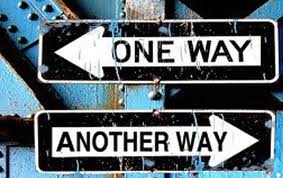
And although it sounds simple, it can transform your teaching. This “in the moment” reflection allows us to connect with our students and to consider what they are learning from their point of view. In doing this we begin to form a connection with our students and view them not as the object of blame, but as a human being to connect with, to teach, to show, to model for. And once this connection has been made it lays the groundwork for further teaching. These connections can also reach across the classroom as we identify models in others that are in the classroom as well. Modeling is about “noticing” and naming what it is that we notice. In this our students can then see that they too can notice and name.
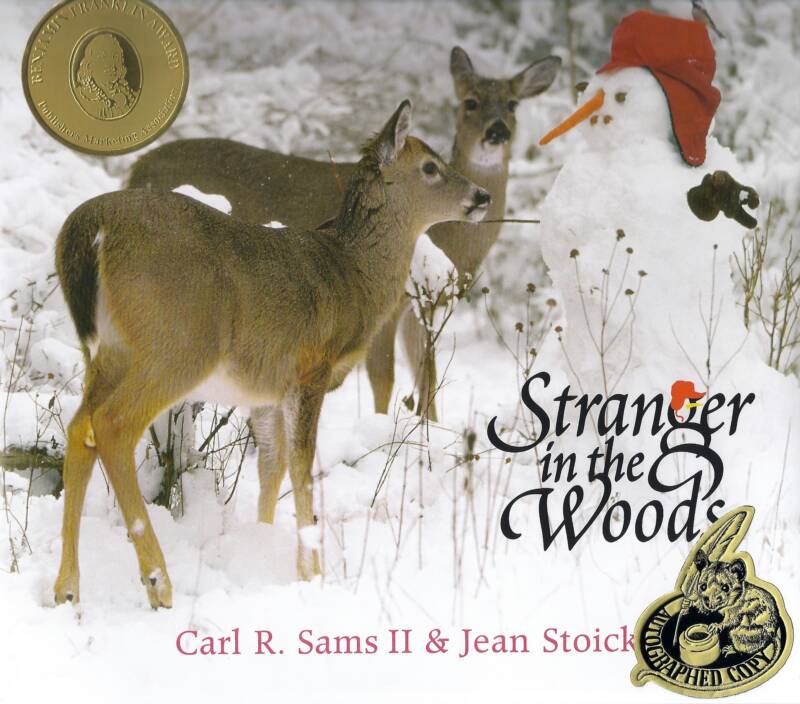
Toting Libba Moore Grey’s, My Momma Had a Dancin’ Heart, under my arm, I enter Emily Spear’s wonderful and familiar first grade classroom where I am greeted with hugs and an offer for one of those famous birthday cupcake that are handed to you with great love and grey grubby hands. I receive the confection’s love, knowing it will never get eaten and smiling at the gesture.

I settle into the comfy rocker and take a brief time to reconnect as they tell me about their latest ventures in writing. Voices ring all around me as they share their latest “sound” words, onomatopoeia the craft we worked on last time I was in. Three little girls get closer, asking about the pink necklace I am wearing, twirling it in their hands and marveling at its sparkle.
Taking this time to reconnect with these kids is a critical part of the teaching process. It only takes a few minutes, but in that time my words and actions show them I am interested in THEM. This gives me an advantage because I have re-established our working relationship and ideally trust and can then move into our writing time together.
I read aloud, knowing that I want to model Moore’s use of playfully hyphenated words as a craft the kids could name and experiment with. I stop and write some examples on the white board:
tip-tapping
song-singing
finger-snapping
We talk about these words and wonder why the author would use the hyphen. They quickly identify that it makes it into one word, makes the reader say the word more quickly and creates rhythm.
We then brainstorm a name for these words and the list consists of
1.describing words
2. two words in one
3. DASH-ing words.
It is democratically decided that DASH-ing words describe them most accurately because of the dash (hyphen) and use of the suffix ”ing” on the end of each word. Next, I ask them to go and try out some of the DASH-ing words in their own writing.
I first check in with Morgan, who seems to be struggling because she is not writing. Her hands are poised under her chin and her page remains blank. I sit to talk with her. I am wondering what is keeping her from writing. I ask her questions, but she just sits and looks up. Finally I ask if she just needs some time to which she responds, “Yea.” I leave and tell her I will check back with her. In my mind I am wondering if I am copping out because it was a flat and uninteresting conversation. I secretly hope that my decision to leave her and trust her is one that will work, but I never really know. What I do know is that was I was doing was not moving her along and so I make the choice to let her work on her own.
I move over to Nick, who also seems to be staring off into space. I ask him how he is doing. He responds, “I don’t know what to write.” In my head I am asking, what does he not understand? After a brief conversation I realize he does not understand what I had just modeled and that he needs further modeling. I am not upset that he is not working, I am curious about why he is not. I ask myself what is missing for him and what can I do to help this young writer to move forward? What else can I model for him? Is there another way in? I lead him back over to the white board and we leaf through the book again looking at the DASH-ing words. We finally realize together that he does not know how to start making his own word because it is not clear that the first word is often an object, a noun. And so I model another example asking him to name an object. He says pencil and I ask what a pencil might do. He responds that it writes. We work together and make it into pencil-scribbling because he liked that better than pencil-writing.
For others the playful word combinations take on a life of their own. Some kids come up with what we call Double DASH-ing Words” such as tweet-tweet-tweeting. Others begin lists and when I check back in with Morgan I realize that what was missing for her in that moment was think time. (phew!) She shares this poem with the class, telling us that she chose to write a poem because the book was like a poem.
Swish-swash
Slush-sliding
Icicles-banging
Against the long
White world
But the world
Is not always white
Wow! I just love the image of the long white world…
We all reconvened back to the carpet, shared our DASH-ing words and created a chart with all of the examples the kids had come up with, creating a classroom “model” that they could refer back to and add to.
I left the room, again humbled at the brilliance of these kids and just what they can do if given the time, space, place and a strong model of what is expected of them and in many instances, more modeling to help them move along in their writing.
In my work with these first graders and all of the students and teachers I work with as an instructor in the English Department at the University of New Hampshire’s Learning Through Teaching professional development program, I ooze passion for words and I do this on purpose. I talk about what I read, write and wonder. I show them first hand that literacy is not about school, it is about life and how we choose to live this life. I have my Writer’s Notebook and other sundry of books with me. It could be a couple of children’s picture books, the current novel I am reading, or more recently my ipad. Kids ask me about the ever-present essentials (appendages?) that I carry with me. They are curious and I can open them up and share small pieces of myself with them. It is an entry point for conversations about reading and writing.
When students see that we, as their teachers are interested in writing, reading books, articles, blogs, on-line periodicals, newspapers etc., they can “see” how we live each literate day. When we talk about a great book we found at a used bookstore or bring in our favorite children’s book, they can catch a glimpse of our lives beyond the four walls of school. And they begin to consider theirs as well. We model every day with our words, out behaviors and even what we carry.
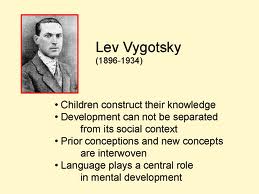
“There is a world in a word,” Lev Vygotsky wrote and it’s up to us to open up those worlds, and I am constantly thinking of new ways to open up those worlds, modeling at every step, whether that shows in what I carry with me, the conversations I have, I am the walking, talking lover of words and my students know this.
What do your students know about you and what do you model every day ?





















 Conversation Education