Let’s Simplify, Not Justify: In Defense of the ART of Teaching

“I have come to believe that a great teacher is a great artist and that there are as few as there are any other great artists. Teaching might even be the greatest of the arts since the medium is the human mind and spirit. “

                                                                                                 John Steinbeck

What is the art of teaching??

In the children’s book of the Three Questions, a retelling of the original story by Leo Tolstoy, a young boy is on a quest to find the answers to these three questions:

  1. When is the best time to do things?

    Image

    Photo Credit: kellykorenek.wordpress.com

  2. Who is the most important one?
  3. What is the right thing to do?

As Nikolai goes off to meet with the wise old tortoise to find the answers to his questions he discovers that when he is not searching for the answers, he actually finds them.   He rescues a mother panda bear and her baby from a terrible storm as the tortoise looks on and observes the boys actions.

Nikolai is still disappointed at the end of this ordeal because he is frustrated that he has not been given the answers.  The tortoise wisely tells him that his questions were answered through his actions.  He ends the story reminding the boy.

Image

Photo Credit: bookimagecollective.blogspot.com

 “Remember then that there is only one important time, and that time is now.  The most important one is always the one you are with.  And the most important thing is to do good for the one who is standing at your side.  For these, my dear boy, are the answers to what is most important in this world.  This is why we are here.”


This is why we are here and this is why I love to teach in a workshop because this kind of teaching and learning requires us all to be present.   These are the essential questions that matter in my teaching in the moment, an essential part of the “art” of teaching.   Keeping true to this art of teaching requires careful listening, intuition and improvisation on the part of every person in the workshop; most importantly, the teacher.  There is no guidebook to where you can check off what you are going to do because the truth is that you don’t know what you are going to teach until you are in that moment with that child.   Terry Moher, in her work on conferring refers to this as “teaching not knowing.”

Image

Photo Credit: wondergressive.com

 One problem is that there is so much noise and distraction in schools right now .  I would love for every person, administrator, parent, citizen and politician to go and just shadow a teacher for a day.  Yes, one whole day so that they can see first hand just what is being asked of teachers.  So much of what is deemed necessary is done so by others, it has become more about justifying every action, each student, their numbers, their percentages, their scores and less about “who” that student is and what is is they might need.

The distractions away from the simplicity of teaching our students are more numerous than you can even imagine.  There is a hurried frenzy that seems to buzz through so many schools.  Lost is the feeling of nurturing, slowness and taking each moment at a time.  Disappearing from early childhood classrooms are blocks, dress-up centers, imaginative play areas, sand tables and any element of play.  Teachers are more frazzled and students, if they buy in to this system, are as well.  The pressure to perform is on and yet…to what end?

Image

Photo Credit: magazine.byu.edu

When I model lessons in classrooms one of the most common responses is, “that was great, BUT, I don’t have that kind of time to allow kids to think things through.”.  I would argue that we don’t have time NOT to let them think!!  And in this I believe that we all must make choices and for me it is as simple as asking myself and grounding my teaching in these 3 questions, When is the most important time?  Now.  Who is the most important one?  The one I am with.  And what is the right thing to do?   It is to do good for the one at my side.  What if we just made it that simple?  What if that was at the very CORE of what we were doing in all of our schools with all of our kids?

More time to simplify.  Less time to justify.

It just simply makes sense to me.

Image

Photo Credit: http://www.etsy.com

The Joke is on You

“Humor, like hope, permits one to focus upon and to bear what is too terrible to bear,” Harvard psychiatrist George Vaillant, writes in “The Wisdom of the Ego.”

“Why did the cookie go to the doctor’s office?”

“Because she was feeling crummy!”

“Do you get it?”

My 4 year old daughter, Emma loved to tell this joke when she found herself in new strange hospital situations.  Humor is one of those incredible gifts that we all have for making human connections.  This was her way of taking some kind of control over her illness and she loved to tell this joke over and over.  The delight in her eyes in seeing who “got it” was sheer heaven, thinking she was so clever and loving the joke over and over herself.  There was something in this joke  she could see that made her enjoy it every time she told it.  She “got” it and was always sure to ask, “Do you get it?”

The getting it is like the ultimate secret that she is privy to; the delight is making sure that everyone is able to enjoy the magic of the punch line in the same way as the teller.  And there is an art to telling a good joke and the feedback is instant…did you get a laugh or not?  You can always tell those who get it as an expression of knowing crosses their faces, and then there are those that laugh to be polite and those who are laughing as they are still trying to figure it out.  We have all been there, at one end or the other and of course the worst place to be is to be the jokester that gets no laughs at all.  It is a tough lesson, but one that you can do something about right away.

In the classroom one part of our morning meeting was joke telling. There were some rules surrounding the telling.  First the joke had to be appropriate for school.  Yes, of course there were those who pushed the limit, but for the most part kids were able to discriminate between those that would be acceptable and those that would not.  Just trusting them allowed them the freedom and the responsibility to make good choices. 

The second rule was that you had to practice the joke at least three times and that you had to get a laugh at least one or two of those times before volunteering for morning meeting.  This was for two reasons; one was to work on the delivery and to work on making it funny.  We would talk about what made a good joke and what didn’t.  We talked about the emphasis being on the punch line and how to deliver an effective punch line.  These could be classified in our  under reading with expression, the importance of audience and comprehension studies.  (How is that for meeting standards?)  It was a clear test of whether the child understood the joke or not based on the reaction of the audience.  If it was not funny we worked together as a group to think about what could be done with the joke to make it funnier.  This is revision in real life.  Then the child would take his or her newly revised joke out into the world and wait until it was funny enough to bring it back to the class. 

Everyone had ownership of the joke by then and often there would be many versions of the same joke told over and over again.  This gave us time to talk about the fact that authors do this all the time.  Once someone has a great idea then other authors try to take the basic idea and make it their own.  We talked about how this often happened with jokes and that jokes changed regularly in their details because joke-telling is typically an oral form of literacy that is passed on from person to person.  The game of telephone is a great way to show how things change based on the oral telling and that people all hear things differently.  

I would always begin the year telling a joke to model how to tell a joke.  I would overemphasize the telling in order to be able to point out to the class just what it was I was doing and that there are things that you can do to tell a good joke.  The joke I told was about a chicken that goes into the library to get a book.  He goes up to the librarian and says, “Book, book book”.  This is said like a chicken saying bok, bok, bok with a high voice.  (This is hard to put into writing!)  The chicken takes the book and returns within 10 minutes shouting the same thing to the librarian, “Book, book, book”.  The librarian thinks this is strange but gives the chicken another book.  Sure enough if you have heard enough jokes you know that this chicken is going to be back in no time.  This structure allows us to look at it closely and see there is predictability in jokes and that if you wanted to make up your own joke then like fairy tales, the magic number of 3 often appears.  Well, the chicken magically does show up again but this time the librarian wants to know what is going on, knowing the chicken could not have read either of those books so quickly.   She gets on her coat and decides, after giving the chicken yet another book, to find out what is going on by following the chicken.  The chicken leaves the library, heads up a big hill, out into a field and through the forest to a clearing.  (Again here is a way a leading the audience into what we know is going to be the punch line.  I talk about slowing down here and that when I do the audience almost leans in waiting, waiting, waiting and thinking get to the punch line already!)  At the edge of the clearing is a pond.  The chicken walks over to the edge of the pond where a frog is sitting.  The chicken pulls out the book and shows it to the frog.  The frog looks at it and promptly replies, “READ IT. READ IT”.  Of course this is said like a frog instead of ribbit it is read it.  These slight changes in voice are very important because without them the joke is just not funny!  So, okay you are thinking this is a dumb joke, and it is.  It is also, however an excellent model for kids because it is clean and it contains so many elements of a good joke.  This gets kids thinking about their own jokes and jokes they have heard in the past.  Often one of the hardest things to do is to just remember the joke.  I tell the kids that having one or two good jokes in your pocket is a great way to be in a new crowd.  Everyone loves a good joke.  But is has to be a GOOD joke.  A bad joke won’t get you very far.  This also encourages kids to think about themselves in social settings and to think about when it is appropriate to tell a joke and when it is not.

“Jokes compact the elements of storytelling into bite-sized mini-narratives. They are not just funny. For writers and editors, they are models that can help teach storytelling” Chip Scanlon, the Poynter Institute.

 Joke telling is a form of storytelling; something that we can use to help our young  readers and writer’s to see the elements of a story in a very compact version.  To tell a good joke the teller must prepare the reader by setting the stage introducing main characters and setting, the chicken, the librarian and the library.

Next is to provide some kind of background for the reader, in knowing the structure of many jokes, one is sure that the chicken will be coming back at least a couple more times.  Also using the voices allows for the characters to know more about them.  She is a female chicken with a high voice; the librarian is suspicious about a reading chicken from the beginning.

The joke relies heavily on creating scenes that the reader can follow.  The chicken comes and goes, comes and goes and does these actions very quickly, leading the librarian to become even more suspicious.

A good joke creates suspense, engaging the reader as they sit and listen, leaning in to find out what in the world is going to happen next and often this is done through conflict.  The conflict here is for the librarian who is miffed that this chicken keeps on coming back without having read a book!

Next it builds to a climax and a clear resolution.  We know that when the chicken leaves and the librarian follows that we are going with her and that we will find out instantly just what the chicken is up to.

Finally, is that wonderful element of surprise, the “aha” moment where we wonder how we didn’t get it all along.  It is funny that the chicken is trying to get the frog a new book and so we laugh with this quick resolution and twist that we can visualize as being very funny.

Derek was a small fourth grader who had a hard time fitting in.  Not only was he smaller than all of his classmates, but also he was somewhat goofy looking and gangly.  He had a hard time finding his place in the world and was often seen getting into it with kids.  If there was trouble, then Derek was in the middle of it.   In the classroom he struggled.  As a reader he struggled the most.  For Derek, this opportunity to tell jokes, this place where being the class clown was encouraged was his place to shine.  By the end of the year he had found every joke book in his local area.  I will never forget the day he showed up with a book the size of Webster’s heaved up under his arm.  It was titles “A Million and One Jokes.”  Derek would sit for hours pouring over this book in search of the perfect joke.   It was a ridiculous book for him as it was laden with jokes that were so out there that I didn’t get a lot of them.  Many of them politically motivated from cultures all over the world.  The schema one would have to have for many of these jokes would put Google to shame!  The print was as small as anyone could imagine, but he continued to read over it, searching for that one joke that he did get!  And he would know when he would get it.  You want to talk about serious close reading.  He was getting to know himself as a reader through this insurmountable task he had set for himself.  He would carry that book everywhere…and did I mention it must have weighed 25 pounds??

Image

Photo Credit: blogs.women24.com

 At first he would tell jokes that none of us got.  Eventually, though he was able to work on finding a good one, practice it and in no time Derek became one of the classes favorite joke tellers.  This was his forte’.  This was his place to find comfort and acceptance for who he was.  This also gave him a very real reason to read and to read for meaning and with purpose.  It also gave him a real reason to write as he then went on to write his own jokes.  At morning meeting it would be Derek that everyone wanted to tell a joke.  Each day we had time for three jokes.  On days when nobody else would volunteer, they would all chant Derek’s name and he would get up and do his own version of a Leno monologue telling joke after joke.  He was good.  I don’t know where Derek is today, but I have a hunch that someday I may see him on stage at the Laugh Factory!

 We need to value children, for who they are, not who we want them to be.  We need to look at each child and find the strength inside of him.  Derek could also easily have dropped out of school.  It was not a place that he “typically” succeeded and joke telling allowed him to have a place in our classroom community for who he was.   Don’t get me wrong.  This was not that all magical cure and Derek continued to struggle each and every day in the classroom and on the playground, but offering this as an option allowed for Derek and other kids to use their humor in an effective and constructive way.  It also allowed Derek to take some of the painful anger in his life and poke fun at that as well.  Doris Kearns Goodwin writes in Team of Rivals, a study of Abraham Lincoln where she focused on “the vital role humor and storytelling played in Lincoln’s melancholy personality.”  , “He laughed, so he did not weep.  He saw laughter as the ‘joyous, universal evergreen of life.’  His stories were intended ‘to whistle off sadness.’” 

 We should each laugh as many times in the day as we can.  I remember reading somewhere that we use so many more facial muscles to frown than to laugh…therefore frowning causes more lines in the wrinkles of life.  So heck, let’s laugh or in the end…the joke is on you!!



The Power of Modeling, Connection, Trust and Play

When my daughter Emma was three, she was playing happily in her corner of the kitchen where I had created her own little “house” complete with a wooden hutch, oven, highchair and cradle for her own dolls.  She spent hours creating her own reality of being a Mom.  One day I was about to wander in when I stopped and peered around the corner (yes mothers do spy!) and as I watched her rock her baby and look into her eyes adoringly, one of those warm washes of love and perfection poured over me.  It was a moment that I wanted to sink into and enjoy.

Emma took her baby, placed her into the high chair and began feeding her and gently said,   “Eat, dammit.  Eat your food, dammit.”

IMG_0012

Emma

I stood there in horror, unable to move and continued to watch.  After the lovely meal, Emma placed her baby into the cradle and in a very nurturing way, covered her up with the blanket and said, “Now time to go to sleep, dammit.”

Again, that word hit me, smacked me right across the face and left a sting.  What had happened to my perfect mother moment?

“Emma”, I asked, “What are you doing?”

“Putting my baby to bed.  She is tired.”

“I see that.  I heard you use a “D” word that I was wondering about.”

“A D word?” she contemplated.  “Oh, Dammit?”

“Yes that is the one.”

“Oh, that is my baby’s name Momma.”

Silenced again.

The power of modeling…

I have been known to tell this story when working with teachers to show how modeling is one of the most powerful tools we have and that we can use it to show our literate lives for our students every day.  It is what we do, not just what we say.  We need to talk about what we read, write and wonder; to show them first hand that literacy is not about school, it is about life and how we choose to live  this life.  When students see that we are interested in writing, reading books, articles, blogs, on-line periodicals, newspapers etc., they can “see” how we live each literate day.  When we talk about a great book we found at a used bookstore or bring in our favorite children’s book, they can catch a glimpse of our lives beyond the four walls of school.  And they begin to consider theirs as well.

Bridging the gap between “school” reading and “life” reading is critical.  As an instructor in the English Department at the University of New Hampshire’s Learning Through Teaching professional development program, I have the privilege of going into classrooms and supporting teachers in their coursework.  Every time I enter a classroom I have my Writer’s Notebook and other sundry of books with me.  It could be a couple of children’s picture books, the current novel I am reading, or more recently my Ipad.   Kids ask me about the ever-present essentials (appendages?) that I carry with me.  They are curious and I can open them up and share small pieces of myself with them.  It is an entry point for conversations about reading and writing.

When I am modeling a lesson for a teacher or group of teachers, I start by talking to the class about my passion for reading and writing; my excitement over a new author I have found, what I am working on myself in writing or how a word looks or sounds.   And it is authentic.  I love words.  I love to read and write and when kids feel that from me, they too want to be a part of that energy.  It is infectious and it is not hard to get them to buy in as I ask them to repeat a word with me, a nice long juicy word like onomatopoeia, that they can take home with them and share with their families. “There is a world in a word,” Lev Vygotsky wrote and it’s up to us to open up those worlds.

My-Mama-Had-a-Dancing-Heart-9780531071427

Toting Libba Moore Grey’s, My Momma Had a Dancin’ Heart under my arm, I entered Emily Spear’s wonderful and familiar first grade classroom where I was greeted with hugs and an offer for one of those famous birthday cupcake that are handed to you with great love and grey grubby hands.  I received the confection’s love, knowing it would never get eaten and smiling at the gesture.

I settled into the comfy rocker and had a brief time to reconnect as they told me about their latest ventures in writing. Voices rang all around me as they shared their latest “sound” words.   Three little girls got closer and asked about the pink necklace I was wearing twirling it in their hands and marveling when I told them it was a crystal.  “ooooh…you must be rich!”.  I explained it was a gift from my sister and that SHE was the rich one because she had ME for a sister.  They giggled.

Taking this time to connect with these kids is a critical part of the modeling process.  It only took a few minutes, but in that time my words and actions showed them I was interested in THEM.  This gives me an advantage because I have re-established our working relationship and can then move into our writing time together.  I am reconnecting and we are exchanging trust in these small moments.

I read aloud, knowing that I wanted to model Moore’s use of playfully hyphenated words as a craft the kids could name and experiment with.  I stopped and wrote some examples on the white board:

tip-tapping

song-singing

finger-snapping

We talked about these words and wondered why the author would use the hyphen.  They quickly identified that it made it into one word, made the reader say the word more quickly and created rhythm.  For each dance in the book I asked for a volunteer to get up and “perform” each season’s ballet.  They were eager to move and the movement brought this story to life for all.

We then brainstormed a name for these words and the list consisted of

1.describing words

2. two words in one

3. DASH-ing words.

It was democratically decided that DASH-ing words described them most accurately because of the dash (hyphen) and use of the suffix ”ing” on the end of each word.  And while some may be thinking this is not correct it is playful and something the kids will remember.  Let’s just call it poetic license!  Next, I asked them to go and try out some of the DASH-ing words in their own writing.

And the play began.  Some kids came up with what we called Double DASH-ing words such as tweet-tweet-tweeting. Morgan, who I thought was struggling was left to her own thinking for some time and arrived at my side with this incredible poem:

Swish-swash

Slush-sliding

Icicles-banging

Against the long

White world

But the world

Is not always white

Wow!  I just love the image of the long white world…

We all came back to the carpet, shared our DASH-ing words and created a chart with all of the examples the kids had come up with, creating a classroom “model” that they could refer back to and add to.

I left the room, again humbled at the brilliance of these kids and just what they can do if given the time, space, place and a  model of what is possible.   Trusting our students.  What a concept and something we can all do, Dammit!!

Ramblings on Lobsters, Testing, Brownstones and Poetry over the John

One sticky New Hampshire July summer evening while hosting the annual lobster and clamfest for our UNH Summer Literacy Institute, Donald Murray was in the house.  Now you must know that to have Don in my house was an honor.  He was a man I had admired since I was an undergraduate and then here he was all hot and buttered fingers and faces on the back deck with the rest of us.

Image

Donald Murray

And then it happened.  He walked right up to me and asked, “Who wrote the poem, ‘Over the John’?”  I froze.  What?  The ultimate test had come my way and as my face heated up and I began to sweat, I flipped through the suddenly empty files in my brain, wracking it for any poet I could think of.  The words, who wrote Over the John? Over the John?, Over the John?, reverberated in my head.  As I agonized I realized he was staring at me…waiting for an answer and so finally, in the ultimate defeat I simply admitted, “I don’t think I know that poem.”  At which point Donald Murray let out a larger than life guffaw of a laugh and re-stated, “No, the poem over the john in the bathroom, who wrote that?”

And in my state of stunned stupidity it still took me a moment to actually realize that he was not testing me at all but simply asking me a question to which I knew the answer.  “Oh!  My daughter wrote that in 3rd grade.”  To which he responded that she was quite a little writer.  And then he left me there in all of my shame to melt in my sense of stupidity.  I hate tests.  I have always hated tests and this was a self-imposed one.  The pressure makes me stupid.

Image

The “actual” poem over the john!

So what if we are all made stupider by tests?  And if that is not the case then what about the some of us that are?  I will admit it; I am one of the worlds worst test takers.  When I see a question and then the 4 possible answers I try to think about the “right” one and while one might seem “more” or “less” right, I get stuck on imagining the possibilities of what “could” or “could not” be right.  I see grey in a world of black and white.  I stammer in the ideas that the test is probably trying to trick me and so I get obsessed with thinking about outwitting, outplaying, and outlasting the test.  Yes, I want to be the sole Survivor, but I get too caught up in the game and then I simply freeze and ultimately I am blindsided and voted off the island.  I lose.

This past weekend in NYC at Barnard (see previous post as well as here:  Totalwebcasting.com/live/columbiatc/20130504/ for live on streaming) was eye opening on so many levels.  It made me wonder about so many things…many of which have to do with testing and beyond.  I heard stories, saw grown men weep, and felt passion so great it was palpable.  I met people that I have only “known” on-line for the first time in person.

I was welcomed into Renee Dinnerstein’s (See her blog here:  http://investigatingchoicetime.com/)   home in Brooklyn…our first face to face meeting ever and she hosted me for 2 nights.   We talked for all the time I was there.  She introduced me to her husband, Simon and his incredible works of art that line their Brooklyn Brownstone and beyond.   She took me to the public schools of NYC, gave me history of the area, of her life, the schools, the system.  We visited an exhibit at the Brooklyn art museum by Anatsui, amazing!!  Thank you Renee for your kind hospitality and for bringing together great minds for brunch where I also met Vicki Vinton, (See Vicki’s blog here: http://tomakeaprairie.wordpress.com/)  on-line colleague, for the first time.   But most of all I learned that I am not alone in this endeavor.  There are so many of us out there who are so discouraged, outraged and ready to take action.

Image

Tomasen and Renee at Anatsui exhibit

And while I was hoping to have a great post synthesizing the weekend, I realize I still have a great deal of processing to do.

And so as my 16-year-old Zachary heads out the door for his annual NECAP testing this morning he seems to be fine with it.  Both of my kids are better test takers than I am.   In fact, he enjoys the testing perks…early senior privileges and the fact that teachers are not allowed to give homework during testing because they want students performance to be stellar.  (Is it just me or can you see how ironic this is?)  Our schools are ready and willing to help students get more sleep FOR the tests, but not for everyday schooling.  Sometimes I think I am crazy, or just looking for answers in my brain that are just not there.  Am I asking the right questions?  That is the real question, or am I just searching for something over the john?

You tell me.

sols_6 (2)

The HOPE Line is Open and Ready for Business, Honoring One Person’s Experience at a Time

I always tell people I have the best job in the world.   I have autonomy.  I am respected to make sound decisions based on the needs of my students.  I have choice and a voice that I am encouraged to use.   I have time to create lessons, facilitate discussions, envision graduate courses and then execute them with amazing professionals.  I am trusted.  This gives me hope.

Image

I wish every teaching professional could say the same thing.  My work is centered in the idea that we learn by doing and so whatever I am teaching or doing I engage in myself first be that a reading assignment, a writing assignment or something that I will be teaching to students.

Ultimately it all comes down to purpose: the why and the how of the whole thing.  And yet I find myself fighting for sites in which to work.  Moving upstream against a current that has such great momentum that is would seem there is no hope.  Imagine that not many years ago our Learning Through Teaching graduate level course were in over 30 schools in the area from New Hampshire, Massachusetts  and up into Maine.  We had a great many talented  consultants and our outreach was far and wide.

Our model was “in vogue” as it empowered teachers and brought them together within their own schools for professional reading, writing and dialogue.  Slowly over the years, the demand has not lessened but the funding has dried up.  The professional development of our teachers is one of the last things on a long list of budget demands.

Image

But there is always hope.  In fact I saw it in my class just last week.  This group is a unique group of educators who meet monthly to discuss a common professional reading in my home.  They receive graduate credit for their work, but more than that they receive support in a way that they cannot find elsewhere.

One teacher actually commented that she found herself wanting to be careful in talking with other teachers at her school about our course because they did not have the same network of support.  So on the one hand she wants to rave about what is a critical part of her ongoing professional development, but on the other hand she feels she cannot.

Another teacher was literally brought to tears as she expressed how lonely and isolated she was feeling in her own classroom and frustrated with the lack of thinking and keeping students in mind.

Image

A MUST read for all.

But, these teachers, after reading Readicide by Kelly Gallagher, immediately shifted their focus on reading to include the love of reading and celebrating that with students.   And you might think, really?  Isn’t that just a given?  And the answer is not anymore!!  This shift brought them back to themselves and who they know they are as educators.  And their students responded in kind coming into school proclaiming,

“I finished my book last night and it was amazing!!  What should I read next?”  And we, together as a group, celebrated these moments.

And in that one line there is hope!  Can you see it?  Just a glimmer?  Honoring One Person’s Experience. Let’s follow that light.  We are strong.  We know what is best for our students and if we can ignite a sense of readership, writership and thinkership among them then we are slowly creating a new genre of students in the name of those who care, those who want to think, those who want to read, those who want to write and will…

Image

And just like those Bostonians who ran towards the disaster and renewed our faith in human kind, let’s do the same for education kind.  So in this spirit please share your “one liners” of HOPE from your students, administrators, parents whatever.  What is being said to keep the hope alive?   The HOPE Line is open and ready for business, Honoring One Person’s Experience at a time.  What is yours?

Photo Credits: www.hopeinspiredministries.org,mylifelonglearningcorner.blogspot.com,info.live58.org –

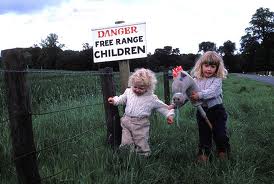
All in Favor of Free Range Children, Say Bok!

Our prime purpose in this life is to help others. And if you can’t help them, at least don’t hurt them. ~ Dalai Lama

Last year my sister ordered 16 baby chicks in the mail so that she could have her own eggs and know exactly where they came from.  Her goal: to raise happy, healthy free range chickens fed the top of the line organic food.  No antibiotics or cheap genetically modified corn products for these chickens au natural!

She loves her chickens.  When they first graduated from the warmly lit crate in the house to the coop she would go daily for “play time”, sit with them and hold them and even talk to them.  Her thinking… happy, loved chickens will eventually produce happy healthy eggs.  Can you say “crazy chicken lady?”  But truly what she was doing really made so much sense!!  Crazy or not!

Image

Sister Lisa with one of her “Goldies”!

There are more and more people ordering baby chicks to free range them.  There are many movements to eat locally and small farms seem to be sprouting up everywhere you look.  We are urged to get back to our roots and consider where our food comes from.  We know that GMO’s (Genetically Modified Organisms) are taking over all of our food sources.  These modifications involve the mutation, insertion or deletion of genes to produce something more quickly, more efficiently and to be adverse to pests or to improve the shelf life of a particular food.  What is happening is we are creating foods that our bodies do not recognize and that we cannot process.  The results are out there.  Just look around and see more obesity than ever in history.  We are farming with our heads and forgetting our hearts and we are hurting our food sources and ultimately ourselves.  So the movement is to move closer to home, closer to the heart.

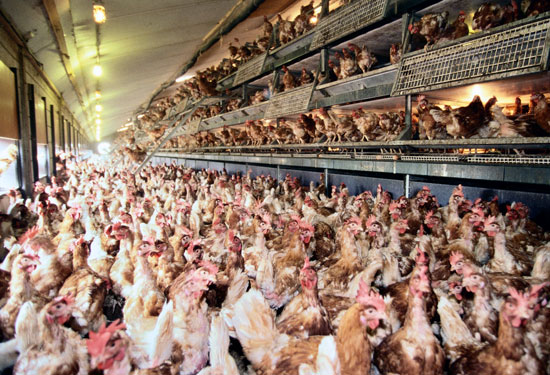
Free ranging is defined where animals are ”permitted to graze or forage rather than being confined to a feedlot.”  And if you have not seen those feedlots then it is well worth your while to check them out.  There are various documentaries that show how these poor chickens are raised to mass-produce and it is completely inhumane.  (See King Corn, Farmageddon or Food Fight)

Image

And I would argue here that what we are doing to our kids in schools is equally inhumane.  The idea of kids mass-producing great numbers on sterile tests is so far away from why we are here on this earth and what really matters.  It is education without heart.  It is education without soul.  It is education without wonder, curiosity and surprise.  It is all about the brain.  We are intellectualizing ourselves right out of ourselves. We need heart AND mind!!

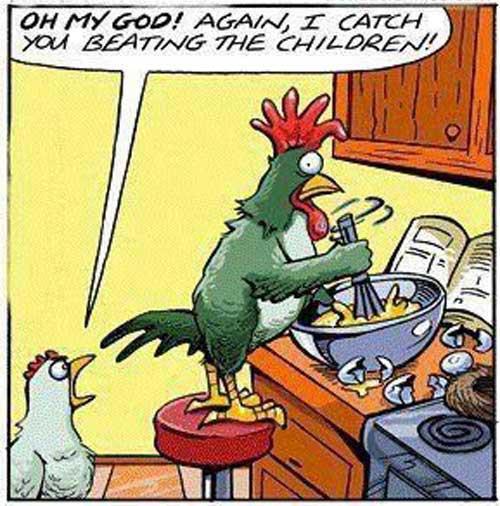
While I am a proponent of competition in some areas of life, this notion of competing has become the GMO’s of education. Performance is all that is looked at and yet what do we need for our kids to perform?  They need just what the chickens do!  They need opportunities to be free and think and make decisions and to fail and ultimately they need their own version of “the crazy chicken lady”.  Someone who is so dedicated to their needs and the raise them as well-rounded and happy chickens!!  There are so many crazy chicken ladies (and men) out there dying to do their jobs but are less and less able to do so.  We are hurting our kids and our teachers and everyone else involved with the sole purpose of production.  It is a business model that is being taken to the extreme.

Image

If all we ask of our students is to perform then we are going to crack and break them one precious egg at a time.  And dare I even say, what happens when they don’t perform?  Will we then consider genetically modifying them to fit in?  Call me crazy, but I think this has already begun with the increase of kids who are medicated in our schools for ADD and the likes.  Why?  So that they will conform to the feedlot of corporate education.

Image

Hmmmm…and so I imagine a world of free -range children…where schools are a place where hearts and minds  are permitted to graze and explore instead of being confined to the feedlot of corporate America.  What a beautiful fantasy this is.  Can you even imagine?

It makes me think of my dear friend and colleague, Louise, who tells a great story about teaching preschool in the 70’s in northern New Hampshire.  On any given day she and her co- teachers might decide it was a nice day for a field trip.  So they would load up all the kids in the VW bus, leave a note on the door for parents as to their whereabouts and head off to the local mountain or lakeside or whatever their fancy.  For me this is the epitome of free range education and something that would never happen today.

The corporate takeover in education is daunting.  The more people and parents and friends and anyone  I talk to outside of education don’t even know what is going on.  Even those of us in education are often left helpless with the enormity of the situation and just how enmeshed it all is. I just want to say BOK in favor of free range children and baulk at these takeovers and say enough is enough.   Will you Bok with me?  Just say Bok!!

I love eating the eggs from my sister’s chickens.  There is something so perfect about it…I mean even my son when he had his first taste of these eggs exclaimed, “these are the best eggs in the world!!”  And they are.  They are not like supermarket eggs.  They are all different shapes and sizes and the color of them is glorious.  A deep orange that screams with great energy, love and hope!

I know, I know…all that in just one egg!  But you know…it is all in that one egg.  The love, nurturing, heart, soul and respect for the production of that egg that goes on to nurture those who eat it and so on.  The same can be said of taking care of and nurturing our kids in schools…one egg at a time. Bok Bok!!

“Our prime purpose in this life is to help others. And if you can’t help them, at least don’t hurt  “~ Dalai Lama

Photo Credits: www.slow-life.co.uk , www.mamamia.com.austrategicoutcomesgroup.com