THINKING is Passionate, Purposeful and Playful

 Lately I have been thinking about what creates real readers and writers.  Much of this thinking comes out of the work I am doing in creating and planning a graduate course I am teaching this summer called:  Passion, Purpose and Play: Creating Real Readers and Writers. 

(See here if you are interested in one of our UNH Summer Literacy Institute courses as we still have some openings.) http://www.unh.edu/english/media/pdfs/Archive%20NHLiteracy/2013SummerInstbrochure.pdf

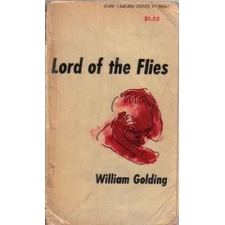
 I think back…what made me a reader?  A writer?  And there are sharp moments in time  that changed my thinking and the way that I saw myself forever.  One of those moments was when I was a sophomore in High School and my teacher was Mr. Dave Krauss.  We were reading Lord of the Flies.  Nothing revolutionary as many high schools today are still doing the same thing and reading many of these same classics some 30 years later.  But something in this experience for me was different.

I recall heated class discussions and at one point I even remember my face flushing to a bright crimson red as I stood up and shouted out,   “That is NOT fair!”  The entire class stopped and looked back at me and Mr. Krauss said, “Tomasen, I need to see you after class.”  I was mortified.  As a resident “good girl”, always sitting in the back of the class, don’t make any trouble kind of student, I felt as if my face might pop as it got even redder and my eyes begin to sting with tears.

Image

Photo Credit: esioh.com


After class I walked up to Mr. Krauss’s desk full of shame and defeat he asked me to sit down and asked me what was so upsetting.  Our discussion started with the idea of fairness and he assured me that “nothing in life was fair”.  I argued that life should be.  He did not disagree but talked about how there would be merit to thinking about things not in terms of fairness, but in terms of how each individual person is in this world.  He didn’t yell at me.  I didn’t get in trouble.  In fact, it was the opposite.  He encouraged me to speak my mind more frequently and the he welcomed my thoughts and ideas just like everyone else’s.  For the first time in my life I realized that perhaps I had something to say “in class”.  This was huge for me.  My thinking mattered for the first time in my entire school career.

Image

Photo Credit: Facebook

Fast forward 30 plus years to where I am planning for this course and out of nowhere jumps into my hands the original copy of Lord of the Flies that I read in High School.  For the life of me I didn’t remember ever even having it, and yet here it was.  The cover looked outdated and as I opened the book the spine cracked with a pop as the old book cardboard smell wafted into my head.  What was revealed inside was sheer magic. 

 Marked in red pen and some pencil and then some blue pen was MY thinking as a sophomore in High School.  Words and phrases were underlined and in the margins were the words, authority, changes in attitude, role of society rules?  It had never dawned on me that perhaps the reason this book stuck with me, that this experience was one of great magnitude might also have been because I was able to actually WRITE in this book and keep track of my thinking.
Image 

I wish I could remember the circumstances around this annotating.  Was the school getting a new set because these were worn out?  Was this common practice?  Not that I remembered.  What did Krauss know that nobody else did?  And as I looked at the red ink I was instantly transferred back to remembering the actual red pen, the one that I used to use in my practice teaching in my bedroom.  “The” red pen of authority.  It was old and clear and the ink was clotty.  As I looked at my own handwriting I could recall moments of writing in this book and feeling so “grown up”.  Grown up in a way that made me feel smart.  I recall writing things just because I could even if they were not great thinking.  I loved the act of writing in this book!!  I don’t remember doing this again until college and again the nostalgia of marking and writing in between and around the lines makes me feel giddy! 

Image


So could it be that something as simple as annotating a text is playful and inspires passion and great purpose?  These words, in our schools, are not in vogue.  It is rare we talk about the passions, the purposes or the play anymore.  And while I have always hated the red pen as a student and teacher of writing, it was this old crimson  that recorded my thinking and allowed me to participate in discussions that made me a real reader with authority.

 It was during this course that I decided I would be an English major.  I wonder if Mr. Krauss understood the power of what he was creating for me as a student in the name of passion, purpose and play?  And underlying all of these “p” is thinking.  Thinking is fun!  It promotes passion, creates purpose and is playful and discovering one’s own thinking is priceless.

Image

Photo Credit: jackgallery.wordpress.com


I would love to find Mr. Krauss.  The last I heard of him he was working at the Admissions office at UNH and when I was a student I visited him.  He has long been gone and I have no idea where he ended up.  As a fellow educator I wish he could read this and understand just what he did for me and how it created the path that I am still on…one that is still seeking equality.  One who still stands up, turns bright red and shouts, “That’s NOT fair” regardless of the lessons learned years ago that we live in an unfair world.

Somebody’s gotta do it!

It’s only fair.

Think about it.

 

The Joke is on You

“Humor, like hope, permits one to focus upon and to bear what is too terrible to bear,” Harvard psychiatrist George Vaillant, writes in “The Wisdom of the Ego.”

“Why did the cookie go to the doctor’s office?”

“Because she was feeling crummy!”

“Do you get it?”

My 4 year old daughter, Emma loved to tell this joke when she found herself in new strange hospital situations.  Humor is one of those incredible gifts that we all have for making human connections.  This was her way of taking some kind of control over her illness and she loved to tell this joke over and over.  The delight in her eyes in seeing who “got it” was sheer heaven, thinking she was so clever and loving the joke over and over herself.  There was something in this joke  she could see that made her enjoy it every time she told it.  She “got” it and was always sure to ask, “Do you get it?”

The getting it is like the ultimate secret that she is privy to; the delight is making sure that everyone is able to enjoy the magic of the punch line in the same way as the teller.  And there is an art to telling a good joke and the feedback is instant…did you get a laugh or not?  You can always tell those who get it as an expression of knowing crosses their faces, and then there are those that laugh to be polite and those who are laughing as they are still trying to figure it out.  We have all been there, at one end or the other and of course the worst place to be is to be the jokester that gets no laughs at all.  It is a tough lesson, but one that you can do something about right away.

In the classroom one part of our morning meeting was joke telling. There were some rules surrounding the telling.  First the joke had to be appropriate for school.  Yes, of course there were those who pushed the limit, but for the most part kids were able to discriminate between those that would be acceptable and those that would not.  Just trusting them allowed them the freedom and the responsibility to make good choices. 

The second rule was that you had to practice the joke at least three times and that you had to get a laugh at least one or two of those times before volunteering for morning meeting.  This was for two reasons; one was to work on the delivery and to work on making it funny.  We would talk about what made a good joke and what didn’t.  We talked about the emphasis being on the punch line and how to deliver an effective punch line.  These could be classified in our  under reading with expression, the importance of audience and comprehension studies.  (How is that for meeting standards?)  It was a clear test of whether the child understood the joke or not based on the reaction of the audience.  If it was not funny we worked together as a group to think about what could be done with the joke to make it funnier.  This is revision in real life.  Then the child would take his or her newly revised joke out into the world and wait until it was funny enough to bring it back to the class. 

Everyone had ownership of the joke by then and often there would be many versions of the same joke told over and over again.  This gave us time to talk about the fact that authors do this all the time.  Once someone has a great idea then other authors try to take the basic idea and make it their own.  We talked about how this often happened with jokes and that jokes changed regularly in their details because joke-telling is typically an oral form of literacy that is passed on from person to person.  The game of telephone is a great way to show how things change based on the oral telling and that people all hear things differently.  

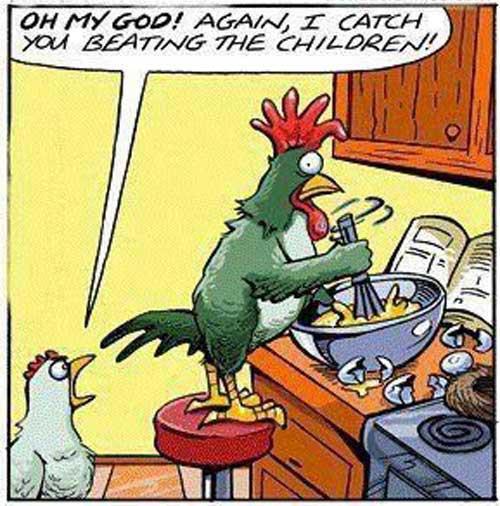
I would always begin the year telling a joke to model how to tell a joke.  I would overemphasize the telling in order to be able to point out to the class just what it was I was doing and that there are things that you can do to tell a good joke.  The joke I told was about a chicken that goes into the library to get a book.  He goes up to the librarian and says, “Book, book book”.  This is said like a chicken saying bok, bok, bok with a high voice.  (This is hard to put into writing!)  The chicken takes the book and returns within 10 minutes shouting the same thing to the librarian, “Book, book, book”.  The librarian thinks this is strange but gives the chicken another book.  Sure enough if you have heard enough jokes you know that this chicken is going to be back in no time.  This structure allows us to look at it closely and see there is predictability in jokes and that if you wanted to make up your own joke then like fairy tales, the magic number of 3 often appears.  Well, the chicken magically does show up again but this time the librarian wants to know what is going on, knowing the chicken could not have read either of those books so quickly.   She gets on her coat and decides, after giving the chicken yet another book, to find out what is going on by following the chicken.  The chicken leaves the library, heads up a big hill, out into a field and through the forest to a clearing.  (Again here is a way a leading the audience into what we know is going to be the punch line.  I talk about slowing down here and that when I do the audience almost leans in waiting, waiting, waiting and thinking get to the punch line already!)  At the edge of the clearing is a pond.  The chicken walks over to the edge of the pond where a frog is sitting.  The chicken pulls out the book and shows it to the frog.  The frog looks at it and promptly replies, “READ IT. READ IT”.  Of course this is said like a frog instead of ribbit it is read it.  These slight changes in voice are very important because without them the joke is just not funny!  So, okay you are thinking this is a dumb joke, and it is.  It is also, however an excellent model for kids because it is clean and it contains so many elements of a good joke.  This gets kids thinking about their own jokes and jokes they have heard in the past.  Often one of the hardest things to do is to just remember the joke.  I tell the kids that having one or two good jokes in your pocket is a great way to be in a new crowd.  Everyone loves a good joke.  But is has to be a GOOD joke.  A bad joke won’t get you very far.  This also encourages kids to think about themselves in social settings and to think about when it is appropriate to tell a joke and when it is not.

“Jokes compact the elements of storytelling into bite-sized mini-narratives. They are not just funny. For writers and editors, they are models that can help teach storytelling” Chip Scanlon, the Poynter Institute.

 Joke telling is a form of storytelling; something that we can use to help our young  readers and writer’s to see the elements of a story in a very compact version.  To tell a good joke the teller must prepare the reader by setting the stage introducing main characters and setting, the chicken, the librarian and the library.

Next is to provide some kind of background for the reader, in knowing the structure of many jokes, one is sure that the chicken will be coming back at least a couple more times.  Also using the voices allows for the characters to know more about them.  She is a female chicken with a high voice; the librarian is suspicious about a reading chicken from the beginning.

The joke relies heavily on creating scenes that the reader can follow.  The chicken comes and goes, comes and goes and does these actions very quickly, leading the librarian to become even more suspicious.

A good joke creates suspense, engaging the reader as they sit and listen, leaning in to find out what in the world is going to happen next and often this is done through conflict.  The conflict here is for the librarian who is miffed that this chicken keeps on coming back without having read a book!

Next it builds to a climax and a clear resolution.  We know that when the chicken leaves and the librarian follows that we are going with her and that we will find out instantly just what the chicken is up to.

Finally, is that wonderful element of surprise, the “aha” moment where we wonder how we didn’t get it all along.  It is funny that the chicken is trying to get the frog a new book and so we laugh with this quick resolution and twist that we can visualize as being very funny.

Derek was a small fourth grader who had a hard time fitting in.  Not only was he smaller than all of his classmates, but also he was somewhat goofy looking and gangly.  He had a hard time finding his place in the world and was often seen getting into it with kids.  If there was trouble, then Derek was in the middle of it.   In the classroom he struggled.  As a reader he struggled the most.  For Derek, this opportunity to tell jokes, this place where being the class clown was encouraged was his place to shine.  By the end of the year he had found every joke book in his local area.  I will never forget the day he showed up with a book the size of Webster’s heaved up under his arm.  It was titles “A Million and One Jokes.”  Derek would sit for hours pouring over this book in search of the perfect joke.   It was a ridiculous book for him as it was laden with jokes that were so out there that I didn’t get a lot of them.  Many of them politically motivated from cultures all over the world.  The schema one would have to have for many of these jokes would put Google to shame!  The print was as small as anyone could imagine, but he continued to read over it, searching for that one joke that he did get!  And he would know when he would get it.  You want to talk about serious close reading.  He was getting to know himself as a reader through this insurmountable task he had set for himself.  He would carry that book everywhere…and did I mention it must have weighed 25 pounds??

Image

Photo Credit: blogs.women24.com

 At first he would tell jokes that none of us got.  Eventually, though he was able to work on finding a good one, practice it and in no time Derek became one of the classes favorite joke tellers.  This was his forte’.  This was his place to find comfort and acceptance for who he was.  This also gave him a very real reason to read and to read for meaning and with purpose.  It also gave him a real reason to write as he then went on to write his own jokes.  At morning meeting it would be Derek that everyone wanted to tell a joke.  Each day we had time for three jokes.  On days when nobody else would volunteer, they would all chant Derek’s name and he would get up and do his own version of a Leno monologue telling joke after joke.  He was good.  I don’t know where Derek is today, but I have a hunch that someday I may see him on stage at the Laugh Factory!

 We need to value children, for who they are, not who we want them to be.  We need to look at each child and find the strength inside of him.  Derek could also easily have dropped out of school.  It was not a place that he “typically” succeeded and joke telling allowed him to have a place in our classroom community for who he was.   Don’t get me wrong.  This was not that all magical cure and Derek continued to struggle each and every day in the classroom and on the playground, but offering this as an option allowed for Derek and other kids to use their humor in an effective and constructive way.  It also allowed Derek to take some of the painful anger in his life and poke fun at that as well.  Doris Kearns Goodwin writes in Team of Rivals, a study of Abraham Lincoln where she focused on “the vital role humor and storytelling played in Lincoln’s melancholy personality.”  , “He laughed, so he did not weep.  He saw laughter as the ‘joyous, universal evergreen of life.’  His stories were intended ‘to whistle off sadness.’” 

 We should each laugh as many times in the day as we can.  I remember reading somewhere that we use so many more facial muscles to frown than to laugh…therefore frowning causes more lines in the wrinkles of life.  So heck, let’s laugh or in the end…the joke is on you!!


The Power of Modeling, Connection, Trust and Play

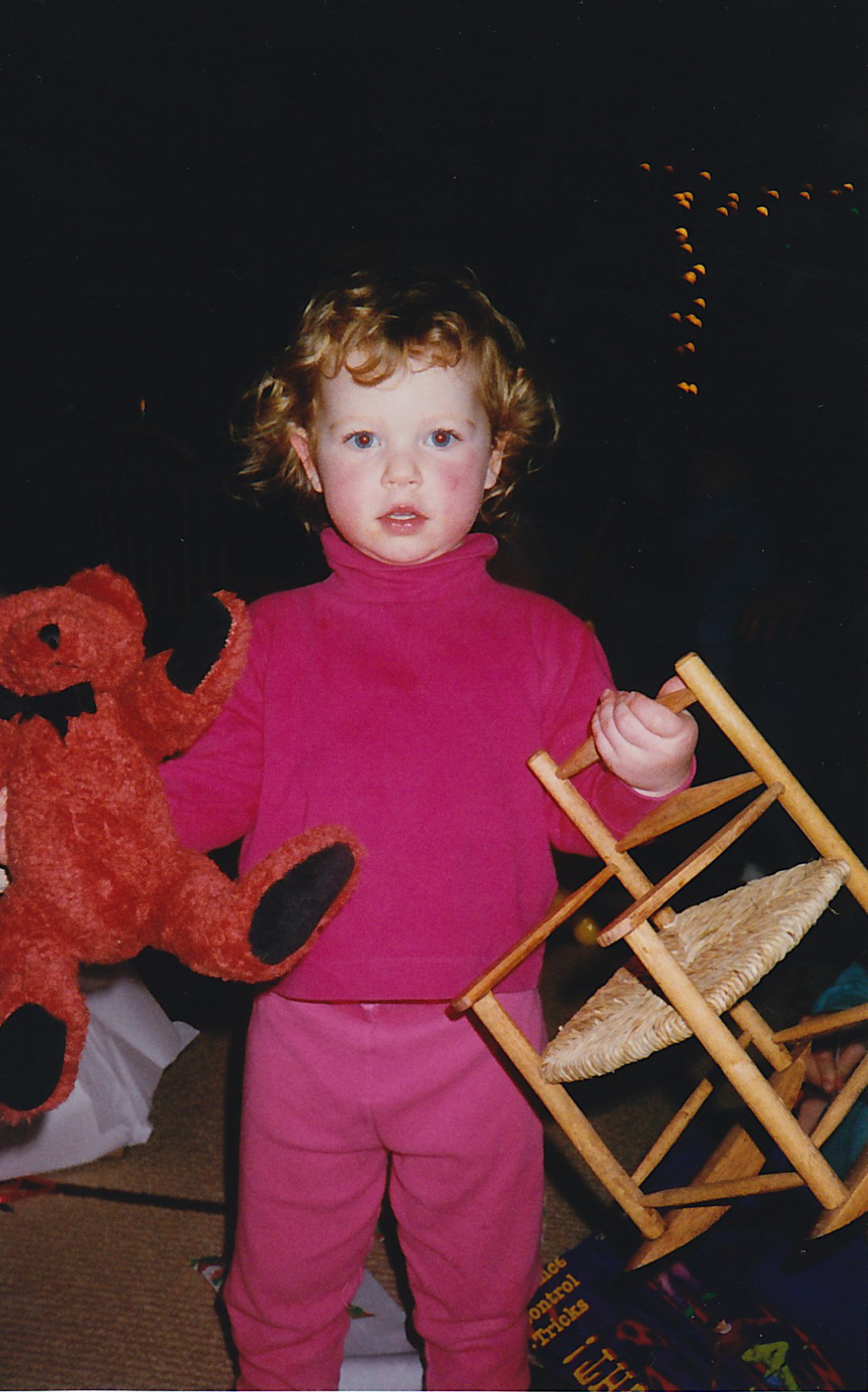
When my daughter Emma was three, she was playing happily in her corner of the kitchen where I had created her own little “house” complete with a wooden hutch, oven, highchair and cradle for her own dolls.  She spent hours creating her own reality of being a Mom.  One day I was about to wander in when I stopped and peered around the corner (yes mothers do spy!) and as I watched her rock her baby and look into her eyes adoringly, one of those warm washes of love and perfection poured over me.  It was a moment that I wanted to sink into and enjoy.

Emma took her baby, placed her into the high chair and began feeding her and gently said,   “Eat, dammit.  Eat your food, dammit.”

IMG_0012

Emma

I stood there in horror, unable to move and continued to watch.  After the lovely meal, Emma placed her baby into the cradle and in a very nurturing way, covered her up with the blanket and said, “Now time to go to sleep, dammit.”

Again, that word hit me, smacked me right across the face and left a sting.  What had happened to my perfect mother moment?

“Emma”, I asked, “What are you doing?”

“Putting my baby to bed.  She is tired.”

“I see that.  I heard you use a “D” word that I was wondering about.”

“A D word?” she contemplated.  “Oh, Dammit?”

“Yes that is the one.”

“Oh, that is my baby’s name Momma.”

Silenced again.

The power of modeling…

I have been known to tell this story when working with teachers to show how modeling is one of the most powerful tools we have and that we can use it to show our literate lives for our students every day.  It is what we do, not just what we say.  We need to talk about what we read, write and wonder; to show them first hand that literacy is not about school, it is about life and how we choose to live  this life.  When students see that we are interested in writing, reading books, articles, blogs, on-line periodicals, newspapers etc., they can “see” how we live each literate day.  When we talk about a great book we found at a used bookstore or bring in our favorite children’s book, they can catch a glimpse of our lives beyond the four walls of school.  And they begin to consider theirs as well.

Bridging the gap between “school” reading and “life” reading is critical.  As an instructor in the English Department at the University of New Hampshire’s Learning Through Teaching professional development program, I have the privilege of going into classrooms and supporting teachers in their coursework.  Every time I enter a classroom I have my Writer’s Notebook and other sundry of books with me.  It could be a couple of children’s picture books, the current novel I am reading, or more recently my Ipad.   Kids ask me about the ever-present essentials (appendages?) that I carry with me.  They are curious and I can open them up and share small pieces of myself with them.  It is an entry point for conversations about reading and writing.

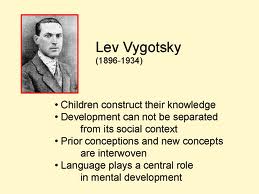
When I am modeling a lesson for a teacher or group of teachers, I start by talking to the class about my passion for reading and writing; my excitement over a new author I have found, what I am working on myself in writing or how a word looks or sounds.   And it is authentic.  I love words.  I love to read and write and when kids feel that from me, they too want to be a part of that energy.  It is infectious and it is not hard to get them to buy in as I ask them to repeat a word with me, a nice long juicy word like onomatopoeia, that they can take home with them and share with their families. “There is a world in a word,” Lev Vygotsky wrote and it’s up to us to open up those worlds.

My-Mama-Had-a-Dancing-Heart-9780531071427

Toting Libba Moore Grey’s, My Momma Had a Dancin’ Heart under my arm, I entered Emily Spear’s wonderful and familiar first grade classroom where I was greeted with hugs and an offer for one of those famous birthday cupcake that are handed to you with great love and grey grubby hands.  I received the confection’s love, knowing it would never get eaten and smiling at the gesture.

I settled into the comfy rocker and had a brief time to reconnect as they told me about their latest ventures in writing. Voices rang all around me as they shared their latest “sound” words.   Three little girls got closer and asked about the pink necklace I was wearing twirling it in their hands and marveling when I told them it was a crystal.  “ooooh…you must be rich!”.  I explained it was a gift from my sister and that SHE was the rich one because she had ME for a sister.  They giggled.

Taking this time to connect with these kids is a critical part of the modeling process.  It only took a few minutes, but in that time my words and actions showed them I was interested in THEM.  This gives me an advantage because I have re-established our working relationship and can then move into our writing time together.  I am reconnecting and we are exchanging trust in these small moments.

I read aloud, knowing that I wanted to model Moore’s use of playfully hyphenated words as a craft the kids could name and experiment with.  I stopped and wrote some examples on the white board:

tip-tapping

song-singing

finger-snapping

We talked about these words and wondered why the author would use the hyphen.  They quickly identified that it made it into one word, made the reader say the word more quickly and created rhythm.  For each dance in the book I asked for a volunteer to get up and “perform” each season’s ballet.  They were eager to move and the movement brought this story to life for all.

We then brainstormed a name for these words and the list consisted of

1.describing words

2. two words in one

3. DASH-ing words.

It was democratically decided that DASH-ing words described them most accurately because of the dash (hyphen) and use of the suffix ”ing” on the end of each word.  And while some may be thinking this is not correct it is playful and something the kids will remember.  Let’s just call it poetic license!  Next, I asked them to go and try out some of the DASH-ing words in their own writing.

And the play began.  Some kids came up with what we called Double DASH-ing words such as tweet-tweet-tweeting. Morgan, who I thought was struggling was left to her own thinking for some time and arrived at my side with this incredible poem:

Swish-swash

Slush-sliding

Icicles-banging

Against the long

White world

But the world

Is not always white

Wow!  I just love the image of the long white world…

We all came back to the carpet, shared our DASH-ing words and created a chart with all of the examples the kids had come up with, creating a classroom “model” that they could refer back to and add to.

I left the room, again humbled at the brilliance of these kids and just what they can do if given the time, space, place and a  model of what is possible.   Trusting our students.  What a concept and something we can all do, Dammit!!

The HOPE Line is Open and Ready for Business, Honoring One Person’s Experience at a Time

I always tell people I have the best job in the world.   I have autonomy.  I am respected to make sound decisions based on the needs of my students.  I have choice and a voice that I am encouraged to use.   I have time to create lessons, facilitate discussions, envision graduate courses and then execute them with amazing professionals.  I am trusted.  This gives me hope.

Image

I wish every teaching professional could say the same thing.  My work is centered in the idea that we learn by doing and so whatever I am teaching or doing I engage in myself first be that a reading assignment, a writing assignment or something that I will be teaching to students.

Ultimately it all comes down to purpose: the why and the how of the whole thing.  And yet I find myself fighting for sites in which to work.  Moving upstream against a current that has such great momentum that is would seem there is no hope.  Imagine that not many years ago our Learning Through Teaching graduate level course were in over 30 schools in the area from New Hampshire, Massachusetts  and up into Maine.  We had a great many talented  consultants and our outreach was far and wide.

Our model was “in vogue” as it empowered teachers and brought them together within their own schools for professional reading, writing and dialogue.  Slowly over the years, the demand has not lessened but the funding has dried up.  The professional development of our teachers is one of the last things on a long list of budget demands.

Image

But there is always hope.  In fact I saw it in my class just last week.  This group is a unique group of educators who meet monthly to discuss a common professional reading in my home.  They receive graduate credit for their work, but more than that they receive support in a way that they cannot find elsewhere.

One teacher actually commented that she found herself wanting to be careful in talking with other teachers at her school about our course because they did not have the same network of support.  So on the one hand she wants to rave about what is a critical part of her ongoing professional development, but on the other hand she feels she cannot.

Another teacher was literally brought to tears as she expressed how lonely and isolated she was feeling in her own classroom and frustrated with the lack of thinking and keeping students in mind.

Image

A MUST read for all.

But, these teachers, after reading Readicide by Kelly Gallagher, immediately shifted their focus on reading to include the love of reading and celebrating that with students.   And you might think, really?  Isn’t that just a given?  And the answer is not anymore!!  This shift brought them back to themselves and who they know they are as educators.  And their students responded in kind coming into school proclaiming,

“I finished my book last night and it was amazing!!  What should I read next?”  And we, together as a group, celebrated these moments.

And in that one line there is hope!  Can you see it?  Just a glimmer?  Honoring One Person’s Experience. Let’s follow that light.  We are strong.  We know what is best for our students and if we can ignite a sense of readership, writership and thinkership among them then we are slowly creating a new genre of students in the name of those who care, those who want to think, those who want to read, those who want to write and will…

Image

And just like those Bostonians who ran towards the disaster and renewed our faith in human kind, let’s do the same for education kind.  So in this spirit please share your “one liners” of HOPE from your students, administrators, parents whatever.  What is being said to keep the hope alive?   The HOPE Line is open and ready for business, Honoring One Person’s Experience at a time.  What is yours?

Photo Credits: www.hopeinspiredministries.org,mylifelonglearningcorner.blogspot.com,info.live58.org –

The Joys of Teaching: Bringing Back the Poetry, the Puppetry and the People

“Imagination is more important than knowledge”

~Einstein

Sometimes life it just too much.  Things come flying at you faster than you can handle and the goal becomes to just get through each and every day and to do the best that you can.  In the midst of great busyness you check things of the list and move on.  But at some point you stop and realize that you are not living as much as creating a record of living.  I may be “doing”all of the mechanical movements to get through a day, but the mundane checks on the list mean very little in my life.

ImageI believe that we get what we give, you know, karma and all of that great stuff.  And as I read through my blog posts I realize how much power and energy I myself have given to the Common Core State Standards.  So I decided to devote one entire class with my graduate students of teachers and devote it to the joys of teaching.  I asked each teacher in my group to think about and come to class with a unit, an idea, collaboration, a lesson that they loved.

And I wish you could have felt the energy, the laughter, and yes even the tears that came out of this discussion.  One teacher talked about how she had her students make toothpaste. Students would bring in ingredients that they then combined with baking soda and water. One teacher chimed in talking about how her daughter was in that class and how they brought in chocolate extract and how disgusting chocolate toothpaste was.  She laughed at the great messiness and engagement and sheer joy in this experiment.Image

Others talked about great units they had planned with colleagues and how those units moved children.  Another spoke of her grand puppet making and how those puppets were then used to create and show meaning within a social studies unit.  I wish I could have bottled that energy…but there is no way to measure that energy so it is deemed useless.  But at the same time it was the excitement behind the thinking that went into the planning and execution of these lessons, units and projects.  And if these teachers were this excited just talking about them they you know the execution of them was the same…and that energy then becomes the energy of the classroom!

I talked about one of my all time favorite units when I was a third grade teacher in Barrington, NH.  Our team created the most incredible unit on the history of Barrington.  It included storytelling as we brought in the Calef’s and their descendents and neighbors who told great tales of the grist mills and the endless springs walking to school in feet of mud. And what incredible storytellers these elders were!   Students would hear these stories and then research and read stories of their own to tell at a celebratory tea where parents and townspeople were invited to hear their stories.  They were also asked to interview someone in the community and we compiled these interviews into books to be shared with the town.  Every day was filled with Barrington history as I read through the town history book and uncovered more great tales to tell.  The month long unit ended with the great town tour.  This was more of a scavenger hunt really where we handed out riddle books with clues and questions.  This book was their guide and they had to think to figure out where they were going.  Small groups would pile into parents cars and off they would go to the Isinglass Riverbanks to the old schoolhouses, where they would be invited in and given a brief history.  I can’t even tell you how much the townspeople welcomed our kids into their homes; some even made snacks and drinks in preparation for their day of visitors.

I have heard that parts of that unit actually still exist in Barrington Elementary, but that the big parts, like the town tour are no longer allowed because of liability.  How sad that litigation gets in the way of good learning?  Once again it is the checks that matter…no more unsafe driving conditions for kids.  (Ironic if you have ever ridden on a school bus with no seatbelts really!)   Never mind how beneficial that town tour was and how it connected the taxpayers to the students and was a starting point in bringing the town together, creating connections and community between the young and the old.   What matters are the details (the devil lives there doesn’t he?) and all of the other minutiae that clog up each and every day.

And so after each teacher had a chance to talk about their joyful teaching we gathered into small groups and I asked these teachers to go through the Common Core State Standards and begin to plug in the standards that were actually covered in those units.  In no time at all they were listing standard after standard.  There is very little that is new in these standards but we are coming at it from the wrong direction.  Why?  Because there is money to be made by large corporations (Pearson) and why consult the experts in the field when you can have people who have nothing to do with education create what you need?

And so I ask, why don’t we spend more time in these joyful spaces talking about what we DO DO instead of always what we don’t do?  Why can’t we bring back poetry, and puppetry and create spaces where people want to be?  Why can’t we create thematic units where students look forward to 3rd grade and the town tour almost as a right of passage?  What is missing in the efforts to implement these standards is the whole.  We are so concerned with each little increment and how to “cover” that small piece that we are not doing anything that is connected to anything else…the whole is gone…and without the whole there are just a bunch of pieces floating about randomly in space never to be connected.

Image

And so I am going to attempt to remain in a place of joy through National Poetry Month. My goal is to read and write poetry each and every day of April.  I will start today and each day I am with students, children and teachers I will have a poem in my pocket to share.  Not so that I can check something off the list, but just for the sheer enJOYment of it.
I will leave you with one of my all time favorites:

The Summer Day by Mary Oliver

Who made the world?

Who made the swan, and the black bear?

Who made the grasshopper?

This grasshopper, I mean-

the one who has flung herself out of the grass,

the one who is eating sugar out of my hand,

who is moving her jaws back and forth instead of up and down-

who is gazing around with her enormous and complicated eyes.

Now she lifts her pale forearms and thoroughly washes her face.

Now she snaps her wings open, and floats away.

I don’t know exactly what a prayer is.

I do know how to pay attention, how to fall down

into the grass, how to kneel down in the grass,

how to be idle and blessed, how to stroll through the fields,

which is what I have been doing all day.

Tell me, what else should I have done?

Doesn’t everything die at last, and too soon?

Tell me, what is it you plan to do

with your one wild and precious life?

Stories as Community

I come from a long line of great storytellers. It started with my grandfather. Some of the best stories he actually wrote to me in letters while I was at camp.  Stories about the snake that had invaded our play schoolhouse in his yard and how he had tricked it with magic snake dust and was laughing hysterically as he watched that snake cough it’s way down the street never to return.  I still smile at this image.

Image

A letter from Grandpa

Then there is my father.  I remember it was as if everything in the room would just stop should he begin to tell a story.  You see he doled these stories out like little crumbs.  They were told so infrequently that when they did come you knew it was time to stop and listen.  He tells stories with the greatest sense of anticipation.  It is like he takes you on this wonderful ride and you go through every up and down and turn with him word by word.   It’s funny, but now that he has gotten older, he falls into his storytelling mode daily.  He loves telling them and although you may have just heard it the day before, you still want to listen as it is in the telling that you find great joy.  And he knows this and so he prefaces each story with, “I may have already told you this but…” and he tells it again.

Image

Dad

Then there is my sister.  She can take any mundane daily activity, like feeding her chickens and turn it into a tale.  Honestly, I am always amazed at how she can take anything and make it fascinating.  I always think she is truly living life like nobody else I know for in the retelling of her days there are countless short stories and anecdotes.  And I wonder, is she crafting these stories as she is living them or does that come after the fact?  Imagine living as if each move that you make is one to be retold in a story later.  Everybody loves to be with Lisa because of her great energy and ability to find the humor is EVERYthing!

There are days she and I will be out in the woods hiking or on the ski lift and her narratives unwind one after the other.  Even better is after she has a couple glasses of wine and the stories flow right along with it.  Together we often rebound off of each other with our stories and we entertain ourselves endlessly.  My Dad always says we sound like a bunch of old hens cackling away.  We tickle ourselves with our tales and then go on to the next one.  We amuse each other.
Image

Tomasen and Lisa Hiking

Then there are the family legends.  You know, those stories that start out simply and then grow and grow with each telling.  One of the classics is from the summer of 1978, a brutally hot summer when my parents decided we would take one of our only family vacations.  Visions of amusement parks, Disney and swimming pools danced in our heads as we all went running to our rooms to get ready  for the 3 am departure to none other than, Newfoundland.  Yes, 3 kids under the age of 15 all crammed into the green, side paneled Pontiac station wagon for a two week, 4,000-mile road trip to Newfoundland and yes, even a lovely Atlantic crossing over to Labrador.  There are so many stories from this one vacation from it being the first time I ever hearing my Dad “swear” telling us kids in the back that all we did was eat, fight and fart, to the hotel room with the one bare light bulb, bed bugs, drunkards wandering around and the beach front where we played amongst the jellyfish and broken glass for hours.

Then there is my brother who is also a master of words.  He can spin a yarn and sell anyone just about anything.  He is masterful with his superlatives and relentless in his enthusiasm.  His stories are often filled with small bits of information that nobody knows.  As my Dad says, he knows more about everything than I know about even one thing.  He too can keep you entertained and on the edge of your seat for hours.

Image

Tomasen and Jamie

Stories provide us with a sense of belonging to something that is bigger than ourselves and each time one of these comes up there is an energy that surrounds them.  We all laugh as the telling begins and those who have married into the family often find the need to leave as once we get going there is no stopping us.  They exit the room saying, “Here we go again, the one bare light bulb and the drunks in Labrador stories…”

Then there are the stories that were told at Jimmy’s celebration of life last weekend.  Jimmy, 23 years old passed away from Ewing’s Sarcoma on March 16th.  (See previous post)  In lieu of a funeral his family organized a service of stories.  One after the other were people who took the stage and told of a boy, a man, a son, a brother with the biggest heart of anyone I have ever known.  It was not just a rambling of how wonderful Jimmy was…you know the words that anyone could say about anyone, but detailed stories that I find I play over and over in my mind.  Stories that punctuated who he was and what he believed in.

And then I meet with a group of teachers and they tell me that they do not have room in their schedules for read aloud anymore.  And my heart sinks and aches for all of those stories that will not be told, read, discussed and written.  For some kids these will be the only stories they will hear. There is scientific research in the area of stories and how those enrich and actually activate our brains in ways that we don’t even know.”

See here for Your Brain on Fiction, http://www.nytimes.com/2012/03/18/opinion/sunday/the-neuroscience-of-your-brain-on-fiction.html?pagewanted=all%3Fsrc%3Dtp&smid=fb-share&_r=0It states, “By simply telling a story, the woman could plant ideas, thoughts and emotions into the listeners’ brains”

See Vicki Vinton’s latest post here to see what is happening and the kinds of texts 3rd graders are being asked to navigate independently, and all this without daily practice with stories. http://tomakeaprairie.wordpress.com/.  This post speaks about what so many of us are so heartbroken over.

And in the end, I ask, what stories will be told after we are gone?  They will not be stories of the scores we got on what tests, or the achievements we made or the trophies we accumulated.   They will be the stories of connection and what made us unique and individual, the stories that demonstrate how we were part of something larger in this world, how we touched others, the humorous stories, and how we integrated ourselves independently into a larger sense of the world.  Those are the stories that will live on.

So how do we change the narratives that are being played out in our schools?  In another article, The Stories That Bind Us, http://www.nytimes.com/2013/03/17/fashion/the-family-stories-that-bind-us-this-life.html?pagewanted=all&_r=0,

Bruce Fieler states,

“The last few years have seen stunning breakthroughs in knowledge about how to make families, along with other groups, work more effectively.”  He goes on to say, “ The single most important thing you can do for your family may be the simplest of all: develop a strong family narrative.”

And this idea of narrative is taken even further as corporations work to develop community.  Developing community is one of the hallmarks  of a great teacher.  Time in the beginning of each year used to be devoted to creating these communities and creating the narratives where each student became a part of a larger story.  These days, there is no time to create community because there is testing in October so often Community building is replaced with test prep.

We are only as good as our stories and I am finding myself feeling almost embarrassed on some level to claim that I am in education, that I believe in the right to a fair and equal public educational system for all when this system has taken on a life of its own and missing is any sense of story that I would ever want to be a part of.  It is the story of money and corporate power.  And so we must work together to re-write this narrative into one where each character matters and has a part in the larger story, because the alternative is a sterile ground with words on a page that nobody wants to read.

And it begins like this…Once upon a time there was a girl who wanted to go to school everyday to see classmates, to discover new ideas, to create, to sing, to play, to explore, to inquire, to wonder, to read and write and be a part of her larger school community…

One story at a time…

Books and Words: Tools for Life

I woke up this morning to the news that our dear friend, Jimmy, 23 years old, died last night as a result of Ewing’s Sarcoma, a nasty cancer that takes 50% of those who get it.  Why did Jimmy have to be on the wrong side of the 50%?  What is the sense in a life lost at 23?  How does one survive the loss of a son?  A brother?

ImageI ask these questions in my head to try to make sense of it all…where there is no sense to be made.  I am all questions and no answers.  My heart aches for his family as I cannot even imagine what they are going through realizing the worst fear of any parent.  I wonder if there is any coming back from such pain and loss and sadness.

And the first thing I do by reflex is search for books, articles, blogs, and information out there that might provide some sense of understanding or solace.  Would it help to read about others who have experienced what they are going through?  Are there articles or poetry that I can send along to help?  Is there anything I can read to help me wrap my head around something that is so unbelievable?

And then I write.  I write to friends, my sister, my family.  I text, I e-mail and then I open up my word processor and begin  to process.  Everything I think about seems so trite…it has been said before. And yet I continue to read and write to attempt to make sense out of the senseless.

And then I get a quick FB message from another mutual friend saying that Jimmy’s story of strength and positivity has to be written.  It is so true. It does need to be written. He was amazing.   And before I go and see my friend Karen, Jimmy’s Mom,  I run into the bookstore desperate to find something to hand to her, something with words that might help.  Words on a page that one can respond to without having to consider any other person’s reactions.  A place to safely feel and respond as only you need to respond.

My daughter Emma got close to Jimmy in this past year.  He reached out to her and at first she just didn’t know what she could offer Jimmy until she read a book by John Green called, The Fault in Our Stars.  It is a book about kids with cancer in a support group who work together to figure out the meaning of life and death through love and friendship.

After reading this book, Emma told me  that never before had she understood why other people with cancer would reach out to her.  It always made her feel uncomfortable and as if she had nothing to offer.  Emma had leukemia when she was three.  Four and half years later, 6 months from being declared cured, she relapsed.  Cancer was part of her life for much of her childhood.  And not until she read that book did she even begin to understand how she might help others.

“He gets me”, she exclaimed of author John Green.   “He understands the language of cancer and what it feels like to be different”.  This book changed her life and encouraged her to reach back to Jimmy, realizing that she had understanding to offer and just how powerful that is.  They became fast friends, having “crazy cancer” in common and wrote to each other frequently on Facebook.  She awaited his Care Page updates with great anticipation and tried to visit him whenever she was home from school. He gave her the gift of understanding right back.  They connected and for her that connection, although too brief, meant the world to her.

Reading and writing are essential tools to function in this life.

Books are places to go to find others who are feeling what you are feeling; a place to engage in empathy and sympathy, grief, anger, happiness, joy, success, failure, triumphs, beauty, sorrow, loss, laughter, inspiration, motivation, creativity, and to attempt to make sense of what it means to be a human being and what it means to live this life in a way that matters, that has meaning; an attempt to find words where there are none.  A place where we belong in a world that often seems so disconnected.  A place to grow.

Image

Because ultimately I believe we all want to be a part of something bigger in this life, be it an idea, a community, a philosophy, a friendship and books and words help us into those larger spaces and beyond ourselves.

Be Peaceful Jimmy.

You are missed and loved by so many.

Miss-Interpretations of The Common Core and Teaching Writing: Dumbing Down with Ridiculous Rules, Mortifying Myths and Loquacious Lies

I am just home after meeting with some very talented and knowledgeable 6th grade teachers.  Our goal, to discuss the Common Core standards and get a feel for where they were in planning for their upcoming insurgence.

Part of the discussion was that in writing a persuasive piece of writing that the use of “I” is forbidden.  I asked by whom it was forbidden and they both looked at me like, “everyone” knows this.  And in walks the infamous “They” that makes these rules.  Who is the “they” in this arena?  And while you can find that in certain places the use of “I” is frowned upon it is not in others.  What about the fact that some of the best persuasive pieces ever written have a very capital and strong sense of I!! 

Image

For instance, if you read through my blog entries, how would you classify (for lack of a better word) what kind of writing it is?  What box would you put it in? Persuasive?  Argument?  Narrative? Informational?  Fiction?  Non-Fiction? Opinion?  Or is it a brand new genre called blogging? Or are there strands of each and all of these?

Or is it just ranting from a girl who lives in the grey areas of life navigating through a world of black and white…forever bumping into the boundaries set by others; hard and fast rules that become the letter of the law lacking any theory to back it up.

I envision it as writing my own newspaper column each week.  Where would that fit in?

I see it as a place where I gather my thoughts, opinions, and ideas and then attempt to support them with the thoughts and ideas and opinions of others.  Sometimes they are simply ideas of my own that I attempt to connect to begin to make sense of what I am thinking about. I write for the surprise that Donald Murray always wrote about.   Does this change what “kind” of writing I am writing on each and every attempt?  Or does it even matter what “kind” of writing is if my readers are reading it and it is making them think and wonder and respond?

Image

Donald Murray

And why do we insist on creating “new” kinds of writing that only exist in the world of school?  Have you ever seen or read a book report in the “real” world?  What about the whopper of a 5-paragraph essay?  When is the last time your boss came to you and said you need to write up a 5-paragraph essay, due on my desk by Monday?  NO, you have not because the idea of 5 paragraphs is another myth created in the world of education in an attempt to dumb down the process of writing.

Image

These teachers showed me a template for a persuasive (yes 5 paragraphs in this one too) where the students could essentially fill in the blanks and create a piece of writing that would fulfill the requirements of the Common Core Standards.  I have to SHOUT out here that I really don’t believe these are the intentions behind the CCSS.  This narrow thinking goes back to what Don Graves speaks about as teaching writing in terms of painting by number.  All of the writing in these mythical genres look the same, feels the same, reads the same.  BORING!!!  BUT, as the teachers respond, if we do this then all of the standards will be met and we will be able to point out specifically in different colored pens which parts fulfill which standard.  This leaves teachers in an impossible stance.  They have to choose whether or not to do what they are told or to teach what they know is good writing.  Wouldn’t you think they would be the same thing?

Image

Donald Graves

Our car is making a horrible noise.  (Using a story/narrative strand here to make my point)  There is a screeching sound that just makes your ears quiver when you turn the wheel.  We need to take it to the mechanic to get it fixed.  When it arrives he will listen to it, diagnose it and make the necessary changes.  Imagine another world, say the world where school meets auto repair and instead of relying on the mechanic there is a checklist that says he must add some simile, a bit of metaphor as well as a heave dose of dialogue to fix and complete this engine repair.  When done he can return it to us with all the things he can check off the list, but still with a broken car.

Image

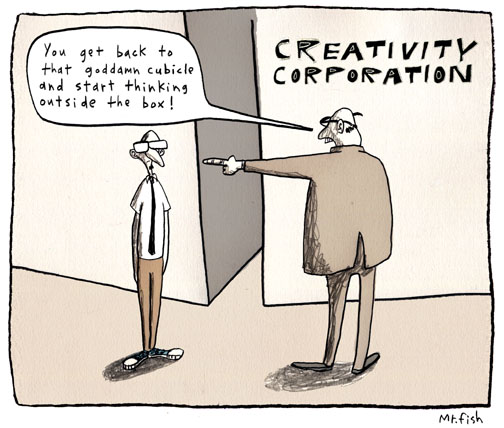
Taking the person OUT of the process only creates nonsensical ridiculous and completely absurd moves.  There is NO sense in it and yet this is exactly the response I am seeing to the CCSS.   It is about coverage and covering one’s ass, if I may be so blunt…but who cares if your ass is covered if you are turning out broken down cars and students?  Taking the writer, the “I” out of the process is not going to create confident writers who know and understand when and where to use a writerly move if they have never had the opportunity as writers to make those decisions.  (Using compare and contrast to drive my point home)

I do not start writing thinking; I will use metaphor, simile and dialogue in this piece.  I start out with an idea and then as I write there are opportunities where these moves may or may not be useful to make my writing what I envision it to be.  I may even remove my car metaphor before this piece is formally posted on my blog.  The point it that these decisions are made my ME, the writer, so that I can create something that makes sense and that will engage my readers (hopefully) and allow them to think about something in a way that maybe they had not thought about it before.

My daughter sent me a link the other day about some middle schoolers involved in inquiry projects and created controlled experiment and then wrote it up and submitted it to various scientific journals to share their findings.  Many of the journals, while they praised the work of the students and it’s originality were not open to accepting the work of these student because their report started with “Once upon a time”, in other words it did not follow the “rules” of the scientific genre.

And yet, you can see here on this link to TED that the work of these students was eventually published and is now one of the most read scientific reports on the Internet. http://www.ted.com/talks/beau_lotto_amy_o_toole_science_is_for_everyone_kids_included.html

And here is a link to the actual paper that was published. http://rsbl.royalsocietypublishing.org/content/early/2010/12/18/rsbl.2010.1056.full

So why are so many people reading this and watching this TED talk?  I would argue (making this an argument piece now!) that they are reading it and listening to it because it is original and interesting and shows us what our kids CAN do if given the opportunity.

Image

So what are we doing?  In our efforts to do what is “right” we are forgetting to think about how kids learn, why kids learn and why they don’t.  Why are kids so totally removed from their own educations, their own thinking, their processes of discovery and wonder and curiosity?  Why?  Why?  Because that is exactly what we are asking of them.  To fill in the blank, not to think about what they are writing, check it off the list and move onto the next genre.  And the beat goes on…

Photo Credits: BLG Consulting Group, communicationissuccess.blogspot.com, http://unhmagazine.unh.edu, UNH Alumni, http://theclimatescepticsparty.blogspot.com/

Nothing In Common: Boutiques and Big Boxes

I just spent four days working in a school district out in Plainfield, Illinois and after getting sideswiped by the blizzard Nemo on my way there and delayed on the way home by President Obama’s departure from Chicago at  the same time as mine, it was a successful trip.  Of course my travel woes are another blog and story all together!!  And yet, are they?

As I was driving from Chicago to the Joliet, Plainfield area in search of my first school to visit I realized as I looked out the car window that although I was in Illinois I really could have been just about anywhere in America.  On my left, I see a Target, and on my right a Home Depot.  Lines and lines of chains from Dunkin Donuts to Burger King stood proudly next to their big box neighbors.  And it got me thinking about the goal of so many schools and districts; heck the ENTIRE nation right now is fixated and obsessed with having everything in “common”.  Common language, common expectations, common outcomes, a Common Core and the list goes on. And so I ask myself, what is so great about everything being the same?

Image

When I travel I seek out what is different.   Where can I find some little restaurant, café or shop that I have never been to before?  Where is there something new I can try in terms of experience, food, or even atmosphere that will provide me with some insight as to what makes this town or city or place tick?  How do people make their livings?  What kinds of homes do they live in?  Where are the tracks and what is on each side of those tracks?  I enter these new places in the same way that I enter each classroom that I visit.  What is different here?  What do these students have to offer and what will I learn about them and how they work in the small amount of time I have to work with them?

My contacts and colleagues in Plainfield are two young dynamic women who brought me back to their district after a one -day workshop on writing in October to do some follow-up demonstration lessons in classrooms k-8.  Before I arrived they asked me to send them some lesson plans for each day.  And so I sat with the list of classrooms and the schedule before me and realized that I probably had not actually written a “real” lesson plan since I was an intern over 25 years ago.  There was a bit of me that actually panicked and began making things up, but I knew in my heart that even if I took the time to write these plans that they would change.  They would change based on the “read” of the students, where they were, what they knew and where we could go.  And so I had to figure out how to send them something open and flexible but concrete as well.

Image

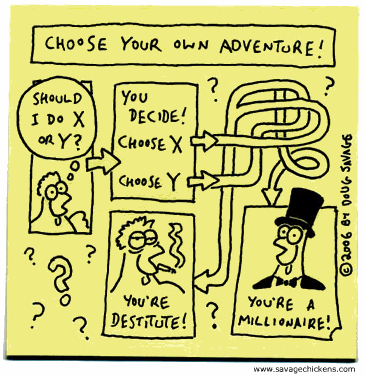
And so I determined a list of my favorite mentor texts that I would be using and then a bullet list of possible teaching points for each text.  I explained that I walked into classrooms with these possibilities in my head, but that I never really knew what I would be teaching before I actually started teaching.  I realize how uncomfortable this makes so many people, but for me there really is no other way.   Don’t get me wrong, there is a plan in my head, but before I begin to implement that plan I am responding to those students I am working with.  My plan is a back up because ultimately I am there to teach the students, not the material.  In fact when I focus solely on content I am removed from those I am teaching: lost in what it is I think I am “supposed” to be teaching…when in reality I am ALWAYS teaching the students.   And so “what” I will be teaching  depends on those I am teaching.  In this way I almost teach in a “choose your own adventure” kind of method.  If this, then that, but again I never know until I am there.

Image

And so I enter with a bag full of books that I know and love, stapled paper (books), markers and an open mind.  That is it?  Yes.  That is it.  I quickly try to connect with the students, perhaps telling them something personal about me and then hear bits and pieces about them.  As I am listening to them I get a sense of where they are and which book might work with them.  Then I reach into my bag and the decision is made.

When I am in this mode of listening I realize that the possibilities are endless and so my role is to focus in on one or two or maybe even three different noticings that the students are making and ask them to talk about what they noticed and why they think the author has made such a move.  If they do not notice then I begin by noticing something and ask that they then look for this same thing as I read on.  I love these kinds of encounters with students.  I am looking and listening intently for what is different in their thinking and what they notice.

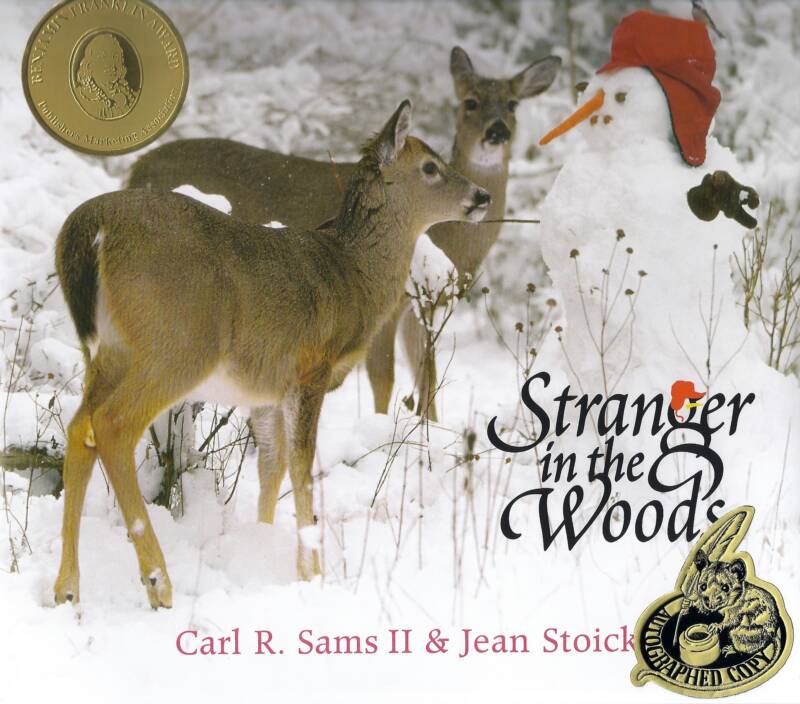
After reading the book, A Stranger in the Woods by Sams and Stoick, one student notices that the animals are talking.  Together we name this craft,  personification as well as a couple of other crafts used by this author. I set the students free with a “book” made out of 4 sheets of paper stapled together and markers and to begin writing this book on anything of their choosing.  I ask that before they leave the carpet that they first tell me what it is they plan on writing about and one kind of craft that they were planning on trying.  As students revealed their plans, new plans formed in the minds of others.  Taking this time allows for each student to leave the group with purpose and to get right to work.

Image

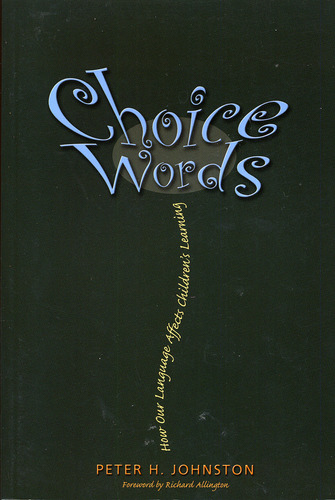
One student in a second grade classroom decided to write a book about snakes and  he was going to attempt to use strong verbs.  As I approached his table I could see his book filled with colorful illustrations and great details as he worked with purpose.  When I kneeled beside him I asked if he would talk about and read what he had written.  He read with great inflection and voice and then came this incredible verb, “lurking”.  I asked him how he came up with that word and he began to tell me that he loved snakes, that he was in fact, obsessed with snakes and that because he read so much about snakes he knows that lurking is what snakes do!  He then ran off to his book box to find many different books on snakes.  He poured through them showing me his favorite parts.  This was unique and different than what anyone else was doing in the class and celebrating this writer’s moves is what I am all about.  I asked that he read it to the class after telling everyone where he got his ideas and what kind of book he was writing about snakes.  He talked about how he used the word lurking because another author had used it.  I confirmed his smart writerly move talking about how all writers borrow from other authors.   I focused on what he was doing and what he thought was important.  This is teaching in my highest self.  This is where I find energy.  This is where I long to always be.  In the moment with a child as he or she identifies what it is they are working on and just what he or she is doing as a learner and how it is or is not working.  I am always moving towards, “Getting kids to “reveal” what they know in order to discover where they might go.”  Johnston, Choice Words.

And dare I even say that in these moments I feel a sense of synergy that I also find in my yoga practices.  It is that moment of being in the “zone” where I can see things clearly and instinctively know where to go with each child that I work with.  This does not happen all of the time, but when it does it is beautiful.  It feels incredibly whole and complete and it has absolutely nothing in common with any other interactions I have with any other student.  It is DIFFERENT.  It is not the same and so I have to wonder in our quest for sameness, in our desire for consistency are we not losing the individual processes, identities and the creative thinking of each individual?

Image

In my debriefs with the teachers after the demonstration lessons I am always surprised by what it is they ask and comment about.  And after a recent rereading of Peter Johnston’s, Choice Words, I realize that so much of my teaching is defined in this book.  The language we use and the responsive teaching is what I am always aiming for.  And if you have not read this book then I encourage you to add it to your list of must-reads.  It is essential for teaching our kids how to be independent agents in their own learning.

And so I left the same way I came in passing Best Buy and Lowe’s, asking myself, are we forgetting what makes life interesting?  Are we aware that in our efforts to be the next Wal-mart that we are losing our downtowns and our small businesses?  I am fortunate to live in a town that still has a downtown and I love walking through the shops and knowing and talking with those working in the shops.  There is something wonderful about knowing people and seeing what is new and different that you would not find in a Target.  And yet, it is a fight to keep our downtowns open because the big box stores are more affordable.  But in the end, can we afford to lose what has yet to be discovered in each child in the name of what is simply common, consistent and so very much the same?  Or am I just a boutique kind of teacher trying to survive in a big box world?

Image

The Things We Carry

Zachary,  came home from high school one day with three poems chosen by his English teacher to “figure out”.  The assignment was to decide what “kinds” of poems they were and to look further to figure out what “literary devices” were used.

He came to me.  “Mom what kinds of poems are these?”

And the teacher in me responds to his question with a question.

“Well, what kinds of poems are you learning about?”

“None.”

“Well, haven’t you been looking at different kinds of poems in class and identifying them and what makes that what they are?”

“No.  MOM, we were just given these poems and told to find the literary devices.  This is what I have to do.  Can you just tell me?”

And so I look at the poems and instantly realize that even for me, these poems could fall into several categories.  So I tell him I am not sure.  Again I ask to see the poetry and begin to slowly look at them with him one at a time while asking him questions about what he notices in terms of how the poem is written, thus a way to discover “literary devices”.  In my head I am wondering, as well, just what this teacher is asking for and in this process I am removed from the poetry myself in an effort to “please” the teacher.  I too have fallen into school mode right alongside Zachary.

“That is NOT what the teacher wants Mom.  She just wants me to know what kinds of poems these are and what devices are used.  Mom, she doesn’t teach.  She just gives us assignments.”

“Well, what kinds of “literary devices” have you  looked at in other poetry or forms of writing?”

“None Mom, can you just help me get this done?”

“Well, how are you supposed to know if nobody every showed you.  Let me help you with this…”

If you are a parent then you know that teaching your own children is akin to trying to grocery shop with a group of young goats in tow.  Oil and water I say.

He stomps off  to spark notes and google to try to figure out what I cannot tell him and what he does not know because there has been no “model” in terms of what to look for.  These beautiful poems are reduced down to a hunt and peck on the internet in an attempt to figure out and “do” whatever it is the teacher has asked him to do.  There is no meaning.  There is no connection.  There is only the sense that he wants to get this done and done quickly and hopefully, somehow in the process he has figured out whatever it is the teacher is asking for at the same time.

download

Pushing my extreme frustration aside, I reflect on this conversation and realize his teacher is not modeling for him.  That the missing piece is and may always be that we are not “showing” our students what it is we are looking for.    In my work with teachers I often hear about how students are just not “getting it” and in this statement is a sense of blame.  They are frustrated with the students because they don’t know what they already know and the blame game begins. And yet, if nobody has ever taught or shown then how is the student supposed to know?  As an educator of students of all ages from kindergarten to adults, if a student is not understanding I have to ask myself what is my responsibility in all of this?

When a student is not understanding I have to stop and ask myself,

  1. What is it that they do not understand and why?
  2. What is it that I have not “shown”?
  3. Is there another way that I could model this for them?

download (2)

And although it sounds simple, it can transform your teaching.  This “in the moment” reflection allows us to connect with our students and to consider what they are learning from their point of view.  In doing this we begin to form a connection with our students and view them not as the object of blame, but as a human being to connect with, to teach, to show, to model for.  And once this connection has been made it lays the groundwork for further teaching.  These connections can also reach across the classroom as we identify models in others that are in the classroom as well.  Modeling is about “noticing” and naming what it is that we notice.  In this our students can then see that they too can notice and name.

Toting Libba Moore Grey’s, My Momma Had a Dancin’ Heart, under my arm, I enter Emily Spear’s wonderful and familiar first grade classroom where I am greeted with hugs and an offer for one of those famous birthday cupcake that are handed to you with great love and grey grubby hands.  I receive the confection’s love, knowing it will never get eaten and smiling at the gesture.

download (3)

I settle into the comfy rocker and take a brief time to reconnect as they tell me about their latest ventures in writing. Voices ring all around me as they share their latest “sound” words, onomatopoeia  the craft we worked on last time I was in.    Three little girls get closer, asking about the pink necklace I am wearing, twirling it in their hands and marveling at its sparkle.

Taking this time to reconnect with these kids is a critical part of the teaching process.  It only takes a few minutes, but in that time my words and actions show them I am interested in THEM.  This gives me an advantage because I have re-established our working relationship and ideally trust and can then move into our writing time together.

I read aloud, knowing that I want to model Moore’s use of playfully hyphenated words as a craft the kids could name and experiment with.  I stop and write some examples on the white board:

tip-tapping

song-singing

finger-snapping

We talk about these words and wonder why the author would use the hyphen.  They quickly identify that it makes it into one word, makes the reader say the word more quickly and creates rhythm.

We then brainstorm a name for these words and the list consists of

1.describing words

2. two words in one

3. DASH-ing words.

It is democratically decided that DASH-ing words describe them most accurately because of the dash (hyphen) and use of the suffix ”ing” on the end of each word.  Next, I ask them to go and try out some of the DASH-ing words in their own writing.

I first check in with Morgan, who seems to be struggling because she is not writing.  Her hands are poised under her chin and her page remains blank.  I sit to talk with her.  I am wondering what is keeping her from writing.  I ask her questions, but she just sits and looks up.  Finally I ask if she just needs some time to which she responds, “Yea.”  I leave and tell her I will check back with her.  In my mind I am wondering if I am copping out because it was a flat and uninteresting conversation.  I secretly hope that my decision to leave her and trust her is one that will work, but I never really know.  What I do know is that was I was doing was not moving her along and so I make the choice to let her work on her own.

download (4)

I move over to Nick, who also seems to be staring off into space.  I ask him how he is doing.  He responds, “I don’t know what to write.”   In my head I am asking, what does he not understand?  After a brief conversation I realize he does not understand what I had just modeled and that he needs further modeling.  I am not upset that he is not working, I am curious about why he is not.  I ask myself what is missing for him and what can I do to help this young writer to move forward?  What else can I model for him?  Is there another way in?   I lead him back over to the white board and we leaf through the book again looking at the DASH-ing words.  We finally realize together that he does not know how to start making his own word because it is not clear that the first word is often an object, a noun.  And so I model another example asking him to name an object.  He says pencil and I ask what a pencil might do.  He responds that it writes.  We work together and make it into pencil-scribbling because he liked that better than pencil-writing.

For others the playful word combinations take on a life of their own.  Some kids come up with what we call Double DASH-ing Words” such as tweet-tweet-tweeting.  Others begin lists and when I check back in with Morgan I realize that what was missing for her in that moment was think time.  (phew!) She shares this poem with the class, telling us that she chose to write a poem because the book was like a poem.

Swish-swash

Slush-sliding

Icicles-banging

Against the long

White world

But the world

Is not always white

Wow!  I just love the image of the long white world…

We all reconvened back to the carpet, shared our DASH-ing words and created a chart with all of the examples the kids had come up with, creating a classroom “model” that they could refer back to and add to.

I left the room, again humbled at the brilliance of these kids and just what they can do if given the time, space, place and a strong model of what is expected of them and in many instances, more modeling to help them move along in their writing.

In my work with these first graders and all of the students and teachers I work with as an instructor in the English Department at the University of New Hampshire’s Learning Through Teaching professional development program, I ooze passion for words and I do this on purpose.  I talk about what I read, write and wonder.  I show them first hand that literacy is not about school, it is about life and how we choose to live this life. I have my Writer’s Notebook and other sundry of books with me.  It could be a couple of children’s picture books, the current novel I am reading, or more recently my ipad.   Kids ask me about the ever-present essentials (appendages?) that I carry with me.  They are curious and I can open them up and share small pieces of myself with them.  It is an entry point for conversations about reading and writing.

When students see that we, as their teachers are interested in writing, reading books, articles, blogs, on-line periodicals, newspapers etc., they can “see” how we live each literate day.  When we talk about a great book we found at a used bookstore or bring in our favorite children’s book, they can catch a glimpse of our lives beyond the four walls of school.  And they begin to consider theirs as well.  We model every day with our words, out behaviors and even what we carry.

download (5)

“There is a world in a word,” Lev Vygotsky wrote and it’s up to us to open up those worlds, and I am constantly thinking of new ways to open up those worlds, modeling at every step, whether that shows in what I carry with me, the conversations I have, I am the walking, talking lover of words and my students know this.

What do your students know about you and what do you model every day ?