Dear Mother, Dear Teacher

Dear Mother,
I wanted to update you on your son’s grades for biology per your request in the last email.  He could really use someone quizzing him the night before a test on the vocabulary.  I give flashcards out so it makes studying a little easier, along with a review sheet and practice problems for each test. If Zach is studying he is doing it passively, like reading through his notes, but what he needs to do is actively write down or perform practice problems, with the notes put away, so that he sees exactly where his weaknesses are and study those topics.
 Image
I think Zach tends to coast along and he could do with some more study time at home.  It is hard for soph boys to see how mediocre grades can affect their future track in life.  I think expecting B’s from Zach is reasonable and he could do it, if he gets a little more organized and motivated.  I also wanted to tell you that I update powerschool at least once a week, so you can always log in and check on his progress there.  You can also check on his attendance record and number of tardies for the year.   It is a great tool for Zach to monitor himself and for you to feel like you know what is happening while letting him remain autonomous.  You can set it up to send you emails once a month or biweekly, so you don’t even have to remember to do it. I also have a moodle site that has all of the homework assignments and upcoming test dates, so that you can help Zach become more organized and prepared. My moodle site has guest access so you don’t have to log in, but you will need to login to Powerschool with a username and password.
If Zach could get his homework done well and on time and spend a little more time studying for tests, I think you would see a drastic increase in his grades in class and on tests. Zach is always polite in class and has a smile on his face, so his personality will get him far and with good grades he would have even more opportunities. Please contact me if you have any questions or comments, Teacher
Dear Teacher,
Thank you for getting back to me.
As I read your report on Zachary I am reminded of an article I read recently.
I hope you will read it and read it with an open mind.  It talks about how kids these days are different in terms of their technological savvy.
Here it is!!
We are teaching a new generation and while flashcards may or may not have worked for us, this is  a new generation of  thinkers!  As a fellow educator I feel it is our job to figure out where they are and to meet them there…at least half way.
Zach’s lack of engagement is often labeled as “lazy” or as you stated that he does not “study well”.  What exactly does it mean to study well and who has ever taught any of our kids to actually “study well”?   What if flash cards don’t work for all students?  Haven’t we come further than flash cards and rote memorization? Or could those flashcards perhaps at least be digital and interactive somehow?

Image
I just want to ask that you read this article and consider that I am in schools all over the state where  I am seeing first grade classrooms with smart boards where kids are constantly using and engaging with technology and even Skyping with their penpals out in California!  In a 3rd grade classroom teachers are using Edmodo to allow their students to ask questions in on online community where they can feel safe to explore subjects of their own choosing.  Fourth graders are blogging, 8th graders are a part of Good Reads and the list goes on.  Unfortunately, short of power point, I cannot think of even one technologically driven assignment that Zachary has done and our High School was built completely outfitted for such advancements.  Have you seen that television recording studio?  Why aren’t students creating TV shows that talk about the impact of biology in their community…just a thought!

Image
I would expect A’s of Zachary and beyond because he is smart and he gets things easily.  You would only expect B’s.  How sad.  Shouldn’t we expect A’s from all of our students and help them get to A’s if they are not there??  The problem lies on many levels though.  He IS motivated and organized when he is invested in something.  School is out of touch for him and for many around him.  And while the prospect of learning biology through a video game might seem outlandish, I can tell you that when there is even the slightest hint of using technology in an assignment Zachary is all over it.  He spends hours taking and editing his own videos.  What if he could “create” something to show his learning to replace an assign and test kind of teaching?  Can you imagine the possibilities and all we could learn from these Digital Natives?
I teach in classrooms from first grade through the graduate level and my question to myself is always the same…if they (my students) are not getting something then what can I do to help them to come to a fuller understanding?  I want thinking…not just memorization for a test that is gone the next day.  I want my students to connect and interact with what they are learning  and how what they are learning might impact who and how they are in the world.  Biology has so many implications for this kind of thinking…but right now I don’t think Zachary thinks biology has anything to do with him.
My daughter went to Phillips Exeter and she LOVED biology because they sat around and discussed biology!  She is now at Kenyon college as  a Biology major.  I wish that Zachary had an opportunity within the public schools to learn in a socratic method…but for some reason we rule that out as impossible and we stay with what we know.  Assign and test.  Assign and test.
The irony is that the technology that teachers have been given, powerschool, is one that only encourages the mentality of assign and test to get the grade.  Emphasis is SO heavily  weighted on  grades and not what is being learned.  So many of our kids are not motivated by grades anymore.   And the stories I could tell you about parents fighting with their kids over homework EVERY day!  I did that all last year.  It nearly killed me and my relationship with my son. Powerschool only added to the anxiety as we would look at the grades and he would talk about the things that had not yet been posted…the homework that he did pass in and every teacher is incredibly different in their use of Powerschool.  I stopped looking at Powerschool and am now looking at my son.
Image
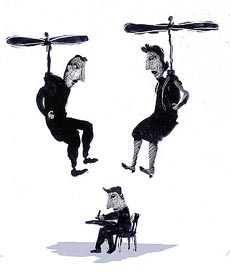
This kind of constant helicopter parent monitoring is not only ruining parent child relationships, but it is also sad that it is the part of technology that teachers have been offered in a world of SO much more to be offered.  I can tell you there are parents who check powerschool hourly.  How is that creating responsible and independent learners to go out into the world?  They need to fail in order to learn, but there is very little room for risk-taking and failure of any kind for our kids.  I feel sad for them as the greatest things I ever learned in life often came from failures.  Are we afraid to let our kids fail?
And your final paragraph speaks of opportunities….and the lack of opportunities Zachary will have because the opportunities offered to him right now are so narrow.  THAT is the greatest rub of all.  It says conform to or your chances in life are well…less than stellar!  The system as is, is designed, particularly with Powerschool, to work against students.
Image
If Zach gets a 0 on a homework it takes 5 A’s for him to make that up.  The scale is heavily weighted towards failure…NOT success!  In my mind an A and an F should average to a C?  Right?  No.  In this point system it averages to an F.  There is very little room for risk taking and even less room for less than perfection.  It is a tough world for these kids to thrive in when their other worlds are so rich with color, light, movement, flexibility, technology and a fast paced life where they are connected.  Zach is unplugged at school…I only wish you could see him “plugged in” in the worlds that matter to him and that together we could find a way to light up the hallways of our schools where classrooms were interactive and students were truly engaged and not just  “getting through” this period to get to the next.
But I am a dreamer.
Please do take a moment to read this article and consider it’s implications as well as the fact that it was written in 2001….and perhaps consider dreaming alongside me and leaving the flash cards behind.
Thanks for “listening”.
Tomasen

Rules of Engagement

Zachary came home from school the other day feeling pretty pleased with himself.  He had a “quiz” in chemistry (his most challenging subject that he struggles with) and reported that it was awesome.

Image  Yes, you are right on if you are picturing me standing in amazement with my mouth hanging open.

Zachary is an 11th grader in public school.  To know Zach is to see him always fixing, researching or tinkering with something be it the ski ramp in the backyard, the latest gadgets in photography or longboarding or his guitar.  He is and always has been “in motion”.  I used to joke that he came out of the womb on wheels!  I believe he is a very different person when in school.

He went on to tell me that this was a quiz where you “did” things and so he felt like he was better able to perform.  In his own words, “I am not good at memorizing, I am good at applying things.”  ImageHe explained how they had 5 different elements that they had to weigh and then do calculations in relationship to what it was they had discovered.   After each element they were to go up to the teacher and check in.  He was animated as he continued his story explaining that because he does not have a calculator he usually just borrows one from his math teacher, but because this was a pop quiz he did not have the time to go and get one.  So he decided he would do the math on his own.

Upon completing the first few problems he checked in with his teacher to discover he got them all right!!   When his teacher asked him how he did these problems Zach instructed him to turn the paper over where he found a lattice method scratched out on the back of his paper.

ImageThe teacher, according to Zachary, was amazed that he was able to do this math without a calculator.  Delighted he went back to finish the last 2 problems, but alas, he ran out of time.  He reported that he got a 70 on it, but that he was thrilled because as he stated,  “I feel like it is the first time that I actually understood something in chemistry.”

“What would happen, if, rather than focusing on teaching reading strategies, we focused instead on getting students engaged?”  Peter Johnston

This quote by Peter Johnston has had me thinking all week about the idea of engagement.  He refers to engagement in terms of reading and actually asks some hard questions about instruction in this Stenhouse blog post.  Worth the read.

http://blog.stenhouse.com/archives/2012/07/23/blogstitute-week-5-reducing-instruction-increasing-engagement/

ImageSo, the next question is what if we decided to make that same commitment across all subject areas, curriculums and grade levels?  What if the most common core standard of all that we were to work towards was engagement of ALL of our students?  What if we focused primarily on engaging our students and worked towards 100% proficiency of engagement?

This is so simple.  There I said it!  Think about it.  We can go on teaching and standing in front of the room and sharing our knowledge.  We can go on creating meaningless tests to supposedly “show” the growth of our students.  We can continue to spend millions and billions of dollars on the next magical cure that won’t work or…imagine this…we could look at our students and focus on engagement.  WHAT matters in our work if our students are not engaged?  What will they learn without engagement?

 What happened in this chemistry class?  The class where Zach admits to getting his daily naps because he has so much trouble paying attention.  He  argues that nobody really understands what It going on.  So what turned this day into a class period filled with engagement and dare I use the term, rigor?   I believe it all started with the ability to move and use his body.  He was not sitting in a seat in the back of the room watching the minutes slowly tick by.  He was standing, walking and using his hands to “apply” what he did and did not know.  He was then able to get some immediate feedback on his work and then a little gravy in the name of praise for his ability to perform without a calculator.  This real feedback sent him back confident and hungry for more.  It was only the clock that worked against him as he told me that he knows he could have gotten the other two if he had had the time.  And even if he didn’t get them right he was ENGAGED!!

Image

If I were his teacher I would look at Zachary differently than those who used their calculators and adjust his grade accordingly.  IF the goal is engagement and ultimately understanding could it not be argued that perhaps he understood more deeply because he could perform without the calculator?  Shouldn’t he be graded on what he did know and not that the time ran out?  But I also realize that I am far from the norm and that grading is another topic for another post.

It’s like my cats, you know.  They are very finicky about their food.  It is clear when they do not like a particular kind of food because they don’t eat it!  They are not engaged in their eating.  So I don’t continue to give them the same food because I have deemed it is the best food for them, I try out different kinds of food to see what works for them to engage them in their eating. Image Why do we continue to do things we know don’t work…especially when so many of us have the vast variety of theory and knowledge that DOES work and even more importantly that engagement is something our students are starving for?


Opt Out of Testing: Do We Dare to Bubble Dot That?

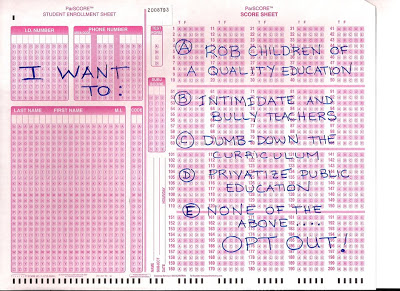
Well, the time has come for me to unleash the beast inside and ask you to look at, for yourself, your kids and your community the idea of opting out of High Stakes Testing.  Up until last week I have steered clear of writing about The Common Core State Standards and the test that will follow and how I have seen the rise of testing in our schools over the past 11 years (thank you No Child Left Behind)  has actually undermined and even damaged the education students are receiving by attempting to create a “one size fits all” mentality and leaving systems, professionals and teachers feeling they “MUST” teach to the test. Period.

one_size_fits_all_sticker-p217558662557834777en8ct_325

Recently Frontline asked three educational reform leaders including Diane Ravitch, Margaret Spellings and Geoffrey Canada  to watch and then speak back to The Education of Michelle Rhee, former chancellor of the DC public schools and a highly controversial figure in educational reform.

http://www.pbs.org/wgbh/pages/frontline/education/education-of-michelle-rhee/how-do-you-measure-success-in-school-reform/#seg3

Margaret Spellings, former US Secretary of Education under George W. Bush and one of the architects of No Child Left Behind writes in response to Rhee’s work and the upcoming onslaught of the Common Core,

“But I still argue that NCLB’s ambition remains pretty modest – all children performing at grade level in reading and mathematics – the bare minimum any of us would want for our own children or grandchildren. And while having every student meet the new Common Core standards is a laudable goal for DCPS and all the states now pursuing “college and career readiness,” it is an empty promise if they’ve yet to meet NCLB’s more modest goals.”

And I shudder to think that if a proponent of No Child Left Behind believes that even those goals were moderate then perhaps what lies ahead may be more daunting that we even realize.

none of the above

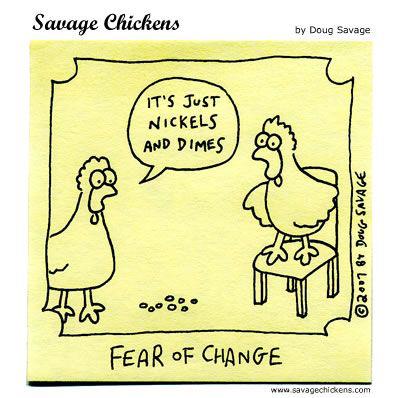
The question is do we dare?  Do we dare go against the norm or is the fear of change and going against the norm too much to risk?  Do we fear that by taking our own kids out of the testing world that it will somehow put them in a place of less importance than those who do test?  Will it limit their options in terms of lifelong goals, colleges and careers?  Without “measuring” our kids and putting them into little boxes will they become less significant in this world?  Without their numbers pasted on their backs will they matter as much as those with numbers or even more importantly those with the highest numbers?

734787_10151059810779649_1253315865_n

What does it mean to opt out?  Opting out is defined by United Opt Out National, in three phases, the first of which is to change the public narrative that testing is good.   These are the questions I am attempting to raise here.  The second is to break the cycle of complicity, isolation, coercion and the third is to support alternatives through knowledge, collaboration and trust in the power of collaboration.  I do believe that if we come together we can make a difference.  For more details about opting out…

Check out this site that talks about what it means to opt out and how we can band together to do so.  http://unitedoptout.com/flyers/what-does-it-mean-to-opt-out-2/

Or watch this video by Peggy Robertson, one of the founders of opt out, http://www.youtube.com/watch?v=_bJlbkxnDVU where she and her two boys reach out to Diane Ravitch,historian of education at New York University and expert on school reform to join them in the national opt out campaign in DC this coming April 4 – 7 where we will unite to protest against testing.  I am considering making this journey and would love to have others I know come with me or meet me there!!  You interested?  Here are more details.

http://unitedoptout.com/update-for-occupy-doe-2-0-the-battle-for-public-schools/

OptOut

So it is time for action.  Enough kavetching about it…it is time for action and trusting in the process of collaboration and the idea that if we band together we can make change happen.  REAL change for all of our kids.

What do you think?

Do we dare?

Brick by Brick

I must confess.  I have been trying to write a book on education for years.  I have actually even put together what “looks” like a book, but if I am completely honest it sucks.  I love to write.  I love to write to discover what I am thinking or wondering about.  I love to play with words.  I love to write but I do not like the voice I put on when I am in book writing mode.  Why?

It dawned on me this morning that I hate what I have written in these books because as soon as I start to write something for the book I put on my slick persuasion blazer and bowler hat and begin the song and dance to show you my “expertise” in teaching and the classroom.  I become the evangelical used car salesperson of education.  I  try to cover everything that I know in order to create the be all and end all, the educational Bible of the century…and ultimately it is a massive failure.  In it I lose my truth, my voice, the essence of who I am which is not an expert of anything, but someone who thinks and wonders and reflects…alongside those I work with.

Image

So, how can I ask you to come along with me as I shed the slick suit with all the answers and indulge me in some way?  I have so many questions that I would like to explore and yet all of them seem are rooted in the theme of how to make our teaching and our classrooms authentic places where learning can and does happen.  How can we engage students instead of disengage them?   How can we change an entire system?  We can’t.  But perhaps what we can do is shift our thinking about our students, our classrooms, and the systems and begin to view them through a narrative lens.  What are the stories in your classroom?  What are the stories of those students you work with?  What are the stories in your literary life?

Research tells us that 70% of what we learn and remember is through a narrative form and yet 98% of the information we provide to our students is in the form of straight fact.

Elizabeth is a beautiful 7th grade soul struggling with a major disconnect between her Social Studies textbook and her sense of wanting to know and understand.  When I first worked with Elizabeth she took me up to her room and showed me her bookcase and all of the different books she liked to read.  She talked openly and freely and with great fluidity about who she was as a reader, what she liked, what she didn’t like and she laughed as we talked about “fake reading” and how she does it in school and so do all of her friends.  She was animated and those beautiful brown eyes danced with enthusiasm and purpose.

Fast forward to the dining room table 10 minutes later where Elizabeth and I will attempt to tackle her Social Studies homework for the night.  Her shoulders slump as she leans over and pulls out the Mount Everest of Textbooks.  It must weigh at least 5 pounds and it is only one of the many texts that Elizabeth is being asked to shoulder.  She lets it thunk down on the table and the reverberations from that book shudder across the table.  This is a heavy book, filled with endless information and Elizabeth’s long sigh confirms that the drudgery is about to begin.  First I ask her to tell me about the book.  She stops and thinks.  I wait.  I ask her what it feels like to read this book.  She thinks and eventually responds, “It is like reading a brick wall.  I try and I try but it is like I can never get through it.”  I am stunned and rendered speechless at Elizabeth’s ability to create such a powerful image for what this experience is like for her.  She is a deep thinker.  She likes to make sense of her world through simile and metaphor and I am in awe of her brilliance and so I tell her so.  She does not feel this way about herself, however.

Image

And we then begrudgingly open the monster of a book and begin.  She is reading about Russia.  Ahhh…yes Russia I begin to remember as both of my kids went through 7th grade with this same teacher and her passion for all things Russian in just one year.  The page she opens to is busy with color and information galore.  It is a smattering of information intended to inform, but to me it looks as though someone vomited everything they may or might want to cover in a chapter onto the page.

We begin with the title and I talk to Elizabeth about making these titles into questions.  Her eyes brighten.  She likes that there is something she can actually “do” to begin to make sense of the text in front of her.  We peruse the page and I move her to the bright green box at the left labeled major concepts and key vocabulary in an effort to activate schema and perhaps do some front-loading to guide her through the reading.

We get through one concept and as I try to conjure up as much information as I can about Russia I quickly realize I am as schema depleted as she is. We press on to vocabulary keeping the key ideas in mind as a purpose for our reading…should we actually get to the reading part.  There are 5 words and in each of those words lives worlds of information.  Elizabeth wants to know more.  What is a Czar?  How is that different than a president?  She is inquisitive, engaged and interested.  A half an our of our time has passed and we have yet to actually even “read” anything!  I move us along…feeling the time crushing in on us.

Image

We start with our questions to read with a purpose and not three words into her reading there is a vocabulary word that she is stumbling over.  She looks up at me and I continue on to the end of the paragraph. I ask her if she understands what she is reading. She shakes her head no.  We talk about stopping and thinking about her understanding and stopping at that point where nothing makes sense anymore.  She goes back and stops at the third word.  It is the same word that she looked up at me on.

We talked about how readers think about their own thinking and how knowing when to stop was as important as knowing when to read on.  I pointed out to her that she “knew” when she didn’t know because she looked up at me.  I want Elizabeth to think about her reading and her understanding as she moves through the text and to stop when she knows she has lost meaning.  She stops at a heavy-hitting vocabulary word, not identified in the neat green column that the publishers deemed as vocabulary.  I help her break down the word and ask her to think of what it reminds her of.  Together we make sense of the word and then she reads on.

And so we work and trudge on as far as we can together in this text knowing that IF Elizabeth is going to actually “get” anything out of this text then we must continue at this snail’s pace to ensure understanding.  It is a process that I am engaged in alongside her as I too question and attempt to make sense of the listing of facts and how they do or do not connect.

Image

There is no narrative in this text.  Nothing for us to grab onto in this endless sea of facts that now seems to weigh heavily on both of us.  And so I attempt to shorten her assignment, knowing she will not get to the questions she has to answer by the end of our time together, but making the choice to allow Elizabeth some true understanding, taking time “out” of the text to Google and get a sense of story that is so lacking in the text.

Who were this Czar and his crazy wife?  Why do they just mention these people in a list of others without letting us know why she was crazy?  And so we Google again and go deeper.

It is hard work.  And I have to question why so much is assigned in one night, but my questioning does not change the fact that those questions are due tomorrow.  She stops and flips through the pages ahead to see how much more she has to read for this one night’s assignment and a heavy groaning sigh escapes her mouth as she rolls her eyes to see we still have 6 more pages to go through.  I look at her and say, “Brick by Brick is all we can do here so let’s just keep keeping on.”  She rolls her eyes again as fatigue begins to move in and we press on.

Image

So how do we challenge this idea of more is better?  Do we want our students going nearly an inch deep and miles wide or do we want to advocate for depth over breadth?  Are we giving our students enough time and the right kind of books to gain a true understanding of whatever it is we are teaching?  Or are we more interested in coverage and checking things off a list?  Do we realize that each time a student comes to a text that is their FIRST reading and that the knowledge we have comes from numerous readings, rendering it much easier to understand?  Are we aware of what it is like for our students?  Are we thinking about that and what that assignment “looks” like for our kids at home?

Less is more.

And in my attempt to write “the” book I realize this too was my problem as I tried to cover everything and rarely went deeply with anything.  And so now I write this blog where I find myself going more deeply with my thinking.  I threw the book out the window because I realized what I was trying to do in all of those attempts was to cover EVERYthing and to do it from an all-knowing omniscient voice.

I do not know everything.  In fact there is so much more that I do not know than I do know.  Living in this information age, information is cheap, but connecting it and making sense of it is priceless.  And so in the name of less is more I write  to wonder, question and begin to figure out my thinking.. brick by brick.  And don’t we want the same for our kids?

Image