Unknown's avatar

About conversationeducation

Lifelong learner and advocate of reading, writing, teaching, curiosity, wonder, passion, intuition, improvisation,humor, creativity, courage, laughter, vulnerability, truth, stories, movement, drama, authenticity and more...

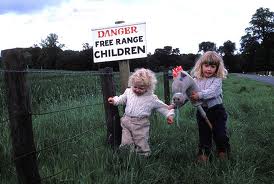
All in Favor of Free Range Children, Say Bok!

Our prime purpose in this life is to help others. And if you can’t help them, at least don’t hurt them. ~ Dalai Lama

Last year my sister ordered 16 baby chicks in the mail so that she could have her own eggs and know exactly where they came from.  Her goal: to raise happy, healthy free range chickens fed the top of the line organic food.  No antibiotics or cheap genetically modified corn products for these chickens au natural!

She loves her chickens.  When they first graduated from the warmly lit crate in the house to the coop she would go daily for “play time”, sit with them and hold them and even talk to them.  Her thinking… happy, loved chickens will eventually produce happy healthy eggs.  Can you say “crazy chicken lady?”  But truly what she was doing really made so much sense!!  Crazy or not!

Image

Sister Lisa with one of her “Goldies”!

There are more and more people ordering baby chicks to free range them.  There are many movements to eat locally and small farms seem to be sprouting up everywhere you look.  We are urged to get back to our roots and consider where our food comes from.  We know that GMO’s (Genetically Modified Organisms) are taking over all of our food sources.  These modifications involve the mutation, insertion or deletion of genes to produce something more quickly, more efficiently and to be adverse to pests or to improve the shelf life of a particular food.  What is happening is we are creating foods that our bodies do not recognize and that we cannot process.  The results are out there.  Just look around and see more obesity than ever in history.  We are farming with our heads and forgetting our hearts and we are hurting our food sources and ultimately ourselves.  So the movement is to move closer to home, closer to the heart.

Free ranging is defined where animals are ”permitted to graze or forage rather than being confined to a feedlot.”  And if you have not seen those feedlots then it is well worth your while to check them out.  There are various documentaries that show how these poor chickens are raised to mass-produce and it is completely inhumane.  (See King Corn, Farmageddon or Food Fight)

Image

And I would argue here that what we are doing to our kids in schools is equally inhumane.  The idea of kids mass-producing great numbers on sterile tests is so far away from why we are here on this earth and what really matters.  It is education without heart.  It is education without soul.  It is education without wonder, curiosity and surprise.  It is all about the brain.  We are intellectualizing ourselves right out of ourselves. We need heart AND mind!!

While I am a proponent of competition in some areas of life, this notion of competing has become the GMO’s of education. Performance is all that is looked at and yet what do we need for our kids to perform?  They need just what the chickens do!  They need opportunities to be free and think and make decisions and to fail and ultimately they need their own version of “the crazy chicken lady”.  Someone who is so dedicated to their needs and the raise them as well-rounded and happy chickens!!  There are so many crazy chicken ladies (and men) out there dying to do their jobs but are less and less able to do so.  We are hurting our kids and our teachers and everyone else involved with the sole purpose of production.  It is a business model that is being taken to the extreme.

Image

If all we ask of our students is to perform then we are going to crack and break them one precious egg at a time.  And dare I even say, what happens when they don’t perform?  Will we then consider genetically modifying them to fit in?  Call me crazy, but I think this has already begun with the increase of kids who are medicated in our schools for ADD and the likes.  Why?  So that they will conform to the feedlot of corporate education.
Image

Hmmmm…and so I imagine a world of free -range children…where schools are a place where hearts and minds  are permitted to graze and explore instead of being confined to the feedlot of corporate America.  What a beautiful fantasy this is.  Can you even imagine?

It makes me think of my dear friend and colleague, Louise, who tells a great story about teaching preschool in the 70’s in northern New Hampshire.  On any given day she and her co- teachers might decide it was a nice day for a field trip.  So they would load up all the kids in the VW bus, leave a note on the door for parents as to their whereabouts and head off to the local mountain or lakeside or whatever their fancy.  For me this is the epitome of free range education and something that would never happen today.

The corporate takeover in education is daunting.  The more people and parents and friends and anyone  I talk to outside of education don’t even know what is going on.  Even those of us in education are often left helpless with the enormity of the situation and just how enmeshed it all is. I just want to say BOK in favor of free range children and baulk at these takeovers and say enough is enough.   Will you Bok with me?  Just say Bok!!

I love eating the eggs from my sister’s chickens.  There is something so perfect about it…I mean even my son when he had his first taste of these eggs exclaimed, “these are the best eggs in the world!!”  And they are.  They are not like supermarket eggs.  They are all different shapes and sizes and the color of them is glorious.  A deep orange that screams with great energy, love and hope!

I know, I know…all that in just one egg!  But you know…it is all in that one egg.  The love, nurturing, heart, soul and respect for the production of that egg that goes on to nurture those who eat it and so on.  The same can be said of taking care of and nurturing our kids in schools…one egg at a time. Bok Bok!!

“Our prime purpose in this life is to help others. And if you can’t help them, at least don’t hurt  “~ Dalai Lama

Photo Credits: www.slow-life.co.uk , www.mamamia.com.austrategicoutcomesgroup.com

The Joys of Teaching: Bringing Back the Poetry, the Puppetry and the People

“Imagination is more important than knowledge”

~Einstein

Sometimes life it just too much.  Things come flying at you faster than you can handle and the goal becomes to just get through each and every day and to do the best that you can.  In the midst of great busyness you check things of the list and move on.  But at some point you stop and realize that you are not living as much as creating a record of living.  I may be “doing”all of the mechanical movements to get through a day, but the mundane checks on the list mean very little in my life.

ImageI believe that we get what we give, you know, karma and all of that great stuff.  And as I read through my blog posts I realize how much power and energy I myself have given to the Common Core State Standards.  So I decided to devote one entire class with my graduate students of teachers and devote it to the joys of teaching.  I asked each teacher in my group to think about and come to class with a unit, an idea, collaboration, a lesson that they loved.

And I wish you could have felt the energy, the laughter, and yes even the tears that came out of this discussion.  One teacher talked about how she had her students make toothpaste. Students would bring in ingredients that they then combined with baking soda and water. One teacher chimed in talking about how her daughter was in that class and how they brought in chocolate extract and how disgusting chocolate toothpaste was.  She laughed at the great messiness and engagement and sheer joy in this experiment.Image

Others talked about great units they had planned with colleagues and how those units moved children.  Another spoke of her grand puppet making and how those puppets were then used to create and show meaning within a social studies unit.  I wish I could have bottled that energy…but there is no way to measure that energy so it is deemed useless.  But at the same time it was the excitement behind the thinking that went into the planning and execution of these lessons, units and projects.  And if these teachers were this excited just talking about them they you know the execution of them was the same…and that energy then becomes the energy of the classroom!

I talked about one of my all time favorite units when I was a third grade teacher in Barrington, NH.  Our team created the most incredible unit on the history of Barrington.  It included storytelling as we brought in the Calef’s and their descendents and neighbors who told great tales of the grist mills and the endless springs walking to school in feet of mud. And what incredible storytellers these elders were!   Students would hear these stories and then research and read stories of their own to tell at a celebratory tea where parents and townspeople were invited to hear their stories.  They were also asked to interview someone in the community and we compiled these interviews into books to be shared with the town.  Every day was filled with Barrington history as I read through the town history book and uncovered more great tales to tell.  The month long unit ended with the great town tour.  This was more of a scavenger hunt really where we handed out riddle books with clues and questions.  This book was their guide and they had to think to figure out where they were going.  Small groups would pile into parents cars and off they would go to the Isinglass Riverbanks to the old schoolhouses, where they would be invited in and given a brief history.  I can’t even tell you how much the townspeople welcomed our kids into their homes; some even made snacks and drinks in preparation for their day of visitors.

I have heard that parts of that unit actually still exist in Barrington Elementary, but that the big parts, like the town tour are no longer allowed because of liability.  How sad that litigation gets in the way of good learning?  Once again it is the checks that matter…no more unsafe driving conditions for kids.  (Ironic if you have ever ridden on a school bus with no seatbelts really!)   Never mind how beneficial that town tour was and how it connected the taxpayers to the students and was a starting point in bringing the town together, creating connections and community between the young and the old.   What matters are the details (the devil lives there doesn’t he?) and all of the other minutiae that clog up each and every day.

And so after each teacher had a chance to talk about their joyful teaching we gathered into small groups and I asked these teachers to go through the Common Core State Standards and begin to plug in the standards that were actually covered in those units.  In no time at all they were listing standard after standard.  There is very little that is new in these standards but we are coming at it from the wrong direction.  Why?  Because there is money to be made by large corporations (Pearson) and why consult the experts in the field when you can have people who have nothing to do with education create what you need?

And so I ask, why don’t we spend more time in these joyful spaces talking about what we DO DO instead of always what we don’t do?  Why can’t we bring back poetry, and puppetry and create spaces where people want to be?  Why can’t we create thematic units where students look forward to 3rd grade and the town tour almost as a right of passage?  What is missing in the efforts to implement these standards is the whole.  We are so concerned with each little increment and how to “cover” that small piece that we are not doing anything that is connected to anything else…the whole is gone…and without the whole there are just a bunch of pieces floating about randomly in space never to be connected.

Image

And so I am going to attempt to remain in a place of joy through National Poetry Month. My goal is to read and write poetry each and every day of April.  I will start today and each day I am with students, children and teachers I will have a poem in my pocket to share.  Not so that I can check something off the list, but just for the sheer enJOYment of it.

I will leave you with one of my all time favorites:

The Summer Day by Mary Oliver

Who made the world?

Who made the swan, and the black bear?

Who made the grasshopper?

This grasshopper, I mean-

the one who has flung herself out of the grass,

the one who is eating sugar out of my hand,

who is moving her jaws back and forth instead of up and down-

who is gazing around with her enormous and complicated eyes.

Now she lifts her pale forearms and thoroughly washes her face.

Now she snaps her wings open, and floats away.

I don’t know exactly what a prayer is.

I do know how to pay attention, how to fall down

into the grass, how to kneel down in the grass,

how to be idle and blessed, how to stroll through the fields,

which is what I have been doing all day.

Tell me, what else should I have done?

Doesn’t everything die at last, and too soon?

Tell me, what is it you plan to do

with your one wild and precious life?

Stories as Community

I come from a long line of great storytellers. It started with my grandfather. Some of the best stories he actually wrote to me in letters while I was at camp.  Stories about the snake that had invaded our play schoolhouse in his yard and how he had tricked it with magic snake dust and was laughing hysterically as he watched that snake cough it’s way down the street never to return.  I still smile at this image.

Image

A letter from Grandpa

Then there is my father.  I remember it was as if everything in the room would just stop should he begin to tell a story.  You see he doled these stories out like little crumbs.  They were told so infrequently that when they did come you knew it was time to stop and listen.  He tells stories with the greatest sense of anticipation.  It is like he takes you on this wonderful ride and you go through every up and down and turn with him word by word.   It’s funny, but now that he has gotten older, he falls into his storytelling mode daily.  He loves telling them and although you may have just heard it the day before, you still want to listen as it is in the telling that you find great joy.  And he knows this and so he prefaces each story with, “I may have already told you this but…” and he tells it again.

Image

Dad

Then there is my sister.  She can take any mundane daily activity, like feeding her chickens and turn it into a tale.  Honestly, I am always amazed at how she can take anything and make it fascinating.  I always think she is truly living life like nobody else I know for in the retelling of her days there are countless short stories and anecdotes.  And I wonder, is she crafting these stories as she is living them or does that come after the fact?  Imagine living as if each move that you make is one to be retold in a story later.  Everybody loves to be with Lisa because of her great energy and ability to find the humor is EVERYthing!

There are days she and I will be out in the woods hiking or on the ski lift and her narratives unwind one after the other.  Even better is after she has a couple glasses of wine and the stories flow right along with it.  Together we often rebound off of each other with our stories and we entertain ourselves endlessly.  My Dad always says we sound like a bunch of old hens cackling away.  We tickle ourselves with our tales and then go on to the next one.  We amuse each other.

Image

Tomasen and Lisa Hiking

Then there are the family legends.  You know, those stories that start out simply and then grow and grow with each telling.  One of the classics is from the summer of 1978, a brutally hot summer when my parents decided we would take one of our only family vacations.  Visions of amusement parks, Disney and swimming pools danced in our heads as we all went running to our rooms to get ready  for the 3 am departure to none other than, Newfoundland.  Yes, 3 kids under the age of 15 all crammed into the green, side paneled Pontiac station wagon for a two week, 4,000-mile road trip to Newfoundland and yes, even a lovely Atlantic crossing over to Labrador.  There are so many stories from this one vacation from it being the first time I ever hearing my Dad “swear” telling us kids in the back that all we did was eat, fight and fart, to the hotel room with the one bare light bulb, bed bugs, drunkards wandering around and the beach front where we played amongst the jellyfish and broken glass for hours.

Then there is my brother who is also a master of words.  He can spin a yarn and sell anyone just about anything.  He is masterful with his superlatives and relentless in his enthusiasm.  His stories are often filled with small bits of information that nobody knows.  As my Dad says, he knows more about everything than I know about even one thing.  He too can keep you entertained and on the edge of your seat for hours.

Image

Tomasen and Jamie

Stories provide us with a sense of belonging to something that is bigger than ourselves and each time one of these comes up there is an energy that surrounds them.  We all laugh as the telling begins and those who have married into the family often find the need to leave as once we get going there is no stopping us.  They exit the room saying, “Here we go again, the one bare light bulb and the drunks in Labrador stories…”

Then there are the stories that were told at Jimmy’s celebration of life last weekend.  Jimmy, 23 years old passed away from Ewing’s Sarcoma on March 16th.  (See previous post)  In lieu of a funeral his family organized a service of stories.  One after the other were people who took the stage and told of a boy, a man, a son, a brother with the biggest heart of anyone I have ever known.  It was not just a rambling of how wonderful Jimmy was…you know the words that anyone could say about anyone, but detailed stories that I find I play over and over in my mind.  Stories that punctuated who he was and what he believed in.

And then I meet with a group of teachers and they tell me that they do not have room in their schedules for read aloud anymore.  And my heart sinks and aches for all of those stories that will not be told, read, discussed and written.  For some kids these will be the only stories they will hear. There is scientific research in the area of stories and how those enrich and actually activate our brains in ways that we don’t even know.”

See here for Your Brain on Fiction, http://www.nytimes.com/2012/03/18/opinion/sunday/the-neuroscience-of-your-brain-on-fiction.html?pagewanted=all%3Fsrc%3Dtp&smid=fb-share&_r=0It states, “By simply telling a story, the woman could plant ideas, thoughts and emotions into the listeners’ brains”

See Vicki Vinton’s latest post here to see what is happening and the kinds of texts 3rd graders are being asked to navigate independently, and all this without daily practice with stories. http://tomakeaprairie.wordpress.com/.  This post speaks about what so many of us are so heartbroken over.

And in the end, I ask, what stories will be told after we are gone?  They will not be stories of the scores we got on what tests, or the achievements we made or the trophies we accumulated.   They will be the stories of connection and what made us unique and individual, the stories that demonstrate how we were part of something larger in this world, how we touched others, the humorous stories, and how we integrated ourselves independently into a larger sense of the world.  Those are the stories that will live on.

So how do we change the narratives that are being played out in our schools?  In another article, The Stories That Bind Us, http://www.nytimes.com/2013/03/17/fashion/the-family-stories-that-bind-us-this-life.html?pagewanted=all&_r=0,

Bruce Fieler states,

“The last few years have seen stunning breakthroughs in knowledge about how to make families, along with other groups, work more effectively.”  He goes on to say, “ The single most important thing you can do for your family may be the simplest of all: develop a strong family narrative.”

And this idea of narrative is taken even further as corporations work to develop community.  Developing community is one of the hallmarks  of a great teacher.  Time in the beginning of each year used to be devoted to creating these communities and creating the narratives where each student became a part of a larger story.  These days, there is no time to create community because there is testing in October so often Community building is replaced with test prep.

We are only as good as our stories and I am finding myself feeling almost embarrassed on some level to claim that I am in education, that I believe in the right to a fair and equal public educational system for all when this system has taken on a life of its own and missing is any sense of story that I would ever want to be a part of.  It is the story of money and corporate power.  And so we must work together to re-write this narrative into one where each character matters and has a part in the larger story, because the alternative is a sterile ground with words on a page that nobody wants to read.

And it begins like this…Once upon a time there was a girl who wanted to go to school everyday to see classmates, to discover new ideas, to create, to sing, to play, to explore, to inquire, to wonder, to read and write and be a part of her larger school community…

One story at a time…

Books and Words: Tools for Life

I woke up this morning to the news that our dear friend, Jimmy, 23 years old, died last night as a result of Ewing’s Sarcoma, a nasty cancer that takes 50% of those who get it.  Why did Jimmy have to be on the wrong side of the 50%?  What is the sense in a life lost at 23?  How does one survive the loss of a son?  A brother?

ImageI ask these questions in my head to try to make sense of it all…where there is no sense to be made.  I am all questions and no answers.  My heart aches for his family as I cannot even imagine what they are going through realizing the worst fear of any parent.  I wonder if there is any coming back from such pain and loss and sadness.

And the first thing I do by reflex is search for books, articles, blogs, and information out there that might provide some sense of understanding or solace.  Would it help to read about others who have experienced what they are going through?  Are there articles or poetry that I can send along to help?  Is there anything I can read to help me wrap my head around something that is so unbelievable?

And then I write.  I write to friends, my sister, my family.  I text, I e-mail and then I open up my word processor and begin  to process.  Everything I think about seems so trite…it has been said before. And yet I continue to read and write to attempt to make sense out of the senseless.

And then I get a quick FB message from another mutual friend saying that Jimmy’s story of strength and positivity has to be written.  It is so true. It does need to be written. He was amazing.   And before I go and see my friend Karen, Jimmy’s Mom,  I run into the bookstore desperate to find something to hand to her, something with words that might help.  Words on a page that one can respond to without having to consider any other person’s reactions.  A place to safely feel and respond as only you need to respond.

My daughter Emma got close to Jimmy in this past year.  He reached out to her and at first she just didn’t know what she could offer Jimmy until she read a book by John Green called, The Fault in Our Stars.  It is a book about kids with cancer in a support group who work together to figure out the meaning of life and death through love and friendship.

After reading this book, Emma told me  that never before had she understood why other people with cancer would reach out to her.  It always made her feel uncomfortable and as if she had nothing to offer.  Emma had leukemia when she was three.  Four and half years later, 6 months from being declared cured, she relapsed.  Cancer was part of her life for much of her childhood.  And not until she read that book did she even begin to understand how she might help others.

“He gets me”, she exclaimed of author John Green.   “He understands the language of cancer and what it feels like to be different”.  This book changed her life and encouraged her to reach back to Jimmy, realizing that she had understanding to offer and just how powerful that is.  They became fast friends, having “crazy cancer” in common and wrote to each other frequently on Facebook.  She awaited his Care Page updates with great anticipation and tried to visit him whenever she was home from school. He gave her the gift of understanding right back.  They connected and for her that connection, although too brief, meant the world to her.

Reading and writing are essential tools to function in this life.

Books are places to go to find others who are feeling what you are feeling; a place to engage in empathy and sympathy, grief, anger, happiness, joy, success, failure, triumphs, beauty, sorrow, loss, laughter, inspiration, motivation, creativity, and to attempt to make sense of what it means to be a human being and what it means to live this life in a way that matters, that has meaning; an attempt to find words where there are none.  A place where we belong in a world that often seems so disconnected.  A place to grow.

Image

Because ultimately I believe we all want to be a part of something bigger in this life, be it an idea, a community, a philosophy, a friendship and books and words help us into those larger spaces and beyond ourselves.

Be Peaceful Jimmy.

You are missed and loved by so many.

The Face and Faces of Education: Surviving and Changing the Current Climate

I have the best job in the world.  But I fear it is a dying field.  I work in professional development as a field coordinator for Learning Through Teaching.  Learning Through Teaching is just that.  It is embedded professional development where we, the consultants from the University of New Hampshire English Department, go out into the schools and hold graduate course on site for teachers in literacy K-12.   What makes this model unique is that time is also spent in classrooms with teachers practicing the theory we are reading and learning about in class.  I model lessons, mentor, facilitate, coach, guide, consult with and observe teachers.  It is connected.  It makes sense.  I first learned about LTT as a student where I was enamored by the professional discussions and the Socratic method of discourse that allows teachers a safe place to talk about their practice in terms of what works, what doesn’t and what else might be considered.  The basic premise is that we are always learning and as professionals we are learning “through” our teaching, reflection, collaboration and revising that thinking as we go.  See here for more information on LTT:  (http://www.learn.unh.edu/pcw/Custom/LLT.php.html).

Image

Talented Teachers attending UNH Summer Literacy Institues, many of whom have also participated in Learning Through Teaching.

The teachers who sign up for my graduate courses are the teachers you want teaching your kids.  They are the teachers I want teaching my kids.  They are committed.  They sign up for a course after school because they want more.  They are thoughtful, inquisitive, life-long learners interested in creating that same love of learning in their students.  They are always reflecting on their practices and going to bed at night thinking about this one student who they just can’t seem to reach.  They wake up and shower thinking about what their day will be and who they might connect with that day.  They drive to work with lesson plans dancing in their heads and excitement about how it may or may not go.  They honor the passion, beauty and joy of their students and are always curious to see what they can try next.  Today, they are also often the most beaten down in our profession.

Image

Teacher professionals gather at my home for the latest model of LTT where teachers read a professional book a month and meet to discuss the book, do some writing and sharing of thoughts ideas and writing. Here teachers participate in a writing exercise on character through dramatic props.

These same teachers leave my classes discouraged because they have become powerless over how to teach.  We read these incredible books and while they are excited about the reading and the pedagogy many are not allowed to practice such good teaching in their schools.  Why?

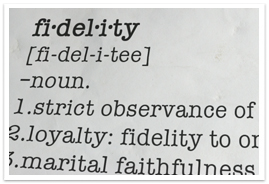
Schools are investing their money in large scripted programs instead of professional development.  Programs that require teachers to not only cover a certain amount of pages in their handbook on a given day via a new invention called a pacing guide, but also to read directly from the scripts that are provided to them.   Essentially teachers are “trained” in these programs and often the goal is to maintain “fidelity” to these programs.  Think of the implications of the words fidelity and training.   To “not” follow these programs means you are a cheating, disloyal teacher who has not followed your precise training.  Training is for dogs and fidelity is for marriage.  When in the world did the idea of marrying a program become a good one?

Image

And as a former member of our local cooperative school board I am amazed that we do not “think” about where all of our tax dollars are going.  The number one item on any local budget is that of salaries and yet at the same time we take away the authority of the teachers  to use what they know and replace it with programs that anyone off the street could administer.  On the one hand we trust our teachers to pay them salaries (yes, also another issue I will not get into here in terms of fair and equal pay) while on the other hand we tell them they are not worthy of decision-making, furthering their professional development and empowering and trusting them to do what is right for their students.   Research tells us again and again that the most powerful indicator of student success is the teacher.  Take away the “teacher” in the person in front of the room and all you have is a loyal robot spitting out information.  If this is the wave of the future then why even have teachers?  Why?  Because good teachers change lives.  Robots and scripts never will.

Image

And now if you can’t even read a script..here is a book to tell you how to do that!! What messages are there here?

“I can’t do this anymore” shouts long time friend and colleague Laura. Laura and I team-taught in a time when teachers were valued as professionals, respected and encouraged to do what was best for students.  Laura is one of the most gifted teachers I know.  She has her Masters in Reading as well as her CAGS (Certificate of Graduate Studies) in literacy.  She has been in education for 24 years.  And yet even in her own district she is not being consulted on what it is that might be best for students in the teaching of literacy.  Instead, those who are not even in classrooms, have never taught and whose only degrees are in administration are making decisions about instruction and are easily wooed by the various and sundry of publishing companies that are selling their wares door to door claiming to be the “magic bullet” sure to create students with higher test scores.  So many decisions are being made hastily out of fear instead of thinking about what is sound instruction.

And Laura is not alone.  I even find myself contemplating another professional life as I see my work and the purpose of my work becoming less and less applicable.  What good is nurturing thoughtful, reflective practitioners if there is no place for them to practice?  The frustration of so many is palpable and I can guarantee you that our kids are also feeling that frustration.

The lateral moves across districts and the adoption of mass programs puts teachers in a position where they must comply or beware.  This in turn trickles down to the students where all we are asking of them is compliance. What is missing in this top down mandated situation is thinking.

John Dewey wrote, ““Anyone who has begun to think, places some part of the world in jeopardy.”

There is a population of reformers out there who know this! Thinking requires questioning, reflection, and perhaps even going against “the man”.  But who is “the man” out there trying to keep us all from thinking and what is the end game?  The more I read the more I believe it is the privatization of education for profit.  A recent article in Salon reads,  “Getting Rich off Schoolchildren, Stop pretending wealthy CEO’s pushing for charter schools are altruistic “reformers”, they are taking in billions.”  See this article for more in depth conversation about what this might mean. http://www.salon.com/2013/03/11/getting_rich_off_of_schoolchildren/

And in turn, the de-professionalization of teachers and lack of funds for their development only creates stressed out, weary, disconnected souls wandering the halls rapidly trying to do everything that is expected of them.  By nature I really believe that a majority of those who go into teaching are rule followers.  They want to do the best job they can.  But with so many changes happening daily they are getting worn down to the point where they are saying, “Just tell me what to do, how to do it, and I will get it done.”

Image

Vicki Vinton

But how long can one survive knowing there are other ways? And what will happen when the history of good teaching disappears with those who have lived through it and all we have left are teachers “trained” in programs?   When will we pay attention to those we have hired and care for them in a way that will allow them to care for our kids in the classroom?  (For examples of the “kind” of teaching I am referring to see Vicki Vinton’s blog, To Make a Prairie to see how rich teaching can be at http://tomakeaprairie.wordpress.com/

Vinton beautifully demonstrates over and over again how to teach within the CCSS in a holistic, non-scripted, responsive workshop setting that fosters great thinking communities.

There is a storm a brewin’ folks, and with so much to keep up on in our world, I worry that education has yet to see it darkest days…

Our conversations need to be about instruction, curriculum, students, and community and away from this obsession with assessment, data and evaluation as it is making cheaters and liars of us all! We need to allow our teachers to teach, make decisions and allow them to do what we hired them to do…TEACH our children!!

Image

Miss-Interpretations of The Common Core and Teaching Writing: Dumbing Down with Ridiculous Rules, Mortifying Myths and Loquacious Lies

I am just home after meeting with some very talented and knowledgeable 6th grade teachers.  Our goal, to discuss the Common Core standards and get a feel for where they were in planning for their upcoming insurgence.

Part of the discussion was that in writing a persuasive piece of writing that the use of “I” is forbidden.  I asked by whom it was forbidden and they both looked at me like, “everyone” knows this.  And in walks the infamous “They” that makes these rules.  Who is the “they” in this arena?  And while you can find that in certain places the use of “I” is frowned upon it is not in others.  What about the fact that some of the best persuasive pieces ever written have a very capital and strong sense of I!! 

Image

For instance, if you read through my blog entries, how would you classify (for lack of a better word) what kind of writing it is?  What box would you put it in? Persuasive?  Argument?  Narrative? Informational?  Fiction?  Non-Fiction? Opinion?  Or is it a brand new genre called blogging? Or are there strands of each and all of these?

Or is it just ranting from a girl who lives in the grey areas of life navigating through a world of black and white…forever bumping into the boundaries set by others; hard and fast rules that become the letter of the law lacking any theory to back it up.

I envision it as writing my own newspaper column each week.  Where would that fit in?

I see it as a place where I gather my thoughts, opinions, and ideas and then attempt to support them with the thoughts and ideas and opinions of others.  Sometimes they are simply ideas of my own that I attempt to connect to begin to make sense of what I am thinking about. I write for the surprise that Donald Murray always wrote about.   Does this change what “kind” of writing I am writing on each and every attempt?  Or does it even matter what “kind” of writing is if my readers are reading it and it is making them think and wonder and respond?

Image

Donald Murray

And why do we insist on creating “new” kinds of writing that only exist in the world of school?  Have you ever seen or read a book report in the “real” world?  What about the whopper of a 5-paragraph essay?  When is the last time your boss came to you and said you need to write up a 5-paragraph essay, due on my desk by Monday?  NO, you have not because the idea of 5 paragraphs is another myth created in the world of education in an attempt to dumb down the process of writing.

Image

These teachers showed me a template for a persuasive (yes 5 paragraphs in this one too) where the students could essentially fill in the blanks and create a piece of writing that would fulfill the requirements of the Common Core Standards.  I have to SHOUT out here that I really don’t believe these are the intentions behind the CCSS.  This narrow thinking goes back to what Don Graves speaks about as teaching writing in terms of painting by number.  All of the writing in these mythical genres look the same, feels the same, reads the same.  BORING!!!  BUT, as the teachers respond, if we do this then all of the standards will be met and we will be able to point out specifically in different colored pens which parts fulfill which standard.  This leaves teachers in an impossible stance.  They have to choose whether or not to do what they are told or to teach what they know is good writing.  Wouldn’t you think they would be the same thing?

Image

Donald Graves

Our car is making a horrible noise.  (Using a story/narrative strand here to make my point)  There is a screeching sound that just makes your ears quiver when you turn the wheel.  We need to take it to the mechanic to get it fixed.  When it arrives he will listen to it, diagnose it and make the necessary changes.  Imagine another world, say the world where school meets auto repair and instead of relying on the mechanic there is a checklist that says he must add some simile, a bit of metaphor as well as a heave dose of dialogue to fix and complete this engine repair.  When done he can return it to us with all the things he can check off the list, but still with a broken car.

Image

Taking the person OUT of the process only creates nonsensical ridiculous and completely absurd moves.  There is NO sense in it and yet this is exactly the response I am seeing to the CCSS.   It is about coverage and covering one’s ass, if I may be so blunt…but who cares if your ass is covered if you are turning out broken down cars and students?  Taking the writer, the “I” out of the process is not going to create confident writers who know and understand when and where to use a writerly move if they have never had the opportunity as writers to make those decisions.  (Using compare and contrast to drive my point home)

I do not start writing thinking; I will use metaphor, simile and dialogue in this piece.  I start out with an idea and then as I write there are opportunities where these moves may or may not be useful to make my writing what I envision it to be.  I may even remove my car metaphor before this piece is formally posted on my blog.  The point it that these decisions are made my ME, the writer, so that I can create something that makes sense and that will engage my readers (hopefully) and allow them to think about something in a way that maybe they had not thought about it before.

My daughter sent me a link the other day about some middle schoolers involved in inquiry projects and created controlled experiment and then wrote it up and submitted it to various scientific journals to share their findings.  Many of the journals, while they praised the work of the students and it’s originality were not open to accepting the work of these student because their report started with “Once upon a time”, in other words it did not follow the “rules” of the scientific genre.

And yet, you can see here on this link to TED that the work of these students was eventually published and is now one of the most read scientific reports on the Internet. http://www.ted.com/talks/beau_lotto_amy_o_toole_science_is_for_everyone_kids_included.html

And here is a link to the actual paper that was published. http://rsbl.royalsocietypublishing.org/content/early/2010/12/18/rsbl.2010.1056.full

So why are so many people reading this and watching this TED talk?  I would argue (making this an argument piece now!) that they are reading it and listening to it because it is original and interesting and shows us what our kids CAN do if given the opportunity.

Image

So what are we doing?  In our efforts to do what is “right” we are forgetting to think about how kids learn, why kids learn and why they don’t.  Why are kids so totally removed from their own educations, their own thinking, their processes of discovery and wonder and curiosity?  Why?  Why?  Because that is exactly what we are asking of them.  To fill in the blank, not to think about what they are writing, check it off the list and move onto the next genre.  And the beat goes on…

Photo Credits: BLG Consulting Group, communicationissuccess.blogspot.com, http://unhmagazine.unh.edu, UNH Alumni, http://theclimatescepticsparty.blogspot.com/

Nothing In Common: Boutiques and Big Boxes

I just spent four days working in a school district out in Plainfield, Illinois and after getting sideswiped by the blizzard Nemo on my way there and delayed on the way home by President Obama’s departure from Chicago at  the same time as mine, it was a successful trip.  Of course my travel woes are another blog and story all together!!  And yet, are they?

As I was driving from Chicago to the Joliet, Plainfield area in search of my first school to visit I realized as I looked out the car window that although I was in Illinois I really could have been just about anywhere in America.  On my left, I see a Target, and on my right a Home Depot.  Lines and lines of chains from Dunkin Donuts to Burger King stood proudly next to their big box neighbors.  And it got me thinking about the goal of so many schools and districts; heck the ENTIRE nation right now is fixated and obsessed with having everything in “common”.  Common language, common expectations, common outcomes, a Common Core and the list goes on. And so I ask myself, what is so great about everything being the same?

Image

When I travel I seek out what is different.   Where can I find some little restaurant, café or shop that I have never been to before?  Where is there something new I can try in terms of experience, food, or even atmosphere that will provide me with some insight as to what makes this town or city or place tick?  How do people make their livings?  What kinds of homes do they live in?  Where are the tracks and what is on each side of those tracks?  I enter these new places in the same way that I enter each classroom that I visit.  What is different here?  What do these students have to offer and what will I learn about them and how they work in the small amount of time I have to work with them?

My contacts and colleagues in Plainfield are two young dynamic women who brought me back to their district after a one -day workshop on writing in October to do some follow-up demonstration lessons in classrooms k-8.  Before I arrived they asked me to send them some lesson plans for each day.  And so I sat with the list of classrooms and the schedule before me and realized that I probably had not actually written a “real” lesson plan since I was an intern over 25 years ago.  There was a bit of me that actually panicked and began making things up, but I knew in my heart that even if I took the time to write these plans that they would change.  They would change based on the “read” of the students, where they were, what they knew and where we could go.  And so I had to figure out how to send them something open and flexible but concrete as well.

Image

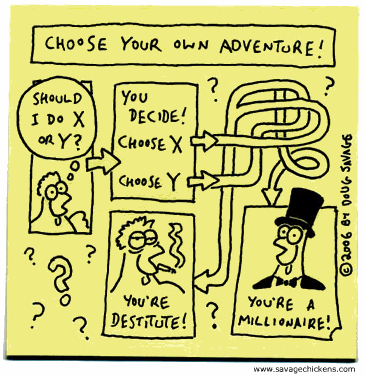
And so I determined a list of my favorite mentor texts that I would be using and then a bullet list of possible teaching points for each text.  I explained that I walked into classrooms with these possibilities in my head, but that I never really knew what I would be teaching before I actually started teaching.  I realize how uncomfortable this makes so many people, but for me there really is no other way.   Don’t get me wrong, there is a plan in my head, but before I begin to implement that plan I am responding to those students I am working with.  My plan is a back up because ultimately I am there to teach the students, not the material.  In fact when I focus solely on content I am removed from those I am teaching: lost in what it is I think I am “supposed” to be teaching…when in reality I am ALWAYS teaching the students.   And so “what” I will be teaching  depends on those I am teaching.  In this way I almost teach in a “choose your own adventure” kind of method.  If this, then that, but again I never know until I am there.

Image

And so I enter with a bag full of books that I know and love, stapled paper (books), markers and an open mind.  That is it?  Yes.  That is it.  I quickly try to connect with the students, perhaps telling them something personal about me and then hear bits and pieces about them.  As I am listening to them I get a sense of where they are and which book might work with them.  Then I reach into my bag and the decision is made.

When I am in this mode of listening I realize that the possibilities are endless and so my role is to focus in on one or two or maybe even three different noticings that the students are making and ask them to talk about what they noticed and why they think the author has made such a move.  If they do not notice then I begin by noticing something and ask that they then look for this same thing as I read on.  I love these kinds of encounters with students.  I am looking and listening intently for what is different in their thinking and what they notice.

After reading the book, A Stranger in the Woods by Sams and Stoick, one student notices that the animals are talking.  Together we name this craft,  personification as well as a couple of other crafts used by this author. I set the students free with a “book” made out of 4 sheets of paper stapled together and markers and to begin writing this book on anything of their choosing.  I ask that before they leave the carpet that they first tell me what it is they plan on writing about and one kind of craft that they were planning on trying.  As students revealed their plans, new plans formed in the minds of others.  Taking this time allows for each student to leave the group with purpose and to get right to work.

Image

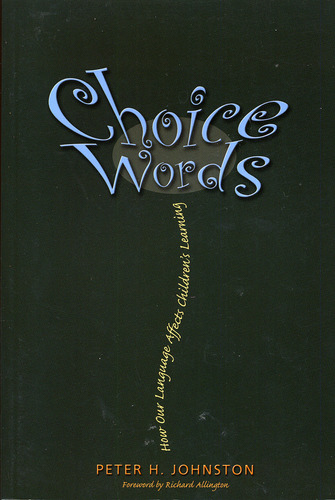
One student in a second grade classroom decided to write a book about snakes and  he was going to attempt to use strong verbs.  As I approached his table I could see his book filled with colorful illustrations and great details as he worked with purpose.  When I kneeled beside him I asked if he would talk about and read what he had written.  He read with great inflection and voice and then came this incredible verb, “lurking”.  I asked him how he came up with that word and he began to tell me that he loved snakes, that he was in fact, obsessed with snakes and that because he read so much about snakes he knows that lurking is what snakes do!  He then ran off to his book box to find many different books on snakes.  He poured through them showing me his favorite parts.  This was unique and different than what anyone else was doing in the class and celebrating this writer’s moves is what I am all about.  I asked that he read it to the class after telling everyone where he got his ideas and what kind of book he was writing about snakes.  He talked about how he used the word lurking because another author had used it.  I confirmed his smart writerly move talking about how all writers borrow from other authors.   I focused on what he was doing and what he thought was important.  This is teaching in my highest self.  This is where I find energy.  This is where I long to always be.  In the moment with a child as he or she identifies what it is they are working on and just what he or she is doing as a learner and how it is or is not working.  I am always moving towards, “Getting kids to “reveal” what they know in order to discover where they might go.”  Johnston, Choice Words.

And dare I even say that in these moments I feel a sense of synergy that I also find in my yoga practices.  It is that moment of being in the “zone” where I can see things clearly and instinctively know where to go with each child that I work with.  This does not happen all of the time, but when it does it is beautiful.  It feels incredibly whole and complete and it has absolutely nothing in common with any other interactions I have with any other student.  It is DIFFERENT.  It is not the same and so I have to wonder in our quest for sameness, in our desire for consistency are we not losing the individual processes, identities and the creative thinking of each individual?

Image

In my debriefs with the teachers after the demonstration lessons I am always surprised by what it is they ask and comment about.  And after a recent rereading of Peter Johnston’s, Choice Words, I realize that so much of my teaching is defined in this book.  The language we use and the responsive teaching is what I am always aiming for.  And if you have not read this book then I encourage you to add it to your list of must-reads.  It is essential for teaching our kids how to be independent agents in their own learning.

And so I left the same way I came in passing Best Buy and Lowe’s, asking myself, are we forgetting what makes life interesting?  Are we aware that in our efforts to be the next Wal-mart that we are losing our downtowns and our small businesses?  I am fortunate to live in a town that still has a downtown and I love walking through the shops and knowing and talking with those working in the shops.  There is something wonderful about knowing people and seeing what is new and different that you would not find in a Target.  And yet, it is a fight to keep our downtowns open because the big box stores are more affordable.  But in the end, can we afford to lose what has yet to be discovered in each child in the name of what is simply common, consistent and so very much the same?  Or am I just a boutique kind of teacher trying to survive in a big box world?

Image

Dear Mother, Dear Teacher

Dear Mother,
I wanted to update you on your son’s grades for biology per your request in the last email.  He could really use someone quizzing him the night before a test on the vocabulary.  I give flashcards out so it makes studying a little easier, along with a review sheet and practice problems for each test. If Zach is studying he is doing it passively, like reading through his notes, but what he needs to do is actively write down or perform practice problems, with the notes put away, so that he sees exactly where his weaknesses are and study those topics.
 Image
I think Zach tends to coast along and he could do with some more study time at home.  It is hard for soph boys to see how mediocre grades can affect their future track in life.  I think expecting B’s from Zach is reasonable and he could do it, if he gets a little more organized and motivated.  I also wanted to tell you that I update powerschool at least once a week, so you can always log in and check on his progress there.  You can also check on his attendance record and number of tardies for the year.   It is a great tool for Zach to monitor himself and for you to feel like you know what is happening while letting him remain autonomous.  You can set it up to send you emails once a month or biweekly, so you don’t even have to remember to do it. I also have a moodle site that has all of the homework assignments and upcoming test dates, so that you can help Zach become more organized and prepared. My moodle site has guest access so you don’t have to log in, but you will need to login to Powerschool with a username and password.
If Zach could get his homework done well and on time and spend a little more time studying for tests, I think you would see a drastic increase in his grades in class and on tests. Zach is always polite in class and has a smile on his face, so his personality will get him far and with good grades he would have even more opportunities. Please contact me if you have any questions or comments, Teacher
Dear Teacher,
Thank you for getting back to me.
As I read your report on Zachary I am reminded of an article I read recently.
I hope you will read it and read it with an open mind.  It talks about how kids these days are different in terms of their technological savvy.
Here it is!!
We are teaching a new generation and while flashcards may or may not have worked for us, this is  a new generation of  thinkers!  As a fellow educator I feel it is our job to figure out where they are and to meet them there…at least half way.
Zach’s lack of engagement is often labeled as “lazy” or as you stated that he does not “study well”.  What exactly does it mean to study well and who has ever taught any of our kids to actually “study well”?   What if flash cards don’t work for all students?  Haven’t we come further than flash cards and rote memorization? Or could those flashcards perhaps at least be digital and interactive somehow?
Image
I just want to ask that you read this article and consider that I am in schools all over the state where  I am seeing first grade classrooms with smart boards where kids are constantly using and engaging with technology and even Skyping with their penpals out in California!  In a 3rd grade classroom teachers are using Edmodo to allow their students to ask questions in on online community where they can feel safe to explore subjects of their own choosing.  Fourth graders are blogging, 8th graders are a part of Good Reads and the list goes on.  Unfortunately, short of power point, I cannot think of even one technologically driven assignment that Zachary has done and our High School was built completely outfitted for such advancements.  Have you seen that television recording studio?  Why aren’t students creating TV shows that talk about the impact of biology in their community…just a thought!
Image
I would expect A’s of Zachary and beyond because he is smart and he gets things easily.  You would only expect B’s.  How sad.  Shouldn’t we expect A’s from all of our students and help them get to A’s if they are not there??  The problem lies on many levels though.  He IS motivated and organized when he is invested in something.  School is out of touch for him and for many around him.  And while the prospect of learning biology through a video game might seem outlandish, I can tell you that when there is even the slightest hint of using technology in an assignment Zachary is all over it.  He spends hours taking and editing his own videos.  What if he could “create” something to show his learning to replace an assign and test kind of teaching?  Can you imagine the possibilities and all we could learn from these Digital Natives?
I teach in classrooms from first grade through the graduate level and my question to myself is always the same…if they (my students) are not getting something then what can I do to help them to come to a fuller understanding?  I want thinking…not just memorization for a test that is gone the next day.  I want my students to connect and interact with what they are learning  and how what they are learning might impact who and how they are in the world.  Biology has so many implications for this kind of thinking…but right now I don’t think Zachary thinks biology has anything to do with him.
My daughter went to Phillips Exeter and she LOVED biology because they sat around and discussed biology!  She is now at Kenyon college as  a Biology major.  I wish that Zachary had an opportunity within the public schools to learn in a socratic method…but for some reason we rule that out as impossible and we stay with what we know.  Assign and test.  Assign and test.
The irony is that the technology that teachers have been given, powerschool, is one that only encourages the mentality of assign and test to get the grade.  Emphasis is SO heavily  weighted on  grades and not what is being learned.  So many of our kids are not motivated by grades anymore.   And the stories I could tell you about parents fighting with their kids over homework EVERY day!  I did that all last year.  It nearly killed me and my relationship with my son. Powerschool only added to the anxiety as we would look at the grades and he would talk about the things that had not yet been posted…the homework that he did pass in and every teacher is incredibly different in their use of Powerschool.  I stopped looking at Powerschool and am now looking at my son.
Image
This kind of constant helicopter parent monitoring is not only ruining parent child relationships, but it is also sad that it is the part of technology that teachers have been offered in a world of SO much more to be offered.  I can tell you there are parents who check powerschool hourly.  How is that creating responsible and independent learners to go out into the world?  They need to fail in order to learn, but there is very little room for risk-taking and failure of any kind for our kids.  I feel sad for them as the greatest things I ever learned in life often came from failures.  Are we afraid to let our kids fail?
And your final paragraph speaks of opportunities….and the lack of opportunities Zachary will have because the opportunities offered to him right now are so narrow.  THAT is the greatest rub of all.  It says conform to or your chances in life are well…less than stellar!  The system as is, is designed, particularly with Powerschool, to work against students.
Image
If Zach gets a 0 on a homework it takes 5 A’s for him to make that up.  The scale is heavily weighted towards failure…NOT success!  In my mind an A and an F should average to a C?  Right?  No.  In this point system it averages to an F.  There is very little room for risk taking and even less room for less than perfection.  It is a tough world for these kids to thrive in when their other worlds are so rich with color, light, movement, flexibility, technology and a fast paced life where they are connected.  Zach is unplugged at school…I only wish you could see him “plugged in” in the worlds that matter to him and that together we could find a way to light up the hallways of our schools where classrooms were interactive and students were truly engaged and not just  “getting through” this period to get to the next.
But I am a dreamer.
Please do take a moment to read this article and consider it’s implications as well as the fact that it was written in 2001….and perhaps consider dreaming alongside me and leaving the flash cards behind.
Thanks for “listening”.
Tomasen

Totally worth your 12 minutes. What ARE we preparing our kids for?

zgenesis's avatarzgenesis

Students are the future, but what’s the future for students?

To arm them with the relevant, timeless skills for our rapidly changing world, we need to revolutionize what it means to learn. Education innovators like Dr. Sugata Mitra, visiting professor at MIT; Sal Khan, founder of Khan Academy; and Dr. Catherine Lucey, Vice Dean of Education at UCSF, are redefining how we engage young minds for a creatively and technologically-advanced future. Which of these eduvators holds the key for unlocking the learning potential inside every student?

View original post

Rules of Engagement

Zachary came home from school the other day feeling pretty pleased with himself.  He had a “quiz” in chemistry (his most challenging subject that he struggles with) and reported that it was awesome.

Image  Yes, you are right on if you are picturing me standing in amazement with my mouth hanging open.

Zachary is an 11th grader in public school.  To know Zach is to see him always fixing, researching or tinkering with something be it the ski ramp in the backyard, the latest gadgets in photography or longboarding or his guitar.  He is and always has been “in motion”.  I used to joke that he came out of the womb on wheels!  I believe he is a very different person when in school.

He went on to tell me that this was a quiz where you “did” things and so he felt like he was better able to perform.  In his own words, “I am not good at memorizing, I am good at applying things.”  ImageHe explained how they had 5 different elements that they had to weigh and then do calculations in relationship to what it was they had discovered.   After each element they were to go up to the teacher and check in.  He was animated as he continued his story explaining that because he does not have a calculator he usually just borrows one from his math teacher, but because this was a pop quiz he did not have the time to go and get one.  So he decided he would do the math on his own.

Upon completing the first few problems he checked in with his teacher to discover he got them all right!!   When his teacher asked him how he did these problems Zach instructed him to turn the paper over where he found a lattice method scratched out on the back of his paper.

ImageThe teacher, according to Zachary, was amazed that he was able to do this math without a calculator.  Delighted he went back to finish the last 2 problems, but alas, he ran out of time.  He reported that he got a 70 on it, but that he was thrilled because as he stated,  “I feel like it is the first time that I actually understood something in chemistry.”

“What would happen, if, rather than focusing on teaching reading strategies, we focused instead on getting students engaged?”  Peter Johnston

This quote by Peter Johnston has had me thinking all week about the idea of engagement.  He refers to engagement in terms of reading and actually asks some hard questions about instruction in this Stenhouse blog post.  Worth the read.

http://blog.stenhouse.com/archives/2012/07/23/blogstitute-week-5-reducing-instruction-increasing-engagement/

ImageSo, the next question is what if we decided to make that same commitment across all subject areas, curriculums and grade levels?  What if the most common core standard of all that we were to work towards was engagement of ALL of our students?  What if we focused primarily on engaging our students and worked towards 100% proficiency of engagement?

This is so simple.  There I said it!  Think about it.  We can go on teaching and standing in front of the room and sharing our knowledge.  We can go on creating meaningless tests to supposedly “show” the growth of our students.  We can continue to spend millions and billions of dollars on the next magical cure that won’t work or…imagine this…we could look at our students and focus on engagement.  WHAT matters in our work if our students are not engaged?  What will they learn without engagement?

 What happened in this chemistry class?  The class where Zach admits to getting his daily naps because he has so much trouble paying attention.  He  argues that nobody really understands what It going on.  So what turned this day into a class period filled with engagement and dare I use the term, rigor?   I believe it all started with the ability to move and use his body.  He was not sitting in a seat in the back of the room watching the minutes slowly tick by.  He was standing, walking and using his hands to “apply” what he did and did not know.  He was then able to get some immediate feedback on his work and then a little gravy in the name of praise for his ability to perform without a calculator.  This real feedback sent him back confident and hungry for more.  It was only the clock that worked against him as he told me that he knows he could have gotten the other two if he had had the time.  And even if he didn’t get them right he was ENGAGED!!

Image

If I were his teacher I would look at Zachary differently than those who used their calculators and adjust his grade accordingly.  IF the goal is engagement and ultimately understanding could it not be argued that perhaps he understood more deeply because he could perform without the calculator?  Shouldn’t he be graded on what he did know and not that the time ran out?  But I also realize that I am far from the norm and that grading is another topic for another post.

It’s like my cats, you know.  They are very finicky about their food.  It is clear when they do not like a particular kind of food because they don’t eat it!  They are not engaged in their eating.  So I don’t continue to give them the same food because I have deemed it is the best food for them, I try out different kinds of food to see what works for them to engage them in their eating. Image Why do we continue to do things we know don’t work…especially when so many of us have the vast variety of theory and knowledge that DOES work and even more importantly that engagement is something our students are starving for?